A new model with an explicit operating brief
GranOcean has introduced the W-66, a 20.12-metre luxury power catamaran designed with charter operation at the centre of the planning brief. The builder's official model information, published in November 2026, specifies a full ten-metre beam, flexible four- to six-cabin guest arrangements and separate accommodation for a captain and two crew. These are the defining features of a new production proposal, not an announcement that a named yacht has already entered charter service.
The approach reflects a practical issue faced by owners of luxury multihulls. Accommodation volume is valuable, but the success of a vessel used frequently with guests also depends on discreet service, workable crew routes, maintenance access and a configuration that suits the local charter market.
A 66-foot hull with a broad platform
The W-66's principal figures are 20.12 metres overall and a beam of approximately ten metres. Those measurements make clear how differently a power catamaran distributes interior space compared with a conventional monohull of similar length. The breadth supports generous social areas and gives designers flexibility in separating functions between two hulls.
The beam also introduces operational questions. A ten-metre-wide yacht will not fit comfortably in every marina berth intended for a single-hull motor boat. Buyers should consider available berths, multihull charges and harbour access before assuming that length alone is sufficient to establish where the vessel can be kept.
Shallow draft is a meaningful feature
The builder states a draft of around 1.20 metres, notably modest for a luxury yacht of this overall length. In suitable conditions, that may help the vessel reach anchorages or coastal areas that are less accessible to deeper-draft craft. The marketing proposition is especially relevant to island cruising and charter itineraries.
Shallow draft is not permission to disregard charts, tides, local restrictions or the risks of grounding. The captain must still consider under-keel clearance, wave conditions, wind and the vessel's actual loading. The benefit is greater potential flexibility, not unrestricted access to shallow water.
Charter operation shapes the cabin choice
GranOcean offers galley-up and galley-down arrangements, with four, five or optionally six guest cabins. A charter operator may prioritise a higher cabin count to suit larger groups, while a private owner might prefer fewer rooms with more generous individual spaces. The available configurations need to be evaluated as complete plans rather than interchangeable labels.
The builder's website illustrates specific five-cabin galley-up and four-cabin galley-down schemes. A six-cabin variant is described as an option, but the public material does not establish that every version has already been built or certified. Owners should request the current approved layout before making assumptions about passenger numbers.
A captain and two crew can work apart from guests
Dedicated captain and crew accommodation is a significant part of the design. It can help maintain a distinction between hospitality spaces and the working environment of the people operating the yacht. Private access can reduce interruptions while the crew manages provisioning, navigation, maintenance and the routine demands of a charter day.
That separation does not mean the vessel is guaranteed to meet every commercial manning regulation. Crew qualifications, safety equipment and national operating rules will depend on flag and location. The official design presents accommodation capacity, not approval by every possible charter authority.
Service routes deserve serious attention
For a small professional crew, the distance between galley, cabins, helm and outdoor dining areas affects how easily guests can be served. A layout that looks impressive in a static rendering may prove less convenient if staff have to cross social spaces repeatedly. The two proposed galley positions create different operational patterns.
A charter company should assess the plan with working captains and interior crew before selecting a version. The preferred solution may differ between a private family yacht and a vessel intended for frequent weekly changeovers. Workable circulation is a form of comfort even when guests never consciously notice it.
Nine thousand litres is a substantial fuel provision
The manufacturer lists potential extended fuel storage of up to 9,000 litres, consistent with an interest in longer cruising itineraries. That figure is an option or upper provision rather than proof that all W-66 yachts will carry exactly the same amount. The actual fuel arrangement should be confirmed in the build specification.
Range cannot be determined from tank capacity alone. Engine selection, hull condition, operating speed, generator use, reserve policy and conditions all influence how far a yacht can travel. Until official measured performance data are available, a precise mileage claim would be speculation.
Engineering partners and design responsibilities
GranOcean identifies Stimson Marine for naval architecture and Gurit for marine engineering. The exterior design is attributed to GranOcean itself. These credits distinguish different aspects of the work: the form and performance of the hull, the detailed engineering of structures and systems, and the aesthetic treatment of the yacht.
The presence of established technical partners is useful context, but it does not amount to a published certification report for a completed example. Buyers should request the actual class, structural and operational documentation relevant to their planned registration and service.
Hybrid propulsion is described as an option
The W-66's bespoke specifications include potential hybrid propulsion, alongside different engine choices. This should be reported as an available design option rather than a guarantee that the base model is entirely electric. Hybrid systems can take several forms, and their value depends on the engineering and duty cycle involved.
Owners should seek a clear description of battery capacity, charging, hotel loads and propulsion modes. A hybrid label does not by itself reveal how long a yacht can operate quietly at anchor or whether it can travel a significant distance without the diesel engines running.
Solar panels need a complete energy assessment
GranOcean also mentions solar options. On a catamaran, a broad roof area can provide opportunities for solar generation, but the usable output depends on available surface, efficiency, shading and weather. Photovoltaics can be valuable for supplying some onboard loads without necessarily replacing conventional power generation.
A charter operator should ask how much energy the specified array can produce over a realistic itinerary and how it interfaces with batteries and generators. No independently verified solar yield is included in the initial W-66 outline, so universal savings claims would be inappropriate.
Storage for tenders and recreational equipment
The builder identifies tender storage and workstations among the areas that may be customised. These options have practical consequences for charter operations, where guest activities can depend on a tender and equipment that must be safely stowed, launched and maintained.
A tender selected after the yacht is completed may create complications if its mass or dimensions exceed the intended lifting arrangement. The correct approach is to agree equipment requirements early, then check them against structure, handling systems and deck circulation.
Making the most of two hulls
A multihull layout can distribute private accommodation between separate volumes while creating a wide shared living space on the bridge deck. This is an attractive proposition for groups seeking social space without sacrificing individual privacy. The value becomes particularly apparent when passengers have different routines throughout a charter week.
There are still compromises. Machinery access, noise isolation, hull shape and circulation through stairs or passages must be considered. The beam alone does not establish superior comfort; the completed yacht's engineering and fit-out will determine the day-to-day result.
The size fits a changing charter market
At about twenty metres, the W-66 occupies a segment where private ownership and professionally managed charter operations often overlap. Buyers may want occasional use alongside revenue-generating weeks, or they may commission a yacht specifically for a small hospitality business.
Those plans need different financial assessments. A professional operator should consider marketing, occupancy, maintenance, crew, insurance and the restrictions of its cruising area. GranOcean's charter-led design is not a guarantee of financial return or full booking calendars.
Customisation still requires programme control
The manufacturer places considerable emphasis on bespoke furniture, interior finishes and technical arrangements. Personalisation is valuable to the owner, but every alteration can affect weight, installation and the eventual maintenance workload. The wider the range of permitted changes, the more important disciplined project management becomes.
A prospective client should understand when changes can be requested, how costs will be approved and whether alterations affect the intended delivery. The new W-66 platform is a starting point for an individual build, not evidence that all configurations can be completed at identical prices and timelines.
Photographs and renderings must be distinguished
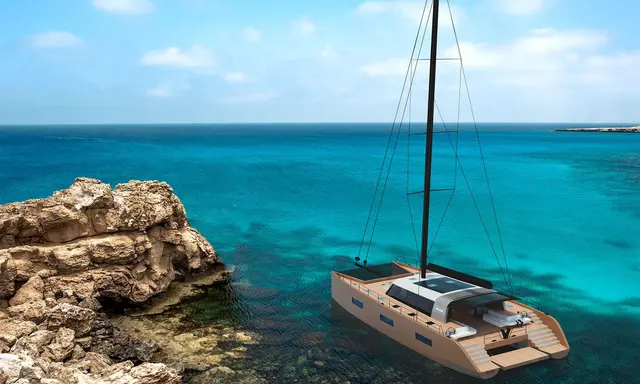
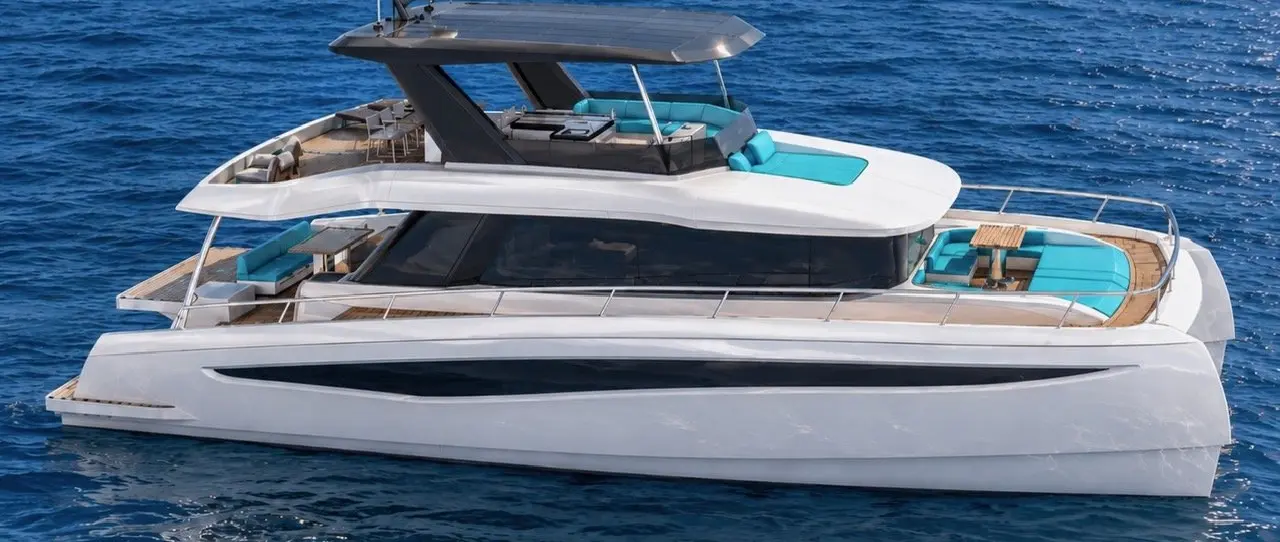
GranOcean's own November gallery depicts the W-66 from several perspectives. The image selected here is official model material rather than a photograph independently verified as showing a fully completed and delivered commercial charter yacht. It is credited and described as builder-issued design imagery.
This matters because a rendering can communicate intended proportions and furniture without proving how the first finished vessel will appear. Future reporting should use new photographs and sea-trial evidence when those are released, making clear which details have actually been executed.
What would confirm a working charter model
A completed charter vessel will need appropriate flag, safety and commercial documentation. Its accommodation plan, crew complement and operational area must satisfy the relevant authorities. No such authorisation for a named W-66 hull is established by the newly published model page.
Similarly, the public announcement does not name a first paying client, identify a delivery date or provide independently tested fuel consumption. Those are legitimate future milestones that should be reported when the builder confirms them, rather than inferred from marketing language.
Comparing W-66 with conventional motor yachts
The model's strengths on paper are its broad social spaces, shallow draft and configurable accommodation. A monohull rival might offer a different combination of berth access, handling preferences or interior circulation. There is no universal winner because owners and charter operators have different requirements.
A proper comparison would examine the full specification, operating costs, professional crew needs and real test results. Looking only at length, cabin count or a proposed maximum fuel volume would not provide an adequate basis for a purchase decision.
The next stage for GranOcean
The W-66 expands the builder's W-Series with a defined 66-foot charter-focused proposition. Its appeal rests on flexibility, substantial beam and the separation of guest and crew functions, backed by design and engineering partners. These elements are clear in official November 2026 information.
The next meaningful newsroom development will be a confirmed construction milestone, first launch, sea trials or a named charter programme. Until then, the W-66 is a new luxury power catamaran design with a distinctive operating brief, not a delivered yacht with independently verified performance.
Primary source and image credit
Verified editorial source: https://granocean.com/wp-json/wp/v2/pages?slug=w-66. © GranOcean. Original W-66 builder-issued November 2026 promotional model visual, not a confirmed delivered yacht. The source image has been screened against previously used SYG, LYG and LBG lead media. This is manufacturer design imagery; it is not represented as a photograph of a delivered yacht.
Additional first-party builder specification: https://granocean.com/. Model performance and equipment details remain subject to confirmation by the builder.