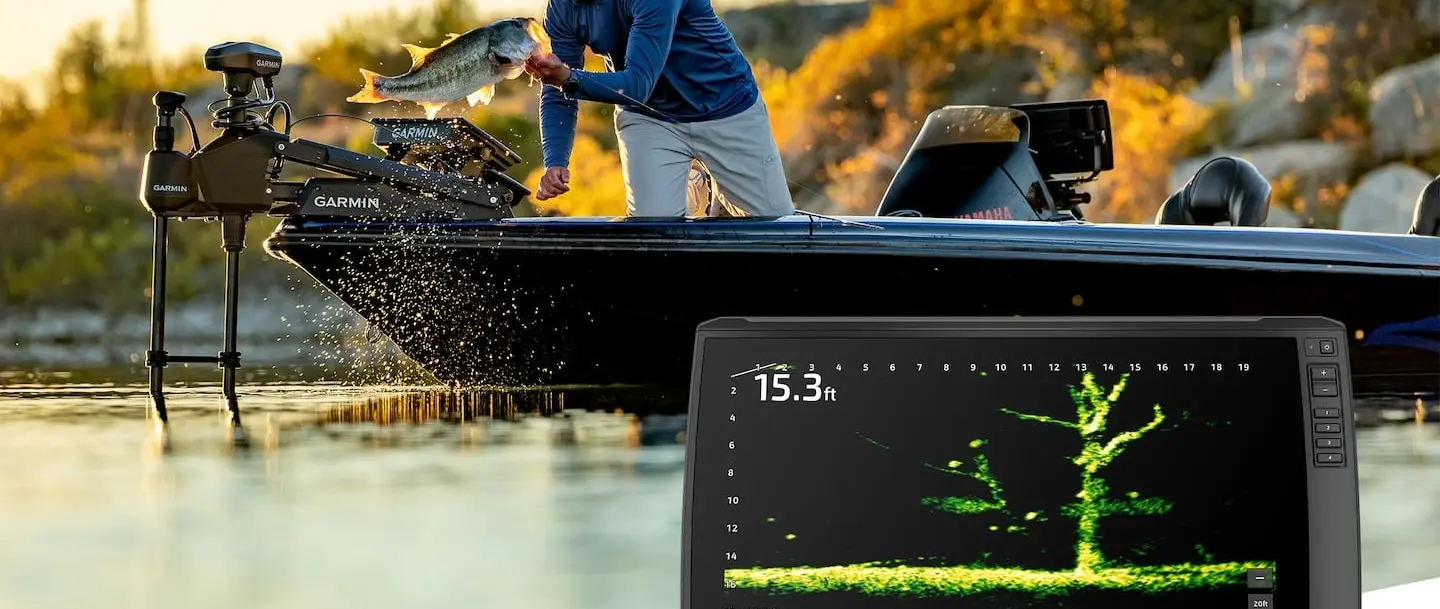
Garmin has launched the LiveScope 2 Series as the next generation of its live-scanning sonar platform, adding greater range, higher resolution and a cleaner installation for boats using compatible Garmin multifunction displays. The new family was announced on 7 July 2026 and includes standard, high-definition and ice-fishing transducer options.
The main LiveScope 2 LVS44 is rated for 20% more resolution and 25% more range than the previous generation, extending coverage to 250 feet. The LiveScope 2 HD LVS42HD instead concentrates on shorter ranges up to 125 feet, where Garmin claims as much as 50% more detail.
More detail across a wider sonar field
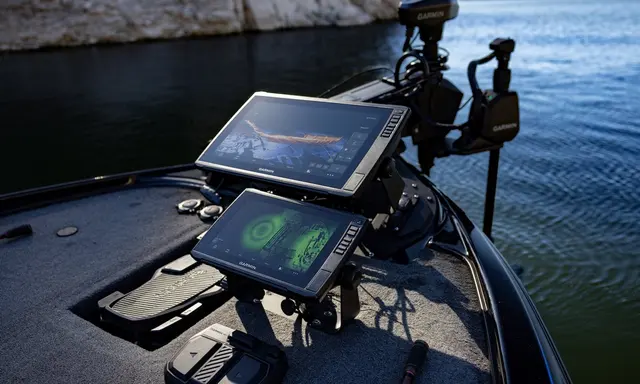
Garmin says the new transducers improve target separation while reducing image noise, helping users distinguish fish, bait and structure in real time. Broader sonar angles also increase coverage in Forward, Down and Perspective modes, so less of the surrounding water is left outside the live view.
Integrated image stabilisation and low-latency processing are intended to make the picture easier to interpret as the boat, transducer and targets move. For yacht owners who use tenders or smaller sports boats for fishing, that matters more than headline resolution because a stable image reduces the amount of interpretation required at the helm.
Direct connection removes the black box
LiveScope 2 and LiveScope 2 HD connect directly to a compatible Garmin MFD and the vessel power supply, eliminating the separate black box used by earlier installations. That cuts component count, reduces cable runs and can free useful space behind a compact console.
A built-in water sensor automatically disables the sonar when the transducer is lifted clear of the water, while an onboard temperature sensor supplies live water-temperature data. These small integration details make the system easier to install cleanly on tenders, chase boats and owner-operated craft where helm space is limited.
The system fits into Garmin’s wider ecosystem
Garmin has designed LiveScope 2 to work with accessories including the motorised Spy Pole and the GT360UHD transducer, allowing live sonar and 360-degree scanning to be combined in one electronics environment. Owners already using Garmin chartplotters can therefore add capability without creating a separate display ecosystem.
The practical advantage is consistency of controls and data rather than simply adding another sensor. When radar, chartplotting, sonar and positioning all share the same interface, a helm can remain simpler even as the underlying electronics become more capable.
Three transducers cover different use cases
The standard LVS44 is aimed at anglers who want to search farther from the boat, while the LVS42HD is optimised for higher-definition work at casting distances. Garmin also offers an HD ice-fishing version with a shorter cold-water cable and dedicated mount package.
For Luxury Yacht Guide readers, the relevance is strongest on sport-oriented tenders and sub-24-metre yachts where fishing electronics are increasingly integrated with the main navigation suite. LiveScope 2 shows how specialist sonar is moving toward the same compact, networked architecture used by mainstream yacht electronics.