Furuno is expanding the role of software-assisted decision support at the yacht helm through AI Routing, Risk Visualizer and AI Avoidance Route. The tools combine electronic-chart information with radar-derived target data to reduce the workload involved in route planning and collision awareness.
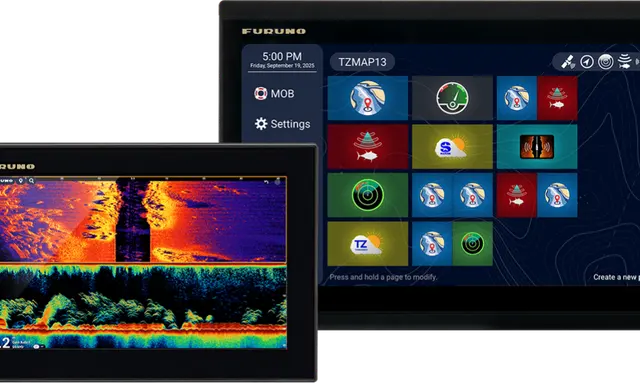
The functions sit within Furuno's TZ MAPS and NavNet ecosystem rather than acting as an autonomous navigation system. The operator remains responsible for watchkeeping, interpretation and compliance with collision regulations at all times.
AI Routing starts with chart data
AI Routing can generate a proposed route using charted hazards, depth contours and navigation constraints. The aim is to reduce the time required to build a passage while still giving the skipper the ability to review and modify the result.
For luxury-yacht owners who cruise unfamiliar waters, that can simplify the planning stage and make route changes quicker. It does not remove the need to verify chart quality, local restrictions, weather and the yacht's actual draft.
Risk Visualizer adds a radar layer
Risk Visualizer analyses the movement of surrounding radar and AIS targets and displays potential collision areas around the vessel. Unlike a simple closest-point alarm, it is designed to show a wider picture of developing risk around the yacht.
That visual approach can help a skipper understand which targets deserve immediate attention. It is particularly useful in congested approaches, busy coastal traffic and situations where several vessels may be crossing at different speeds.
AI Avoidance Route proposes an escape path
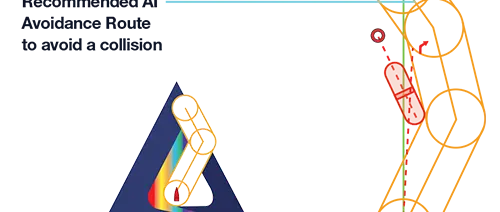
When connected to compatible Furuno radar and TZ MAPS, AI Avoidance Route can use the available data to suggest a route around a developing hazard. The system is intended to assist the operator by turning target information into a more intuitive recommended track.
Furuno's own material makes clear that the feature is an aid rather than a replacement for judgement. Sea state, visibility, manoeuvring room and the intentions of other vessels can still require a different action from the suggested route.
Helm software is becoming more proactive
Modern yacht electronics increasingly move beyond displaying sensor information toward interpreting it and highlighting the most relevant risks. That can reduce cognitive load, but it also makes system understanding and training more important for owners and crew.
For yachts in the 12-to-23.99-metre range, Furuno's approach shows how functions once associated with larger bridge systems are moving into integrated recreational helms. The value will depend on how clearly the tools communicate uncertainty and how well operators understand their limits.