A small fitting changes a familiar deck problem
UltraGlozz is showing a compact furling-line guide called Furl-Fix at METSTRADE 2026, with nylon and stainless-steel versions intended to attach to yacht stanchions. The supplier describes a system that takes a furling line along the outside of the stanchions, reducing the amount of rope and associated hardware occupying the walking area of the deck. This is a narrow but worthwhile design problem for a sailing yacht between 12 and 24 metres: every line needs a fair route, and every protrusion near a passage or working position deserves scrutiny.
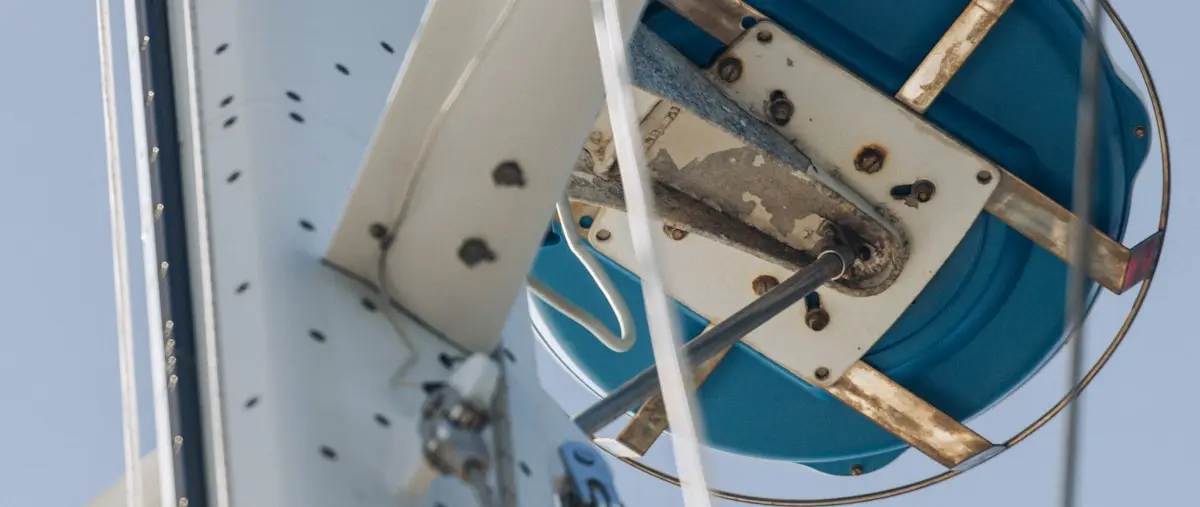
The product is not a complete furling system, and it will not make an unsuitable sail-handling arrangement safe by itself. It is a guide component that may be incorporated into a properly engineered installation. The company has detailed its dimensions and material options, and the METSTRADE directory carries the announcement. The photograph illustrating this report depicts ordinary sailing rigging and is not an image of the Furl-Fix fitting. Keeping that distinction clear prevents a generic photograph from being misread as proof of the product's particular appearance or performance.
What the manufacturer specifies
The company lists two principal variants. Its fibre-reinforced nylon version is described as UV-resistant, available in black or white and configured for 25-millimetre stanchions. The Furl-Fix STS alternative is made of 316 A4 acid-resistant stainless steel and is offered for 25- and 32-millimetre stanchions. Both are presented for furling lines up to 12 millimetres in diameter. The supplier gives a mass of 42 grams for the nylon component and 118 grams for STS, indicating a noticeably different material choice rather than simply a change in colour.
The exhibition listing highlights the compact extent of the fitting beyond the outer face of the stanchion, approximately 20 millimetres according to the company's specification. A figure like that is useful but incomplete without the actual deck and rail geometry. A skipper needs to know whether the line will remain clear of guardwires, gates, fairleads and other fittings throughout sail handling. A compact object in a showroom can still create a snagging point if placed at an unfortunate angle aboard a yacht.
Why the outside route matters
Furling lines often travel from the foredeck back to a cockpit or other working station. When the route is poorly arranged, the line may scrape a deck edge, lie where someone places a foot or require a collection of fittings that intrude into narrow passages. Larger cruising yachts provide more space than small dayboats, but their deck equipment is also more substantial, and guest movement may coincide with sail handling. A neat, consistently guided line is therefore a legitimate design objective.
There is a crucial difference, however, between keeping a line away from feet and moving it somewhere inaccessible or exposed to accidental impact. The route must still remain usable under load and free from unwanted friction. A professional rigger should inspect line lead angles at every fitting, including the first turning point near the furler and the final transition to the cockpit. New fittings should be part of a complete reevaluation of the line path. Merely attaching a succession of compact blocks does not correct a poor geometric arrangement.
Low friction without ball bearings
UltraGlozz says Furl-Fix uses a simple low-friction design without ball bearings and therefore requires little maintenance. The appeal is straightforward: a compact guide that does not contain an exposed bearing assembly may avoid some of the cleaning and servicing demands of more complicated fittings. Still, the phrase 'maintenance-free' should be read in context. Salt, sand, UV exposure and wear can affect even simple marine hardware over time, especially when a line moves repeatedly under load.
Owners should inspect any installed guide for abrasion, cracking, corrosion, distortion and contact with adjacent lines. They should also examine the furling rope itself. A smooth turn when the yacht is tied to the dock may feel very different when the sail is pressed by wind, so real operating loads matter. The supplier's description does not replace appropriate working-load information, a rigger's judgement or the furling-system maker's instructions. On a 12–24-metre yacht, confidence comes from knowing the limits and inspecting the whole arrangement.
Different yachts, different stanchions
The manufacturer promotes single or paired mounting and compatibility with furlers used for headsails, Code Zero sails and gennakers. That breadth makes the product interesting to both cruising and performance-oriented crews. Yet those rigs differ in line diameters, loads, leads and operating patterns. A Code Zero furling line may demand a very different deck path from a conventional headsail roller-furler control line. A universal marketing phrase should not be taken as a guarantee that one component can be installed indiscriminately.
A practical survey starts by measuring the stanchion diameter and confirming the rail's construction, spacing and clearances. A yacht that has intermediate gates, unusual toe rails or custom guardwire arrangements may require an adapted solution. The route should be checked with the sails set and furled, and with people moving along the deck. The ability to install a guide easily is helpful, but final alignment can be more important than installation speed. Owners should ask their rigger to document the arrangement for the next crew member.
Materials and compatibility questions
The glass-fibre-reinforced nylon and stainless versions present different compromises. Nylon has low mass and avoids some metal-to-metal contact issues; stainless provides a different feel, stiffness and exposure profile. Neither material is immune to damage or incompatible installation. Stainless hardware near aluminium stanchions, for example, warrants consideration of contact, isolation and drainage, while polymer components should be assessed for wear and UV exposure according to the maker's guidance.
The advertised maximum rope diameter is another simple but important limit. A line marked as 12 millimetres can vary in actual size with construction, age and swelling. It must run freely without jamming, and the device must suit the rope material and surface. An installation should also maintain appropriate access to fittings used for safety lines and avoid any modification that weakens the stanchion system. Nothing about an inexpensive guide justifies drilling or clamping in a manner that compromises the guardrail's primary purpose.
A show listing and indicative prices
METSTRADE's product listing identifies the nylon two-pack with a manufacturer's suggested price of €24 and a single stainless STS unit with a suggested price of €54. Those are supplier-provided figures in the exhibition material, not independently checked retail quotations or a guarantee of availability in a particular country. The company lists manufacture in Denmark and Sweden and says the product was developed by a Danish sailor. These facts establish the provenance of the announced design without implying an independent performance endorsement.
The exhibitor description also provides a product release date in September 2026. The current news hook is its presentation to the wider industry at the November Amsterdam exhibition. It would be misleading to call it a world premiere if an earlier release is already recorded. The useful development is that a specific product, complete with materials and dimensions, is available for buyers and riggers to examine alongside other deck hardware at METSTRADE.
What should be demonstrated
A worthwhile trade-stand discussion would start with a sample stanchion and line path, then progress beyond a neat display. Visitors should ask how the guide responds to varying lead angles, how it performs with a wet rope and how it is secured without damaging the rail. Full installation guidance, load limits, replacement schedules and warranty terms matter more than a simple claim of universal fit. If a supplier can show wear tests or comparative friction measurements, those should be reviewed alongside the conditions under which they were obtained.
Riggers may also want to see how a paired arrangement handles direction changes and whether it can be removed cleanly for annual checks. Crew should be able to recognise a line that is snagging or chafing before it fails. Even a small device can influence the reliability of a critical sail-handling operation. A sensible purchaser therefore treats Furl-Fix as one possible part of a complete system rather than a cure for every untidy furling line.
Why the innovation is relevant
Equipment news need not be spectacular to be useful. On a privately owned sailing yacht, the owner may spend years living with the consequences of seemingly minor deck decisions. A cleaner line run can make a cockpit easier to manage and a sidedeck more pleasant to use, but only when it is correct for the particular boat. Furl-Fix's stated material options, diameter compatibility and compact profile give installers a concrete proposition to assess.
The confirmed story is the manufacturer's 2026 product specification and the forthcoming METSTRADE presentation. The remaining questions concern real loading, whole-system compatibility and long-term service. Those are the conditions under which a small fitting earns its place on a serious 12–24-metre sailing yacht. Owners interested in the new guide should seek professional advice, check the actual product documentation and resist the temptation to regard the ease of purchase as evidence that the installation requires no planning.
Image credit: Sailboat mast and furling hardware — Will Haddock / Unsplash. Original photograph, used under the Unsplash License. The lead photograph is illustrative and does not depict an unverified product or berth.