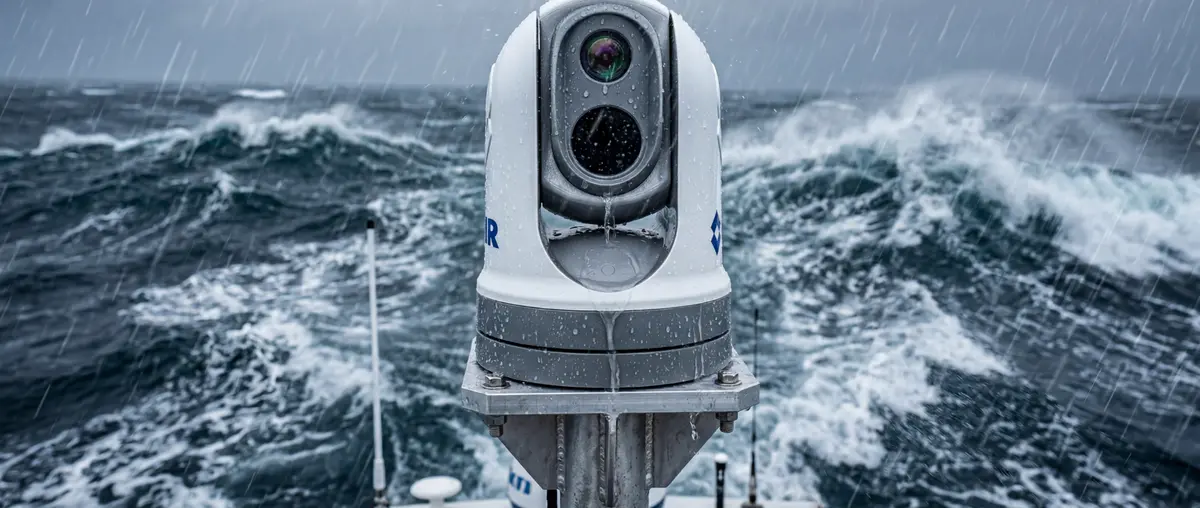
Teledyne FLIR Marine has introduced the M364C-USV, a multispectral camera system developed specifically for autonomous, remotely operated and uncrewed surface vessels. The unit combines thermal and low-light visible imaging with reinforced hardware and synchronised metadata intended for navigation, obstacle detection and remote mission control.
The camera builds on FLIR’s established marine imaging platform but adds interfaces and software features aimed at autonomy stacks rather than a human-operated bridge alone. That includes low-latency control, frame-aligned video and metadata that can be consumed by sensor-fusion and mission-management software.
Thermal and visible channels are aligned
The M364C-USV combines thermal imaging with a visible-light camera so an autonomous system can compare information from two different parts of the spectrum. FLIR says the channels are aligned, helping software associate a heat signature with the corresponding visible object without introducing unnecessary positional error.
That matters when glare, haze or darkness makes one sensor type less useful than the other. A multispectral view gives autonomy software more evidence before it classifies an object or recommends a manoeuvre.
Metadata is designed for machine use
FLIR has engineered the camera to deliver synchronised metadata with the video stream, allowing external software to understand orientation and other sensor information alongside the imagery. This is different from a conventional helm camera, where the primary user is a person looking at a screen.
For autonomous navigation, timing and alignment are critical because the decision system may be combining camera data with radar, AIS, lidar or other sensors. A delay or mismatch between those feeds can reduce the quality of obstacle detection even if each individual sensor performs well.
The hardware is built for persistent operation
The M364C-USV and longer-range variant are designed for repeated use on vessels that may operate without crew continuously watching the equipment. Reinforced mechanics and a marine-rated housing are intended to support that duty cycle in saltwater, vibration and changing weather conditions.
Reliability becomes especially important when a remote operator cannot simply walk outside and inspect a camera. Autonomous and remotely operated craft therefore need sensors that are easy to monitor, diagnose and integrate into maintenance routines.
Autonomy technology may move into recreational yachts
The immediate target market is uncrewed and autonomous vessels, but the same sensing technology could influence future recreational-yacht assistance systems. Collision warnings, remote watchkeeping and advanced night navigation all benefit from better aligned thermal and visible data.
Luxury yachts are unlikely to become fully autonomous simply because a new camera exists, but owners may see more automotive-style assistance at the helm. The M364C-USV shows how the sensor layer needed for that transition is becoming more specialised and software-ready.