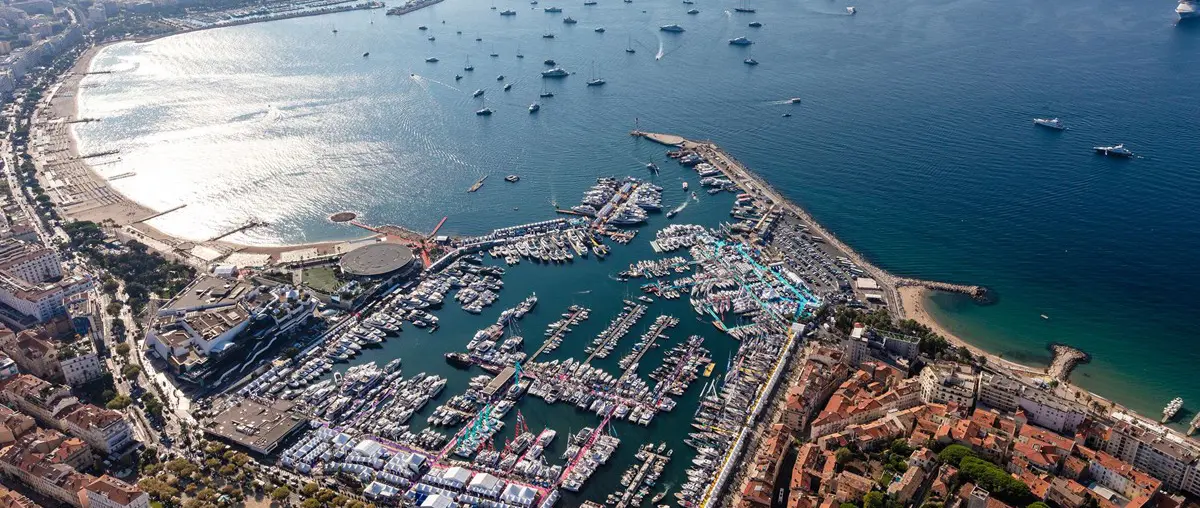
Teledyne FLIR Marine is using the 2026 Cannes Yachting Festival to demonstrate a group of thermal-imaging products aimed at improving situational awareness on yachts. The display includes the M460 fixed-mount thermal camera, the M364C thermal camera and the portable Ocean Scout Pro handheld monocular.
Thermal imaging has moved steadily from specialist commercial use into leisure yachting because it adds a different layer of information from conventional visible-light cameras. It can help a helm team detect objects, people or coastline features in darkness and in some low-visibility situations.
M460 adds a fixed thermal view
The M460 is the fixed-mount element of FLIR’s Cannes display. A permanently installed thermal camera can be integrated into a yacht’s bridge or helm workflow, allowing the operator to call up a thermal view without needing to handle a separate device while navigating.
That is useful for larger cruising yachts that operate after dark, approach unfamiliar anchorages or spend long periods underway. Thermal imaging does not replace radar, AIS, charts or a proper visual lookout, but it can provide another independent source of information.
M364C and Ocean Scout Pro broaden the options
FLIR is also showing the M364C, a versatile marine thermal camera intended to support navigation, hazard awareness and security. Alongside it, the Ocean Scout Pro provides a portable option that can be used away from the main helm, including from a flybridge, tender or deck position.
The difference between fixed and handheld systems gives owners a practical choice. A permanently installed camera offers immediate integration into the yacht’s navigation environment, while a handheld unit can be moved to wherever the crew needs an additional view.
Thermal imaging becomes part of the modern helm
For luxury-yacht buyers, the important question is whether a thermal camera contributes useful information to the way the boat is actually operated. Owners who cruise at night, use remote anchorages or regularly manoeuvre in busy harbours are more likely to benefit from the technology.
FLIR’s Cannes presence underlines how safety electronics are becoming more integrated across the leisure market. As multifunction displays make it easier to present camera feeds at the helm, thermal imaging is increasingly becoming an option considered during specification rather than only as a later retrofit.
Safety still depends on layered information
No camera should become a substitute for proper watchkeeping, radar interpretation and safe-speed decisions. The strongest use case is as one more independent sensor that can help confirm what the crew believes it is seeing on other instruments.
For a production-yacht builder, that means thermal equipment should be considered as part of the complete navigation layout, including screen placement and control access. A good installation makes the extra information easy to use without distracting the operator.