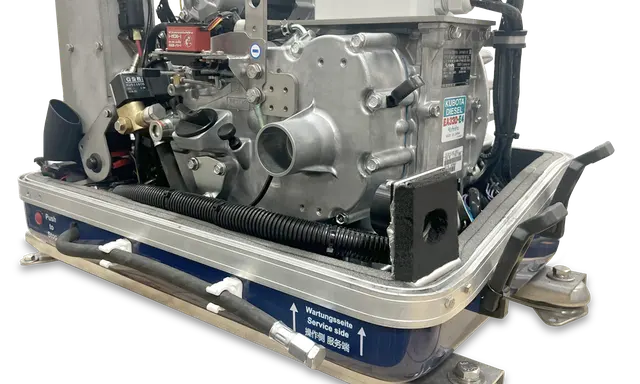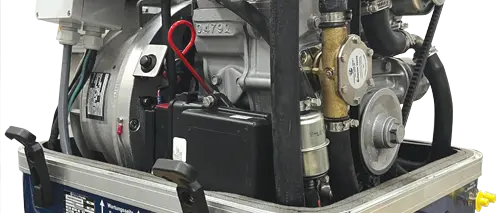
Fischer Panda’s 5.5e expands the company’s compact inverter-generator range with 5.5kW of output. It is aimed at yachts carrying larger air-conditioning, refrigeration and domestic electrical loads.
The unit uses a freshwater-cooled Kubota Z482 diesel engine and is packaged around the acoustic and space constraints of smaller yacht engine rooms. Fischer Panda quotes the same 54dBA at 23ft figure for the sound-shielded installation.
5.5kW expands the usable load envelope
The extra capacity gives owners more flexibility to operate several hotel systems at the same time. It can reduce the number of situations where air conditioning, battery charging and other appliances have to be deliberately sequenced.
A 5.5kW set may also support faster battery charging where the yacht uses a substantial lithium bank. The charger and inverter architecture still determines how much of the generator output can actually be used.
Compact diesel-inverter architecture
The inverter system allows the generator to produce stable AC output without relying solely on a traditional constant-speed arrangement. For builders, that can package useful hotel power into a smaller machinery envelope than some larger conventional sets.
The freshwater-cooled Kubota engine is a familiar type of marine auxiliary power source, which can help with serviceability. Routine access for filters, belts and cooling components still needs to be protected during installation.
Acoustic treatment matters at anchor
Fischer Panda quotes 54dBA at 23ft with the sound shield, an important consideration when the generator runs while guests are sleeping or using exterior spaces. The enclosure is only one part of the acoustic system.
Structure-borne vibration, exhaust silencing and ventilation paths can change the perceived onboard result substantially. Owners comparing installations should listen from cabins and deck areas rather than judging machinery-room sound alone.
A middle ground for modern yachts
The 5.5e sits between very small auxiliary sets and larger generators used for heavy hotel loads. That makes it relevant to owner-operated yachts whose systems have become more electrically intensive without reaching superyacht-scale consumption.
A proper energy audit remains the best way to decide whether 5.5kW is sufficient. Battery capacity and charging strategy can materially change how often the generator has to run and at what load.