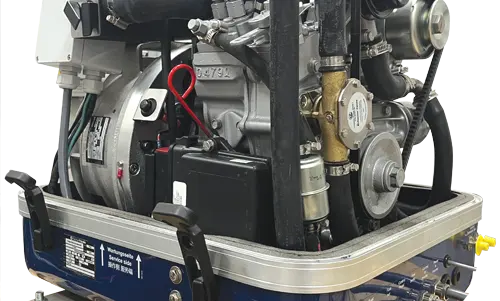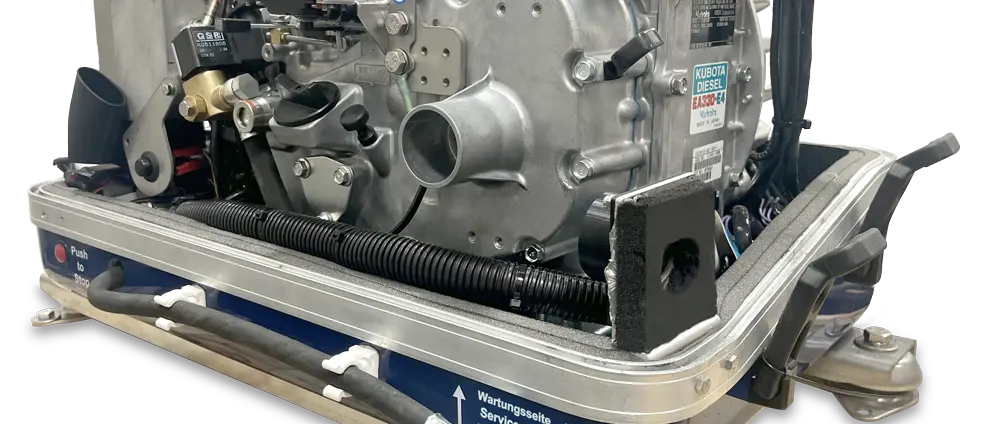
Fischer Panda has added the 3.5e to its marine generator range for boats that need dependable AC power but have limited machinery space. The company lists 3.6kW of AC output in a compact inverter package.
Fischer Panda also quotes 54dBA at 23ft with the full sound shield, targeting air conditioning, refrigeration, navigation and domestic loads on smaller yachts. The product is designed around moderate hotel demand rather than large simultaneous consumers.
Compact output for tight spaces
The 3.5e uses inverter technology so stable AC power is not tied to a simple fixed-speed generator architecture. That allows the package to focus on compact installation and efficient response to varying onboard demand.
Low height and a small footprint can matter on yachts where the genset must fit below cockpit furniture or beside propulsion machinery. Service access still needs to be preserved when deciding where the unit will sit.
Changing loads suit inverter control
A yacht rarely consumes the same amount of power all day because refrigeration, battery charging and climate systems cycle in and out. A smaller inverter generator can therefore be attractive when peak demand is occasional.
The electrical design should still account for compressor starts and battery-charger demand. A realistic load schedule is more useful than simply adding together every appliance rating on the boat.
Noise is part of the installation
The published acoustic figure depends on the sound-shielded package, but exhaust routing, anti-vibration mounts and engine-room ventilation still influence what owners actually hear. Installation quality therefore remains as important as the generator specification.
Structure-borne vibration can travel surprisingly far through a lightweight yacht if mounts and surrounding panels are poorly designed. Exhaust water separation and intake noise can also affect perceived comfort at anchor.
Sizing should follow real demand
The 3.5e is intended for moderate hotel loads rather than large simultaneous consumers. It is likely to suit yachts where batteries absorb short-duration peaks and the generator mainly covers sustained demand and recharging.
Owners should calculate continuous and start-up loads before selecting a generator size. Choosing too large a unit can be inefficient, while choosing too small can lead to constant load management and longer running hours.