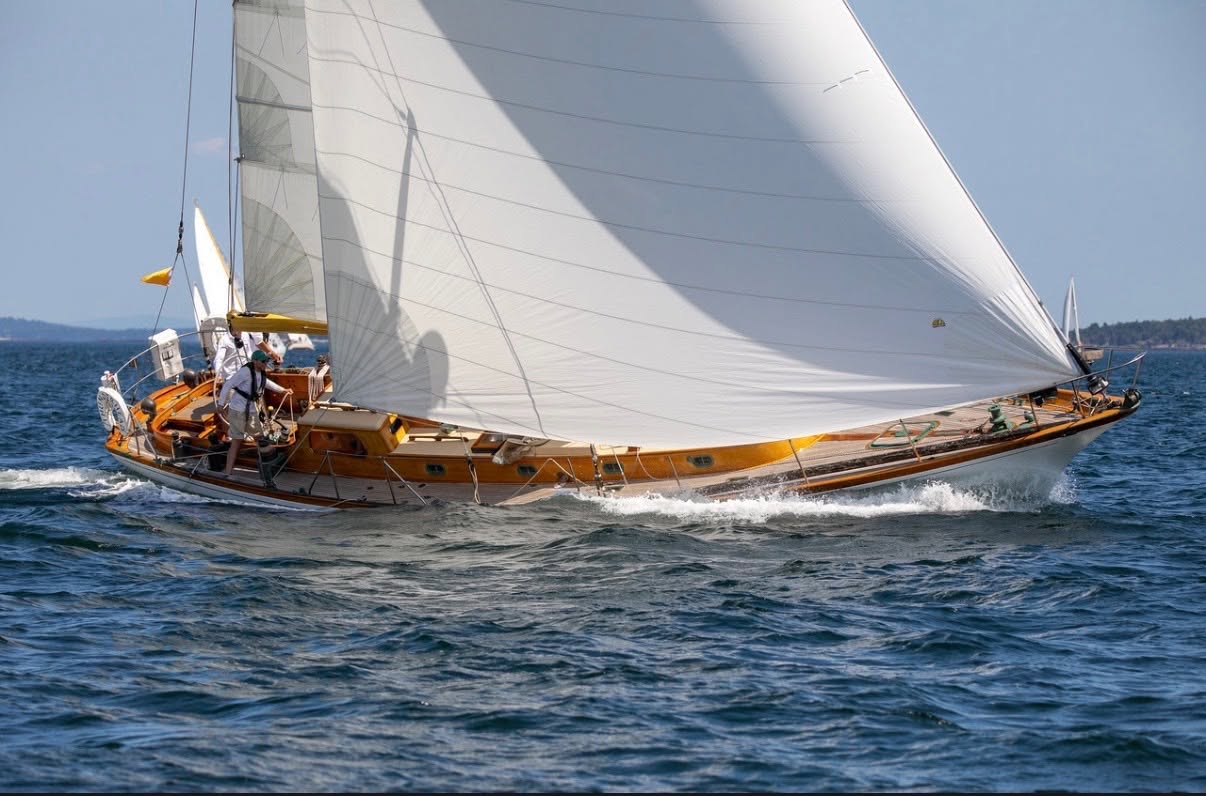
Doyle Sails' Salem loft has reviewed its 2026 northeastern United States racing season in a discussion with the Classic Yacht Owners Association, identifying results for several yachts in the 14-to-15-metre class and announcing winter sailmaking work for the 50-foot ACOR. The November report is particularly relevant to owners of traditional and Spirit of Tradition sailing yachts because it connects race results with the continuing maintenance and development of sail inventories. It also shows how a regional loft can use the end of a competitive season to prepare for another rather than treating a sail purchase as an isolated transaction.
Results in the Spirit of Tradition division
Among the boats identified by Doyle is Blackfish, the Taylor 49 sailed by Carolyn Grant Zarrella. The yacht won the Spirit of Tradition division at the Opera House Cup and subsequently took the corresponding title in the Massachusetts district of the Classic Yacht Challenge Series. A 49-foot yacht falls within the length range that Luxury Yacht Guide covers, and the boat provides an example of contemporary sailing performance within a traditional visual vocabulary.
The loft associates the results with an inventory built in 2025 from designs first developed in 2017 and subsequently reworked by Will Hundahl. That is an interesting detail because the development of a successful sail inventory does not necessarily begin with a completely new set of design assumptions. Experience of a particular yacht can be carried forward while the actual geometry and construction are reconsidered. The reported results do not establish the isolated contribution of the sails to the yacht's performance, which also depends on its preparation, crew and conditions.
A new genoa for Thunderhead
Doyle reports that Thunderhead, Stephen Ross's 49-foot Philip Rhodes design, added a genoa designed by Robbie Doyle during the season. The yacht had finished fifth in Classic C at the Eggemoggin Reach Regatta in the previous two years and won that class in 2026 by more than six minutes on corrected time. The report also identifies Thunderhead as the leading boat in the Classic division of the Maine district.
A genoa is a substantial component of a yacht's sail inventory, with its dimensions and shape affecting the way the boat develops driving force and interacts with its other sails. On a classic yacht, a new sail needs to be considered in relation to the existing rig and deck arrangements. Modern sailmaking methods do not remove the need to establish the appropriate loads, attachment details and range of use for the individual boat. The successful racing season provides a reason to examine that process, without treating one race result as an engineering test of the sail alone.
Hopgrasser and the contemporary fleet
The Salem review also identifies Hopgrasser, raced by Drew and Mackenzie Lyman, as the winner of the Contemporary division in the Maine district. Doyle explains that the loft designed the original STRATIS sails for two LM46 yachts, including this example. The approximately 46-foot class falls within the lower part of the luxury yacht range, where a relatively compact platform can still be the subject of extensive individual sail development.
Different yacht designs and racing divisions should not be assessed as if they presented identical engineering requirements. A sail developed for a contemporary design may need to address a different relationship between displacement, rig characteristics and the way the crew handles the boat. The value of a loft familiar with several examples of a design lies partly in the opportunity to accumulate relevant experience. Each yacht's actual condition and configuration must nevertheless be established before applying that experience to a new commission.
Isobel returns to a class podium
The review describes a further result for Todd Lalumiere's Stephens Waring-designed Isobel, which received a new jib during the season and placed third in the ten-boat Spirit of Tradition B class at the Eggemoggin Reach Regatta. Doyle identifies this as the yacht's first podium at that regatta since 2018. The result illustrates the range of outcomes reported by the loft rather than implying that every project produces an overall race victory.
For owners, a sustained competitive programme can provide useful information about the performance and handling of a sail inventory. Records of conditions, crew observations and equipment changes are valuable when discussing future work with a sailmaker. Racing results can form part of that record, but they need to be interpreted with the boat's wider operation in mind. Changes in the fleet, weather and race management can influence finishing positions independently of any new equipment.
Preparing sails during the winter
The loft explains that much of its inspection, washing and repair work takes place during winter while yachts are under cover. That timing allows owners to address deficiencies identified during the preceding season without interrupting their next intended period of sailing. It also gives the sailmaker an opportunity to examine the actual condition of components rather than relying exclusively on a description supplied by the crew.
A useful service programme begins with an accurate inventory of the sails and their intended functions. An owner should establish which items are normally used for cruising, racing or reserve purposes and identify any changes in their behaviour over the season. The appropriate treatment depends on the construction and condition of each sail. Not every example can be restored to the same performance through washing or repair, and a professional inspection may identify reasons to retire a particular item.
Design work ahead of spring
Doyle identifies winter as an important period for designing and constructing new sails for delivery before the next sailing season. This is particularly relevant to boats with bespoke rigs or arrangements that cannot be addressed through a standard replacement. Measurement, design development, construction and fitting all need to be coordinated around the intended commissioning date of the yacht.
Owners planning extensive work should communicate any concurrent rig alterations to the sailmaker. A new sail specified for the existing arrangement may not be appropriate after changes to spars, fittings or sail-control equipment. Coordination between the yard, rigger and sail loft helps prevent individual projects from being developed on incompatible assumptions. A delivery target is most useful when it accounts for the work required before and after the sail itself reaches the boat.
A new inventory for ACOR
The most specific future project identified in the release is ACOR, a 50-foot cold-moulded daysailer designed by Stephens Waring and constructed by Brooklin Boat Yard. Doyle says the yacht will receive a complete new inventory for the forthcoming season. The announcement identifies it as a Spirit of Tradition project, drawing on experience developed through the loft's work with other boats.
A full inventory provides a different design opportunity from replacing a single worn sail. The relationship between the individual sails can be addressed as a coordinated programme, taking account of the expected conditions and the intended operation of the yacht. The official announcement does not identify the final cloth specifications, dimensions or delivery date of each component. Those details remain matters for the parties involved in the project. It is therefore appropriate to describe the inventory as work planned for the new season rather than as a completed installation.
Supporting traditional construction
Cold-moulded construction uses layers of material arranged to form a structural shell, and the specific properties of a yacht built in this manner depend on the design and building method employed. For a boat such as ACOR, the sail plan is one component of a much wider relationship between hull form, rig and deck equipment. The traditional appearance of the yacht should not be taken as evidence that its systems are identical to those of an older vessel.
The Spirit of Tradition category provides a useful context in which established design influences can coexist with contemporary materials and construction. A sailmaker developing an inventory for such a boat must address the actual yacht rather than select equipment merely because its appearance is consistent with the category. The resulting design can preserve the desired character while accommodating the engineering requirements of the vessel.
The value of an owner association
The Classic Yacht Owners Association, founded in 2015, describes its purpose as supporting cooperation among owners and people involved in the preservation, operation and racing of classic sailing yachts. Doyle is identified as a Diamond Partner. Its published conversation with the association provides a direct account of the loft's work and identifies particular projects and results.
That relationship is relevant because specialist knowledge often needs to be shared between several organisations if classic yachts are to remain active. Yacht yards, sailmakers, racing organisers and owners have different responsibilities but can benefit from exchanging relevant experience. The loft's annual review provides an example of how a regional sailing community can maintain a continuing connection between a racing season and the technical preparation that follows it.
Looking toward the 2027 season
The Salem report identifies Blackfish, Thunderhead, Hopgrasser and Isobel among the boats whose results informed its review of the year. The planned ACOR inventory provides a concrete indication of future work. For owners of 12-to-24-metre sailing yachts, the central lesson is the importance of coordinating sail inspection, replacement and rig work with a realistic preparation schedule.
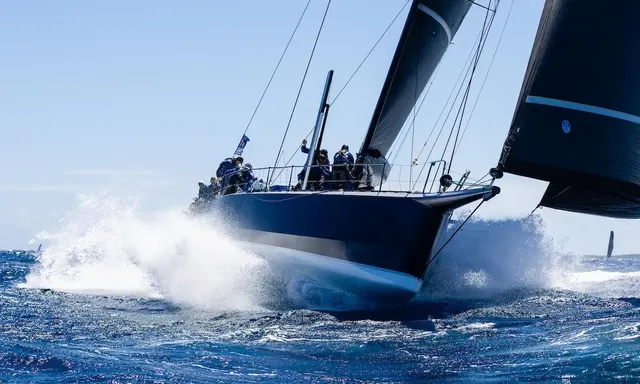
Luxury Yacht Guide has not independently assessed the sails or attributed particular race results to individual equipment changes. The results and project descriptions are reported by Doyle Sails in its official account, published with the association's permission. The accompanying sailing image comes from that source. Owners considering work for the 2027 season should obtain an assessment of their own yacht's inventory and agree the relevant technical and delivery requirements directly with their sailmaker.
Related Luxury Yacht Guide reporting
- Hallberg-Rassy Marks 27 Years of Atlantic Rally Support
- Incidence Sails Names Dolphin Sails Exclusive UK Partner for DFi Membrane Technology
- Dufour Sets Out a Winter Sailing Checklist for Cruising Yacht Owners
- Harken Presents New Staysail Furling and Sail Control Systems at METSTRADE
Primary reporting and image credit
Primary source(s): https://www.doylesails.com/2026-northeast-season-wrap-classic-wins-and-a-busy-winter-ahead-at-doyle-sails-salem/. Doyle Sails / Classic Yacht Owners Association; official season review image; respective photographer copyright retained. Image is used only for correctly attributed factual editorial coverage and never represented as open-licence stock photography. Original source image.