A remarkable lead interrupted by a very practical problem
Corentin Horeau was still setting the pace in the IMOCA fleet of the 2026 Route du Rhum on Saturday 7 November, but his morning report was hardly a picture of effortless speed. According to the event organiser’s same-day account, a hatch had come loose and the sail storage compartment on his yacht MACSF had taken on water. The solo skipper spent around two hours removing the water and then dealt with the displaced panel. For a sailor defending a significant Atlantic race lead, that is the kind of interruption that can change priorities immediately, even when the official leaderboard continues to look favourable.
The organiser reported an advantage of roughly 265 nautical miles over the nearest IMOCA rival at the time of its Saturday bulletin. That is a snapshot, not a guaranteed margin for the rest of the race. Weather systems, sail selection and the condition of the boat can rapidly change the gap. Horeau's immediate task was to resume effective sailing after the incident while keeping a watch on what remained secure. In this episode the racing drama is unusually tangible: a fast 60-foot yacht, a water-filled compartment and one person responsible for restoring order far from port.
What the official update actually establishes
The Route du Rhum's 7 November report describes the sail-locker flooding and says the skipper recovered the hatch. It does not publish an independent structural survey, a full list of damaged equipment or a definitive mechanical diagnosis. Reports of a compartment taking on water should not be exaggerated into an assertion that the yacht's main hull was breached or that sinking was imminent. The precise opening involved, the water volume and any subsequent inspections have to be established from the team's own later technical statements, not inferred from an alarming headline.
The distinction is worth making because offshore racing invites dramatic summaries. A sailor can be seriously inconvenienced by water where sails and equipment are stored without the same failure having occurred as a puncture through the hull below the waterline. The incident may affect sail handling and speed, and a lone sailor faces physical effort in clearing it, but the available evidence supports only the reported facts. For readers who follow marine technology, this is a useful example of how rigorous reporting can remain compelling while separating a confirmed fault from possible consequences.
MACSF belongs squarely in the 12–24m sailing story
The MACSF entry is an 18.28-metre IMOCA monohull according to the class association's published specifications, comfortably within Luxury Yacht Guide's 12–23.99-metre editorial coverage. This is not a conventional family cruising yacht, and the class's design priorities are unusually focused on solo ocean racing. Even so, the subject is directly relevant to readers who appreciate modern sailing design, seamanship and the systems needed to manage a substantial yacht with limited hands. The decision to include the story rests on the boat's actual size and type, not merely on the prestige of the transatlantic event.
The yacht was developed as a high-performance IMOCA and has been prepared for Horeau's solo programme. In its pre-race communication, sponsor MACSF described a substantial preparation period intended to consolidate and lighten the boat ahead of his debut in this edition of the race. Those are the team's reported objectives, not verified results from an independent engineering test. The latest difficulty illustrates why the tension between weight reduction, reliability, serviceability and race pace remains central to campaigns in which almost every operation must be performed by the skipper.
How Horeau built such a large advantage
The class's progress during the opening week had been shaped by routing decisions as much as pure boat speed. The IMOCA organisation published comments from former Route du Rhum class winner Thomas Ruyant, who praised Horeau's choices through the shifting wind corridors around the Azores. Ruyant explained that competitors seeking other routes had encountered lighter air while the MACSF skipper continued to make useful progress. Those comments form an expert interpretation of the race rather than a claim that a single tactical decision determines the final result.
In offshore racing, a boat can travel fast and still lose ground if it is taking a longer or less favourable route. Conversely, a sailor who manages an awkward transition between weather systems can establish a commanding position without having the highest instantaneous speed in the fleet. The resulting gap may look decisive in a simple table, but distances to the finish are calculated at fixed reporting times and remain sensitive to weather changes. Horeau had gained a valuable advantage; he had not already won a race still underway across the Atlantic.
The work of bailing out while sailing alone
Removing water from a sail compartment is not a routine office-style repair. On an offshore yacht, loose gear, movement, exposure and the need to monitor navigation create competing demands. The organiser's account records a two-hour effort, an indication of how much time can disappear when an apparently small failure occurs during active racing. Unlike a fully crewed yacht, the skipper must balance the immediate task against steering, watchkeeping and the requirement to remain rested enough for what follows. A setback can impose a secondary cost even after the visible fault is corrected.
It would be irresponsible, however, to pretend that a short race report supplies a complete step-by-step procedure for dealing with water ingress. The correct response aboard any yacht depends on the location, severity, vessel systems and safety equipment. Recreational yacht owners should not copy techniques from a solo racing incident without reference to their own vessel's procedures and competent crew. The lesson for the broader yachting audience is about design for inspection, ready access and operational resilience, rather than admiration for improvised emergency action.
The human side of first-time IMOCA pressure
MACSF's pre-race profile identifies this as Horeau's first Route du Rhum in an IMOCA. The insurer and team also highlight his earlier success in the Solitaire du Figaro in 2023. Moving between campaigns is not merely a progression in boat dimensions: singlehanded ocean sailing requires decisions about sleep, timing, technical faults and risk that are intensified when the skipper is alone for long periods. His position at the front of the IMOCA fleet is therefore notable, but any claim that he has already secured a definitive breakthrough would be premature.
Experienced sailors often make solo racing look clean and simple from shore because position reports reduce complicated work to a dot on a map. The hatch incident is a reminder that even an apparent front-runner is managing a large number of simultaneous responsibilities. The sponsor's earlier emphasis on boat familiarity and confidence takes on particular meaning here. A skipper who knows the exact layout of compartments, fastenings and equipment is better positioned to identify a problem, though that knowledge cannot remove all risk. Race leadership and vulnerability can coexist in the same hour.
The fleet remains a moving target
The Route du Rhum departed Saint-Malo on 1 November 2026, with the IMOCA category listed among the race's six classes. The event's live classification is the appropriate place for readers to see standings at a stated time. At the Saturday reporting point used for this article, the organiser's narrative described Horeau retaining a substantial advantage, while other entries continued to negotiate the Atlantic systems. It is important not to mix figures from different leaderboards or timestamps as though they represented one simultaneous snapshot.
The sailing world can also confuse the first vessel expected to reach Guadeloupe with the first in the IMOCA category. The fastest multihulls belong to different classes and their progress does not determine a monohull result. For a 60-foot IMOCA story, the relevant comparison is with other IMOCA skippers. Any mention of an Ultim yacht approaching the line belongs to broader race context, not a direct result for MACSF. Separate categories matter both for racing accuracy and for maintaining Luxury Yacht Guide's own distinction between yacht lengths.
Technology is only as strong as its practical details
Contemporary offshore raceboats attract attention for foils, carbon structures, routing systems and sophisticated sail inventories. The MACSF episode directs attention to a humbler area: openings, closures, compartment management and the skipper's ability to access what has gone wrong. Reliability is an integration problem. A fast boat still relies on fixtures that stay in place under repeated loads, and a fault must be detected before it creates an avoidable chain of difficulties. Those principles also apply, in different form, to well-equipped cruising yachts.
For owners of 12–23.99-metre vessels, the useful question is not whether a yacht resembles an IMOCA, but whether critical spaces can be inspected and managed. Crew familiarisation, secure storage, sensible alarm design and access to pumping equipment deserve attention alongside comfort and performance. This article is not attributing a specific design deficiency to MACSF: the organiser has not issued the necessary engineering evidence. It is identifying broader operational questions raised by a reported event. Technical confidence rests on the actual details of an individual vessel, not on marketing language.
What comes next before Pointe-à-Pitre
By the organiser's Saturday account Horeau had dealt with the immediate flood and was still leading, but the conditions ahead could change. A solo skipper approaching the Caribbean must continue to manage the yacht's condition, route and available energy. The fact that a lead has grown during one part of the Atlantic does not mean it will survive every later weather transition. Today's reported margin is a reflection of completed progress and estimated remaining distance, not a forecast of the result. Any claim about finish time or final order should await official confirmation.
The appropriate next checks are further bulletins from the Route du Rhum and the MACSF team, ideally paired with a time-stamped classification. That is particularly important if more detail emerges about the hatch, any repairs or the boat's condition. Readers may be tempted to compare this setback to accidents elsewhere in the fleet, but such comparisons should consider the different equipment and factual circumstances. For now the substantiated story is already substantial: a singlehanded skipper maintained a remarkable IMOCA lead after an unexpected and laborious problem aboard an approximately 18-metre racing yacht.
An incident that makes the numbers real
Race tables offer a useful overview, but they compress the experience of ocean sailing into rankings, headings and miles. Saturday's MACSF report brings the work behind those numbers into focus. A boat sailing alone across the Atlantic can be fast enough to establish a commanding advantage while still requiring hours of physical effort to deal with a failure. That combination is one reason the IMOCA class fascinates both serious sailors and owners of very different luxury yachts: it makes design and judgement visible under pressure.
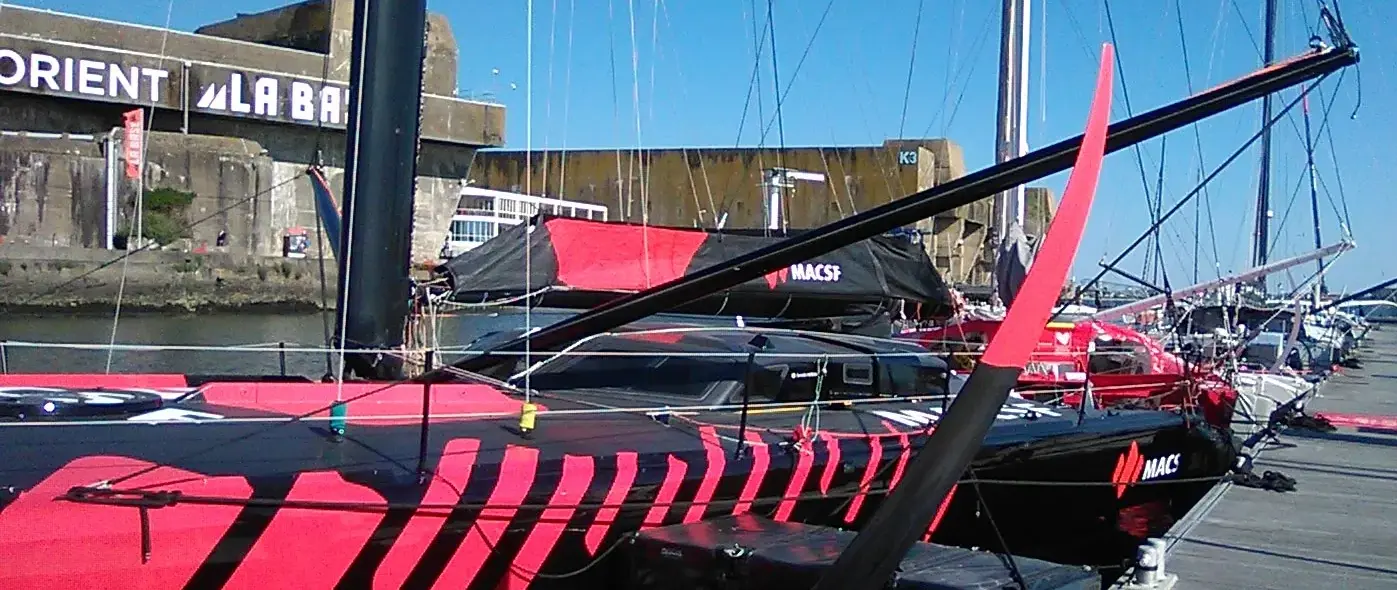
Luxury Yacht Guide will continue to treat this as an evolving event. The position margin belongs to the 7 November bulletin, the incident description belongs to the race organiser's published account and the background on preparation belongs to sponsor MACSF. None of those facts establishes an ultimate outcome. The editorial value is in documenting a specific, verifiable moment from a yacht within our length category, with a photograph of the actual boat taken earlier in 2026. Future results should be reported separately when the official race confirms them.
Verified source material
IMOCA class: MACSF vessel profile, design and length.
- Route du Rhum organiser, 7 November incident bulletin
- Official Route du Rhum classification
- MACSF sponsor: Corentin Horeau's first IMOCA Route du Rhum
- IMOCA: Thomas Ruyant on Horeau's early performance
Photograph: Actual IMOCA MACSF of Corentin Horeau at Lorient, 6 April 2026; by Jug81, Wikimedia Commons, CC BY-SA 4.0, resized and converted to WebP. The photograph does not depict the reported mid-Atlantic incident.