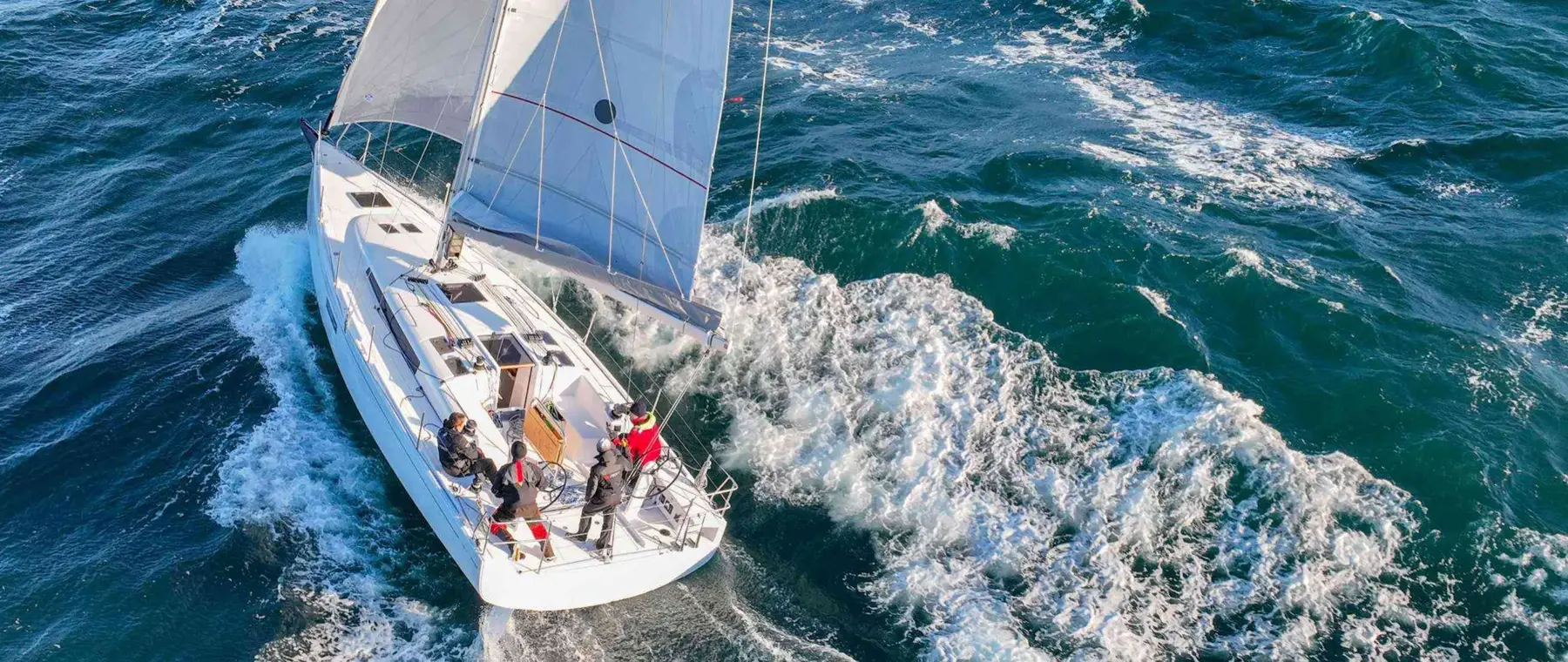
Beneteau owners made a visible showing at the 55th FIGAWI race weekend, with 14 yachts from the French builder competing across six divisions on the traditional Memorial Day passage from Hyannis to Nantucket. The 2026 event brought 108 boats to the start and delivered three podium finishes and four top-five results for Beneteau crews.
The significance of the result lies in the variety of boats involved. First performance designs lined up alongside Oceanis cruising models and older Beneteau generations, showing how a long-running production range can remain active in club and offshore competition years after individual models have left the catalogue.
A New England race with a broad fleet
FIGAWI began in 1972 and has developed into one of the Northeast United States' best-known sailing events. The 2026 race again combined serious competition with a strong social tradition, attracting performance yachts, family cruisers and multihulls to the waters between Cape Cod and Nantucket.
Conditions forced the race committee to think carefully about the mix of boats. With light easterly winds forecast to build toward Nantucket, principal race officer Andrew Seguin split the fleet between a 25.4-nautical-mile course for faster spinnaker boats and multihulls and a 19.5-nautical-mile direct crossing for the rest of the competitors.
Beneteau crews take three second places
Phoenix, a First 36.7 sailed by Dan Fellows, finished second in Division 3 Spinnaker and was one of the strongest Beneteau results in the racing fleet. In the non-spinnaker divisions, Saylavee, a Beneteau 311, placed second in Division 11, while Summer Wind, a Beneteau 45, took second in Division 7.
Those results came from very different generations and design briefs. The First 36.7 was developed with a clear performance emphasis, while the Beneteau 45 and 311 belong to cruising-oriented parts of the builder's history, making the combined podium record a useful illustration of how owner skill and preparation can matter as much as a model's original marketing category.
First and Oceanis models share the same racecourse
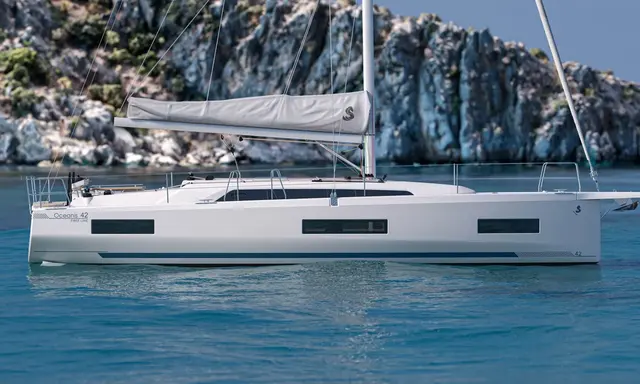
Beneteau says models represented across the 2026 fleet included the First 36, First 36.7 and First 40.7 together with Oceanis 45, 41.1, 38.1, 46.1, 31.1 and 42.3. That is a broad spread of ages and sizes, and it demonstrates the depth of the installed Beneteau fleet in North American sailing communities.
For owners, this kind of event can be more revealing than a manufacturer-organised demonstration. Boats are loaded, maintained and sailed by private crews in ordinary club-racing conditions, so results reflect not only design potential but also how practical the yachts remain after years of normal ownership.
Racing gives cruising boats another life
One of the attractions of events such as FIGAWI is that they allow cruising yachts to compete without requiring every owner to run a dedicated race programme. The broad division structure means families and club sailors can participate alongside more performance-focused crews, giving production boats another reason to remain active rather than being used only for cruising weekends.
That matters for resale and owner communities as well. A model with an active racing and cruising presence can retain a stronger identity long after production stops, supported by tuning knowledge, owner networks and a history of real-world results that is difficult to create through advertising alone.
What the 2026 result says about Beneteau ownership
Beneteau's 14-boat presence represented more than a single successful design. It showed an owner base willing to race boats from different parts of the company's catalogue, including models conceived primarily for comfortable cruising as well as those carrying the First performance name.
The three podium finishes are the clearest headline, but the wider value of the weekend is the evidence of continued use. Production yachts earn much of their reputation after they leave the factory, and a mixed fleet turning out for a 55-year-old offshore tradition says something about durability, owner enthusiasm and the ability of established designs to keep finding new roles on the water.
The race also shows why long-lived production fleets matter to event organisers. When owners keep older models active, class organisers gain depth and builders retain visibility without needing every participant to sail the newest design. That continuity can be especially valuable in regional sailing communities, where familiarity with a model often encourages new owners to race because tuning advice, sail inventories and experienced crews are already available locally.