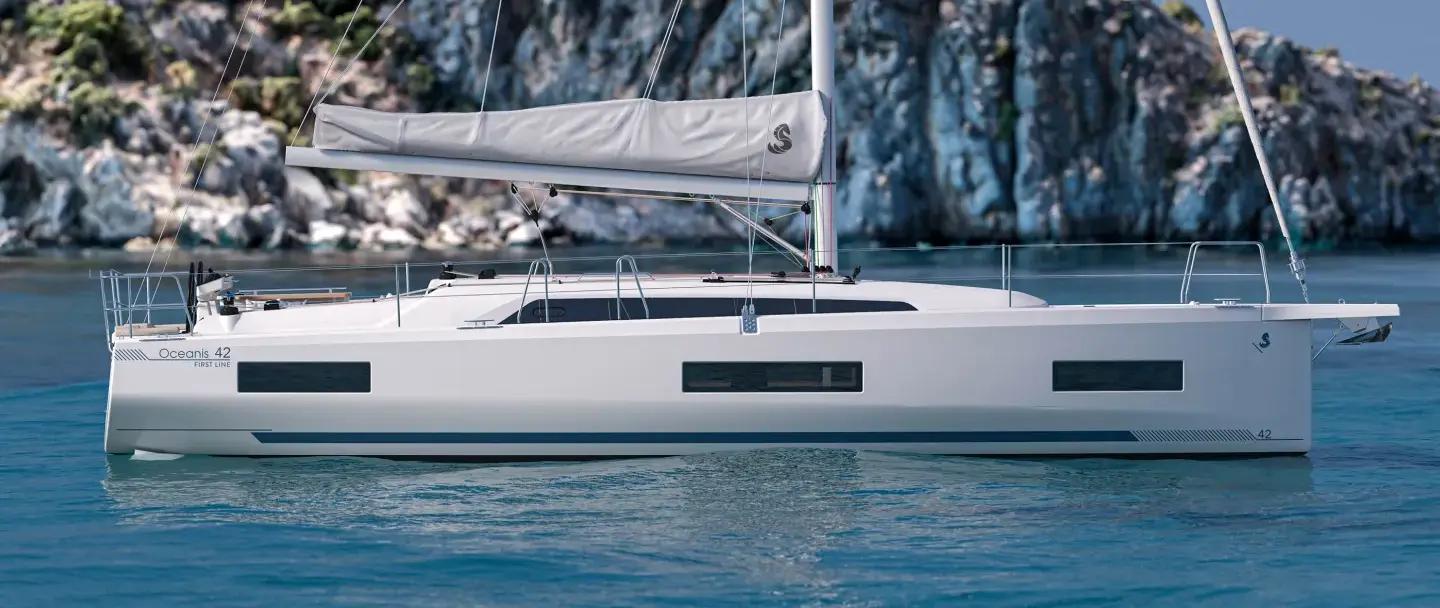
BENETEAU has published the full specification for its new Oceanis 42, a 12.86-metre sailing yacht with five accommodation layouts and two distinct galley configurations. The builder positions the model as the successor to the Oceanis 40.1, bringing a more configurable interior to the important forty-foot cruising category.
Marc Lombard Yacht Design is responsible for naval architecture and Nauta Design for exterior and interior styling. The combination puts recognised design teams behind a boat whose primary brief is to reconcile straightforward handling, useful performance and the varied accommodation needs of private owners and charter operators.
Five layouts address different kinds of cruising
The published layouts run from two cabins and one bathroom to a four-cabin, two-bathroom charter configuration. Between those ends of the range are three-cabin arrangements with one, two or three bathrooms, allowing buyers to choose whether sleeping capacity or privacy matters most to their usual crew.
The choice is more consequential than adding decorative options because the number of heads, berths and partitions affects storage and daily circulation. A couple cruising alone might favour the two-cabin plan and its larger shared spaces, while a family or charter operation may place a greater premium on separate accommodation.
Owners can choose the galley arrangement
BENETEAU offers an L-shaped galley at the base of the companionway or a linear version with an extended work surface. Both approaches keep food preparation integrated with life below deck, but they allocate the available floor area and usable counters differently for people cooking at sea or in harbour.
The L-shaped arrangement is described by the manufacturer as offering two large sinks, storage and 215 litres of refrigeration. A galley that can be used securely when a boat is heeling can be important on passage, although prospective owners should assess handholds, restraint points and actual movement aboard rather than rely on a brochure description.
Two cockpit configurations change aft-deck use
The open aft configuration makes the platform a continuation of the cockpit and provides a more direct connection with the water at anchor. A closed configuration introduces aft seats and a more enclosed area, creating another social zone near the helm while changing the way people move through the stern.
Those alternatives suit different cruising routines and warrant examination alongside dinghy handling, boarding and swimming plans. Owners who spend long periods at anchor may prioritise unrestricted access to the sea, while those regularly sailing with younger guests may value the extra seating and different cockpit boundary.
The rig has been revised for sail area
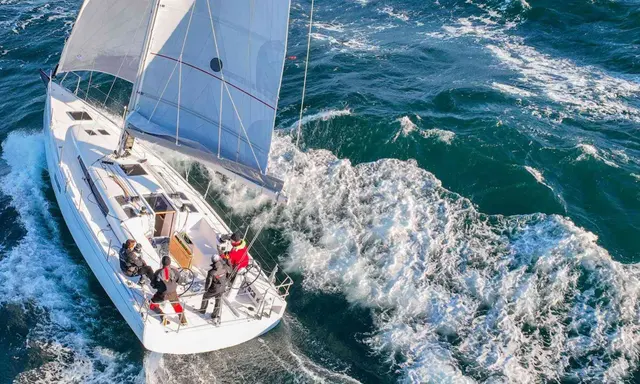
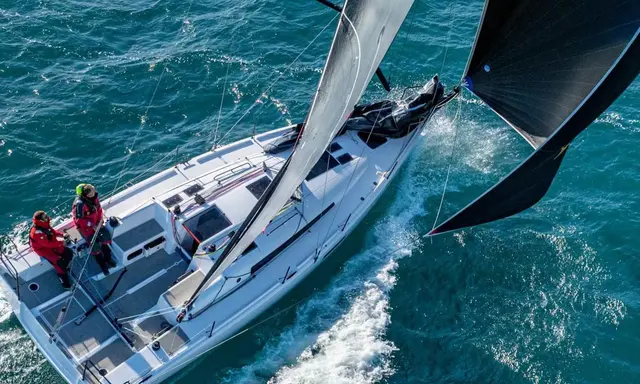
The yard says it has increased the mast height compared with the preceding arrangement, by 60 centimetres on the standard furling version and 30 centimetres on classic and performance rigs. The change is intended to add sail power while retaining a manageable operating package for the intended cruising audience.
Rig choice should be considered against crew experience, local wind conditions and the intended balance between cruising convenience and more active sail handling. The manufacturer gives a bridge-clearance figure of 18.72 metres, a practical number to check against bridges and marina approaches when planning a berth or cruising itinerary.
The dimensions establish the size of the new model
Official specifications give an overall length of 12.86 metres, a beam of 4.23 metres and a quoted dry weight of 7,985 kilograms. Draft varies from 1.68 to 2.25 metres across the published configurations, making keel choice especially relevant for shallow harbours or sailing areas with limited depth.
The figures also state fuel capacity of 195 litres, freshwater capacity of 235 litres and maximum auxiliary engine power of 45 horsepower. Tank volumes and engine output should be considered together with individual equipment and the intended passage plan, rather than interpreted as guarantees of range under every operating condition.
The saloon integrates a dedicated desk
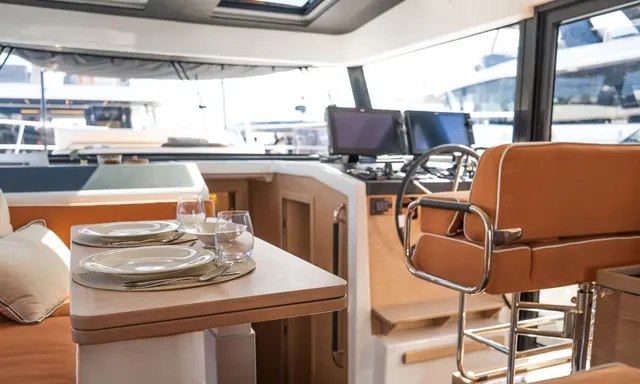
The interior includes a full-size desk facing the seating area, plus a bookshelf on the mast-foot bulkhead and a cabinet concentrating electrical controls near the companionway. These details differentiate the Oceanis 42 from yachts that allocate nearly all their saloon space to seating and a television.
Natural light, hull openings and three upholstery schemes named Ivory, Sunset and Pacific form part of the published interior offer. Such finishes influence the atmosphere, but the desk, electrical access and storage arrangements may have a greater bearing on how easily an owner lives aboard and keeps everyday equipment organised.
Connected ownership support is part of the package
The yacht is equipped with BENETEAU’s Seanapps service platform, which the manufacturer promotes as a way to connect with the boat and request maintenance or other services. The practical value depends on the installed equipment and service availability in the owner’s cruising area, so individual capabilities deserve confirmation before purchase.
By publishing five distinct layouts alongside rig and transom options, BENETEAU is giving buyers a number of meaningful decisions before choosing fabrics or minor fittings. The Oceanis 42 is therefore better assessed as a configurable cruising platform than as one fixed specification, with each proposed build matched to the owner’s expected crew and waters.