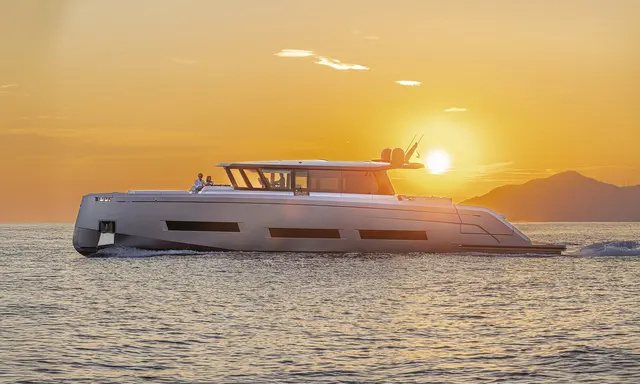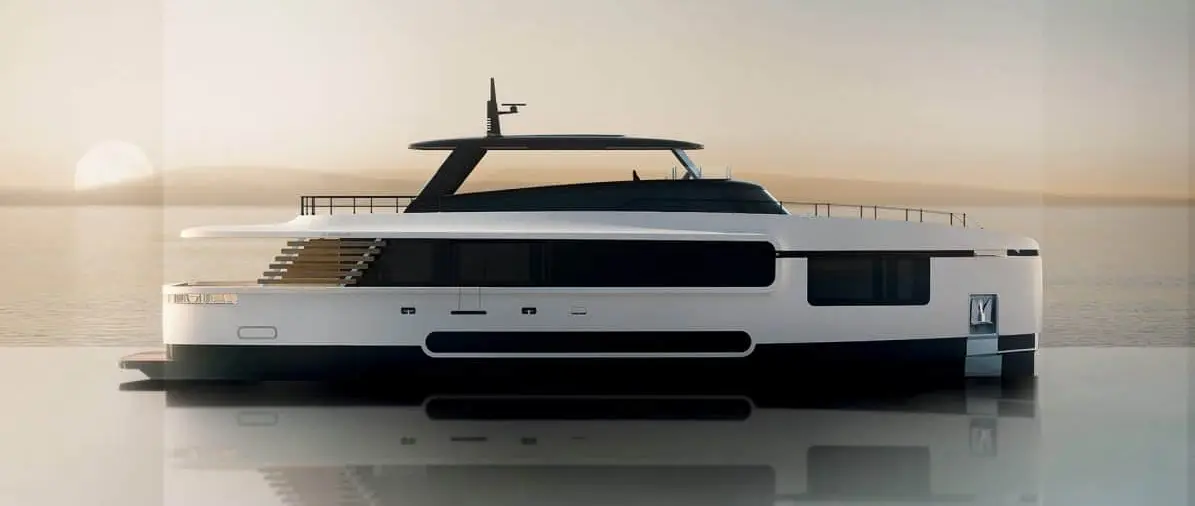
The Dual Mode hull is central to the concept
The Magellano 60 uses a semi-planing Dual Mode hull developed by Profjord with Azimut's research and development team. The concept is intended to retain stable, efficient behaviour over a wider range of speeds than a conventional planing hull.
Azimut publishes a maximum speed of up to 26 knots, but outright performance is not the model's only purpose. Its design brief also prioritises long stays aboard, predictable motion and economical operation at moderate cruising speeds.
HVO fuel adds a second efficiency lever
Azimut identifies the Magellano 60 as the first yacht in its range powered using HVOlution, a hydrotreated vegetable oil fuel produced from renewable raw materials. The fuel can reduce lifecycle emissions where certified supply is available.
Owners should distinguish lifecycle carbon claims from exhaust emissions during operation, because the two measures are not identical. HVO compatibility nevertheless offers a practical lower-carbon option without requiring a fully new battery-electric propulsion architecture.
Three cabins and a crew space support longer cruising
The 18.47-metre layout includes three guest cabins plus a separate crew cabin, making the model suitable for longer owner trips. A 5.15-metre beam creates useful interior volume while full-height windows bring daylight into the main-deck saloon.
Ken Freivokh is credited with the exterior styling, while Azimut handles the interior design. The result avoids an overt expedition appearance, packaging longer-range cruising ideas within a contemporary Mediterranean motor-yacht profile.
Twin MAN diesels keep the machinery conventional
Power comes from two MAN i6 engines rated at 730 horsepower each, allowing owners and service yards to work with a familiar diesel installation. Azimut publishes performance information across several speeds rather than relying only on a headline maximum.
The Magellano 60 therefore blends evolutionary and alternative approaches: conventional engines, a specialised hull and renewable-fuel compatibility. It shows how builders can reduce operating impact without requiring owners to adopt fully electric propulsion at this size.
Official sources: azimutyachts.com.