An all-weather cabin boat with a surprisingly open side
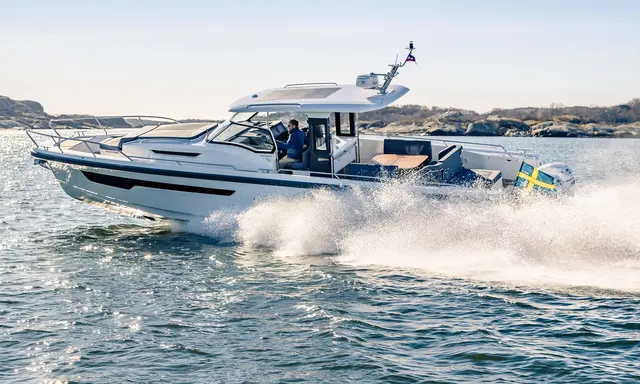
Axopar's 45 XC Cross Cabin combines a fully enclosed wheelhouse with the kinds of outdoor circulation and relaxation areas usually associated with a large open dayboat. The builder lists a length of 13.90 metres excluding the outboard engines and a 4.11-metre beam. Those figures place it firmly in the substantial premium-cruiser market, yet the design retains a purposeful, low-profile character rather than adopting the visual language of a traditional flybridge yacht. The idea is to keep movement and sea access simple without giving up proper shelter at the helm.
Sliding doors open the wheelhouse on either side, connecting the enclosed centre of the boat to the walkaround decks. Axopar also provides dual electrically operated canvas roofs, so owners can choose how much of the cabin remains protected from sun and weather. The resulting layout is particularly attractive for places where a morning passage can be cool and breezy while the afternoon anchorage is hot. Reconfiguration becomes part of the cruising experience, although door and roof mechanisms should be operated in the conditions recommended by the builder.
Fold-out balcony doors amidships create additional living space at anchor and let the indoor seating area feel less separated from the water. This is not quite the same concept as the stern terraces of a conventional open cruiser, since the access is closely connected to the wheelhouse's own social zone. Guests can remain sheltered while enjoying an expanded view and more immediate contact with their surroundings. Buyers should consider how the openings are secured for travel, and how safe movement is maintained when the boat is busy.
The new twin-engine choice changes the specification
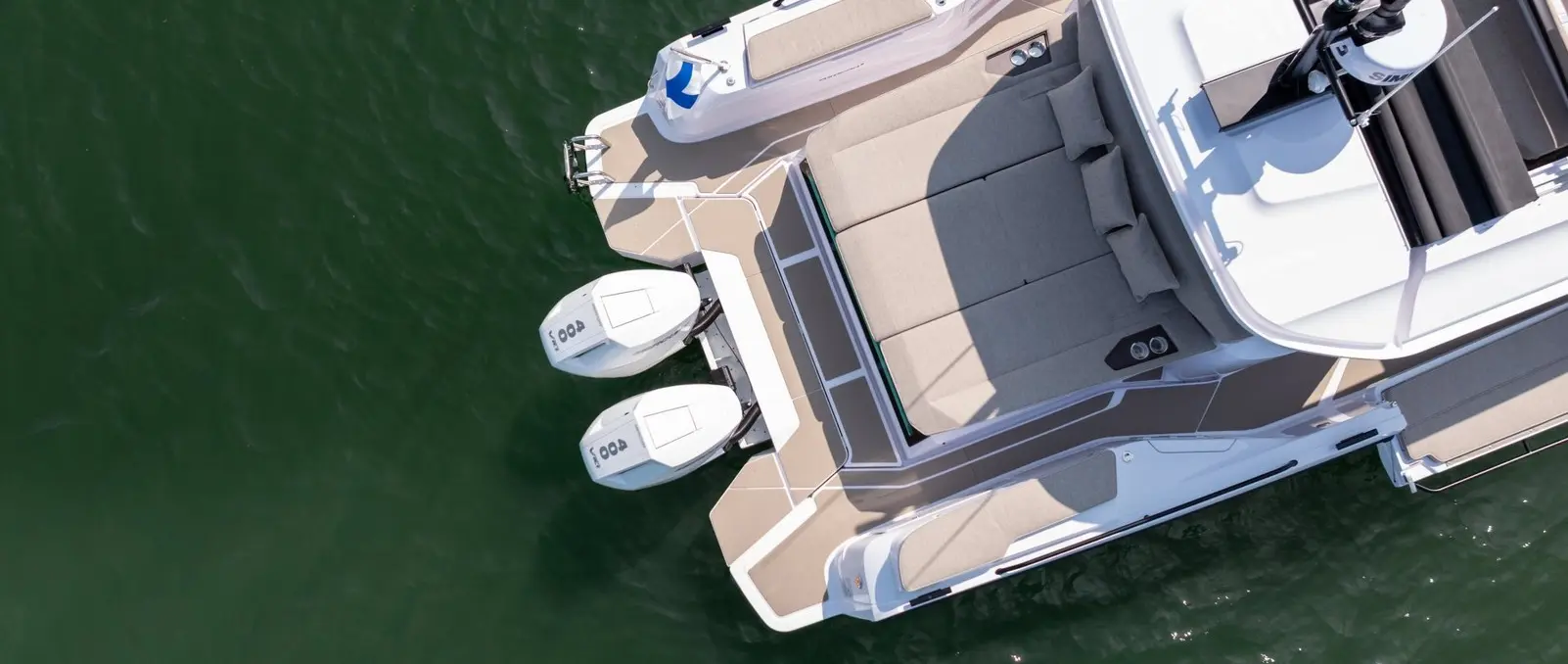
For the 2026 model year, Axopar introduced a twin Mercury Verado V10 425-horsepower option to the 45 range, creating an alternative to three-engine installations. The official specification also lists triple 300- and triple 350-horsepower arrangements. This is a genuine powertrain choice, not merely a change in the name on a badge. It affects the appearance and working space at the transom as well as service logistics, so the best configuration will depend on the owner's cruising programme and local engine-support network.
Axopar publishes a maximum speed capability of up to 50 knots for the 45 XC range, but that upper figure must not be applied indiscriminately to every installation, loading condition or hull. The builder's own figures note that performance varies with weather, equipment and load. It also provides a reference fuel-consumption figure of 4.1 litres per nautical mile at 25 knots with triple 300-horsepower Mercurys. That is a specified reference configuration and should not be presented as a verified consumption figure for the twin-425 setup.
The 45 XC uses Axopar's twin-stepped V hull philosophy, designed to combine a sharp entry with responsive handling. The builder lists a fuel capacity of 1,390 litres, useful information for planning but insufficient to establish range without a realistic consumption profile. Owners considering repeated long legs should also look at engine availability, fuel reserves and the practical steps needed to reach service points away from major marinas. A boat with impressive high-speed ability is at its best when that ability is managed with sensible operating margins.
Living aboard without losing the dayboat character
One of the clever features of the Axopar 45 XC is the flexibility of its overnight layout. The standard forward cabin accommodates two people, with an optional aft cabin bringing the stated sleeping arrangement to two plus two. That distinction is important because the extra sleeping space is not guaranteed on every example. A buyer planning family weekends should check whether the aft cabin is fitted, inspect access and ventilation, and consider how its installation changes the uses of the rear deck.
The forward cabin includes a seating arrangement that can transform into sleeping accommodation, along with storage and an enclosed head and shower. Those details help the boat support short coastal trips beyond a single day on the water. Still, this is an adventure-oriented crossover design rather than a floating apartment with multiple permanently separated suites. Comfort will depend on how many people travel, how much equipment they carry and whether the day's activities leave the cabin tidy enough to become a quiet space at night.
Within the wheelhouse, a U-shaped lounge, movable table and wet bar establish a social centre protected from the elements. The wet bar includes a refrigerator, with cooking equipment among the choices available to buyers. The seating can serve refreshments and conversation during an anchorage while the helm area remains close at hand for a change in weather. This blend of practical equipment and seating is one reason the XC is especially relevant to boaters who do not want to choose between an enclosed pilothouse and a hospitable dayboat.
Practical questions behind the versatility
Axopar's published design also gives attention to secure walkaround decks, access to the bow and dedicated fender storage. These are not glamorous headline features, but they can make a large difference when a couple operates the boat without a full-time crew. Passengers need a reliable path from cockpit to foredeck, and lines and fenders must be available without unpacking half the luggage. A walkthrough should test those routes with doors, balconies and seating in their normal travelling positions.
Different editions and optional packages can alter the boat substantially. Axopar offers choices in rear-deck arrangements, upholstery and equipment, and its catalogue makes clear that multiple configurations can sit beneath the same model name. The differences may be more significant than colour or trim alone: the aft cabin, for example, has a direct impact on how the deck is used and how many people can remain aboard overnight. Comparing two listings requires a written option-by-option specification.
The Axopar 45 XC Cross Cabin is therefore best judged as a solution to a particular kind of boating: relatively fast travel between destinations, proper shelter when needed and open social space after arrival. The added twin-425 engine choice broadens how an owner can approach the propulsion package without changing the design's underlying intent. At 13.90 metres excluding engines, the model demands serious attention to berth length and service arrangements, but its adaptable deck and cabin plan create a compelling alternative to more conventional express cruisers.