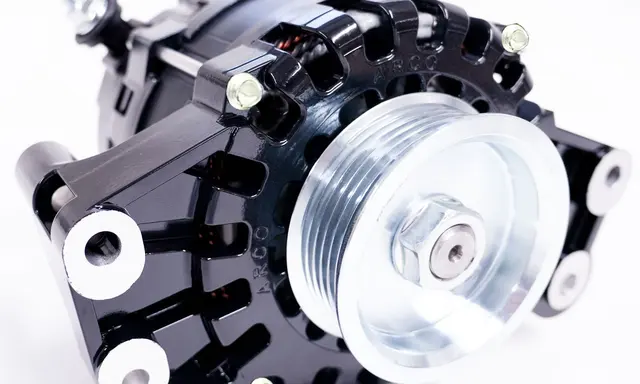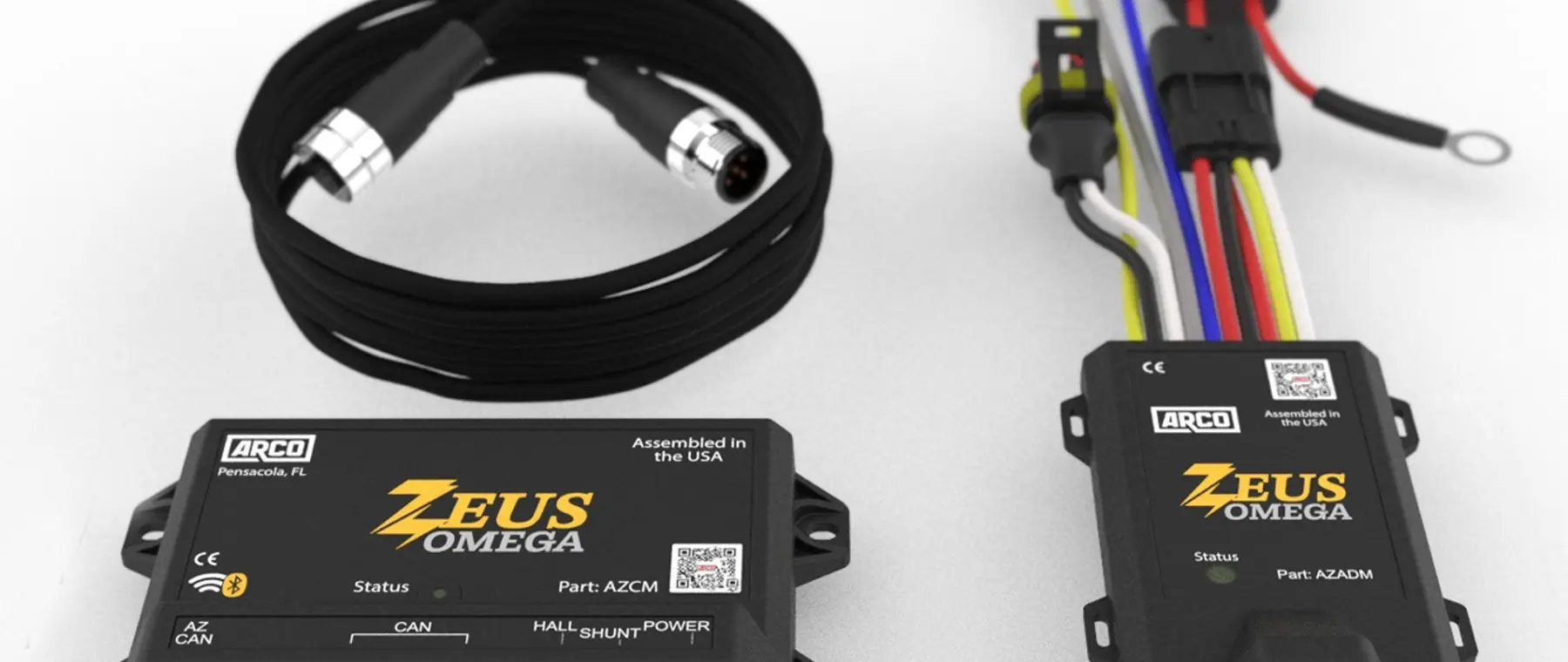
ARCO Marine has launched Zeus Omega, a new alternator-control platform designed to simplify high-output charging installations on boats with increasingly complex electrical systems. The system separates control into an Alternator Drive Module mounted at the alternator and a central Control Module near the battery, linked by a single communication cable.
The architecture supports 12V, 24V, 36V and 48V systems and is intended to scale as onboard power demand increases. ARCO also includes Bluetooth and Wi-Fi connectivity through its Zeus app and AZ Cloud, allowing configuration, updates and remote diagnostics without treating the regulator as an isolated engine-room component.
One cable replaces a conventional harness
Traditional external alternator regulators can require several conductors running between the alternator, batteries, ignition and monitoring equipment. Zeus Omega moves the drive electronics closer to the alternator and reduces the connection back to the controller to one communication cable, which can simplify installation and troubleshooting.
The Alternator Drive Module carries an IP68 rating and is epoxy-potted for high-temperature engine-bay use. ARCO also supports Hall-effect current sensors, avoiding the need for some conventional shunt installations and reducing the number of heavy-current connections that have to be engineered into the system.
A distributed architecture allows expansion
One Zeus Omega controller can communicate with multiple Alternator Drive Modules, so a yacht can add charging capacity without installing a separate independent regulator for every alternator. That is particularly relevant to larger owner-operated yachts and catamarans where several engines or alternators may be feeding a large lithium house bank.
The modular approach also gives installers a clearer path for future upgrades because the control logic remains centralised as generating capacity grows. Owners still need a properly engineered charging plan, but the hardware is designed to make expansion less dependent on rewiring the whole system.
Protection functions are built into the controller
ARCO includes automatic engine-run detection, alternator rotor protection and an emergency charging mode intended to keep charging available if module communication is interrupted. The system can also detect a stopped alternator and shut down charging, helping protect the equipment if a belt fails.
These safeguards are important on lithium-equipped yachts because modern batteries can accept very high current and can disconnect abruptly when a battery-management system intervenes. A high-output alternator therefore needs coordinated regulation and protection rather than simply a larger current rating.
Integration reaches beyond the charging system
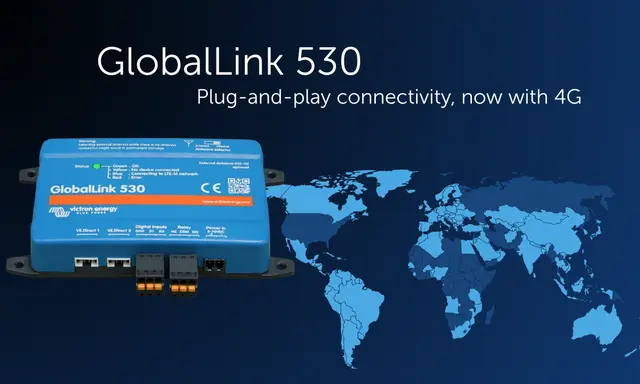
Zeus Omega supports interfaces including Victron DVCC, NMEA 2000, CZone, RV-C and smart battery-management systems. That gives builders and refit yards a route to connect charging data with the wider electrical and monitoring environment instead of leaving alternator information hidden in the engine room.
For owners, the useful outcome is better visibility of what the charging system is doing and easier diagnosis when performance changes. The platform illustrates how yacht electrical systems are becoming software-managed networks rather than collections of unrelated chargers and regulators.