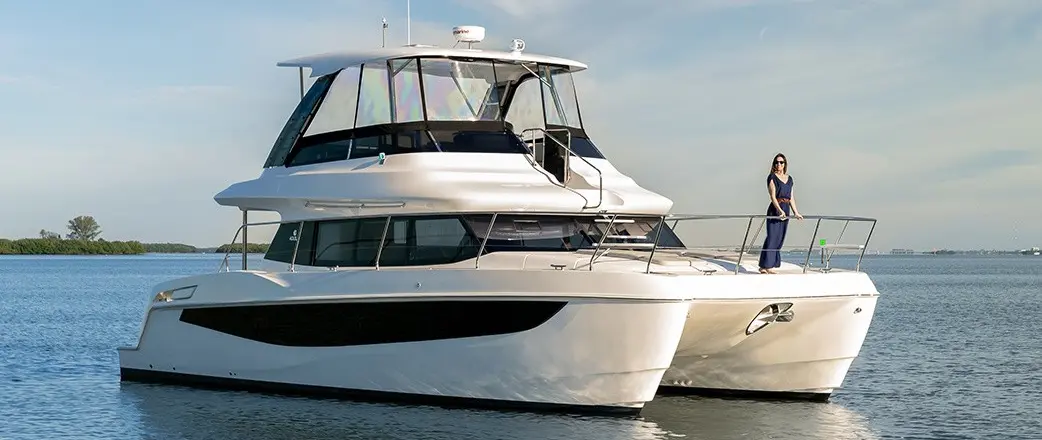
A broad platform in a relatively compact length
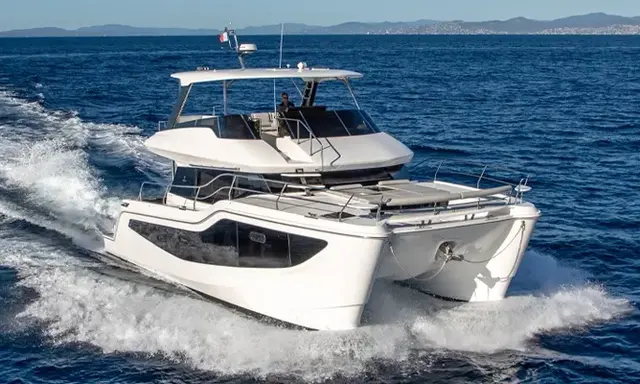
The Aquila 42 Yacht makes a useful case study in why a power catamaran cannot be judged by length alone. At 12.64 metres overall, it occupies the familiar territory of owner-operated leisure yachts, but the twin-hull platform measures 6.4 metres across. That unusually broad beam shapes the accommodation and circulation far more dramatically than the headline length suggests. Buyers comparing it with a single-hull cruiser should begin with the usable living spaces rather than assuming the two types will feel alike.
Aquila's current product presentation promotes the 42 Yacht for personal viewings connected with the Fort Lauderdale boat-show period. The manufacturer is not describing the design as a new 2026 launch; this is an established model being presented to a fresh audience of prospective owners. That distinction matters because the news is the current opportunity to assess it, not an invented debut. It also makes a face-to-face comparison with other power catamarans a practical way to judge how the design performs.
The beam creates the room for separate open-air destinations rather than one large but compromised cockpit. Aquila identifies the aft cockpit, bow seating and elevated flybridge as three distinct places to gather or sit apart. That arrangement can work particularly well for a family or charter-like gathering where some guests want shade and conversation while others prefer an open view. It also means the vessel's layout has to be tested for clear routes between the spaces.
The manufacturer's specification lists a light displacement of 15,700 kilograms and a fully loaded displacement of 19,000 kilograms. Those figures are useful reference points, but a loaded cruising boat carrying people, provisions, tender equipment and water will behave differently from an empty demonstration craft. Buyers should ask for performance data tied to their intended engine package and loading condition. A published length-and-beam comparison is not a substitute for a realistic sea trial.
How the interior supports time aboard
On the main deck the bright saloon incorporates a full galley and opens to the aft cockpit. This direct connection helps prevent food preparation from becoming a separate task hidden from guests, particularly when the cockpit is the preferred dining space. Panoramic windows contribute to the feeling of width, although their value extends beyond aesthetics to keeping passengers connected with the horizon. Glare control, ventilation and sightlines at seated eye level deserve attention during a viewing.
Aquila offers interior configuration choices and lists sleeping accommodation for eight or more people. The range of possible layouts is more important than a single promotional bed count, since full-time cruising and occasional overnight entertaining can demand quite different cabin arrangements. A couple living aboard may prioritise privacy and generous storage while a larger family may prize separate berths and flexible guest accommodation. Prospective buyers should request an exact general arrangement for the boat they are considering.
The manufacturer's materials also discuss an optional interior helm position. That can have substantial day-to-day value when long trips involve rain, wind or intense heat, even if many owners expect to steer from the flybridge in pleasant weather. An inside driving station must be evaluated for all-round visibility and the ease of moving outside to handle lines. The location of navigation displays, engine controls and companion seating changes how well it works underway.
The flybridge is central to the model's appeal, yet it brings everyday operational questions as well. The height above the waterline with hardtop is listed at 5.49 metres, a dimension that matters for bridges, covered marina structures and transport planning. Owners who routinely navigate low bridges should check published clearance against the actual vessel and local water conditions. Comfort at anchor is only one part of choosing a cruising platform.
What the figures mean for a buyer
The Aquila 42 Yacht's advertised certification includes Category A for eight persons, with different limits for other certification categories. The model page also describes a higher maximum passenger figure under its specifications, but these numbers must not be treated as interchangeable permissions for every sea state. The safe and lawful operating limit depends on the certified category, configuration and local rules. For a family hoping to carry a large party, that distinction should be resolved before purchase.
Fuel and freshwater capacity have a direct bearing on itinerary planning. The manufacturer's available specification materials list approximately 1,000 litres of fuel and 460 litres of freshwater, but autonomy cannot be derived reliably from tank volume on its own. Speed, hull loading, sea conditions and use of onboard systems all change actual consumption. Owners should request verified range figures at several realistic cruise speeds, with an appropriate reserve included.
A wide twin-hull vessel can be steady at rest and provide extensive accommodation for its length, but it will not suit every home berth. At 6.4 metres across, the Aquila needs a marina space wide enough for the hull and usable fender clearance. Lift capacity, berth pricing and access through narrow channels may influence the ownership budget just as much as fuel. Finding a suitable permanent berth should precede any assumption about easy local operation.
The propulsion arrangement and servicing access also merit attention. A twin-hull plan gives a different engine-room layout from a conventional single-hull cruiser, and inspection access becomes important for routine work as well as emergency maintenance. Prospective owners should ask where major service items sit and whether technicians can reach them without disrupting guest spaces. A sophisticated layout only retains its appeal if the practical machinery is manageable over years of ownership.
A useful Fort Lauderdale viewing checklist
A show or broker appointment is a chance to establish whether the boat feels as coherent as the deck plans suggest. Walk the route from the boarding point to the galley, flybridge and forward seating with a group, rather than assessing each area when it is empty. Check handholds, stair gradients, door openings and the space required around the galley when several people are moving. Those observations often reveal more than an isolated measurement of seating capacity.
Next, examine the cabin layout against the way the vessel will actually be used. Count enclosed sleeping spaces, bathrooms, wet lockers and practical storage for extended trips, and note which places depend on convertible furniture. If the planned use includes extended coastal passages, look particularly hard at ventilation, noise levels and how crew can rest while underway. These details become consequential long after the excitement of the first walkthrough fades.
Aquila's official invitation to arrange a personal 42 Yacht viewing makes the current Fort Lauderdale period a useful moment to revisit the design. It gives experienced buyers an opportunity to ask for updated equipment information and to clarify precisely what appears on the vessel offered for sale. Published model specifications and standard equipment can vary from the configuration on display, so every quotation should identify its options. Written confirmation keeps comparisons between builders meaningful.
The overarching attraction remains the combination of a 12.64-metre overall length and unusually generous breadth. The 42 Yacht asks buyers to trade some conventional monohull assumptions for separate outdoor areas, a sociable saloon and flexible accommodation. Whether that is the right trade depends on local berthing, passage plans and how many people actually travel together. Used as a structured comparison rather than a showroom spectacle, a viewing can answer those questions with unusual clarity.