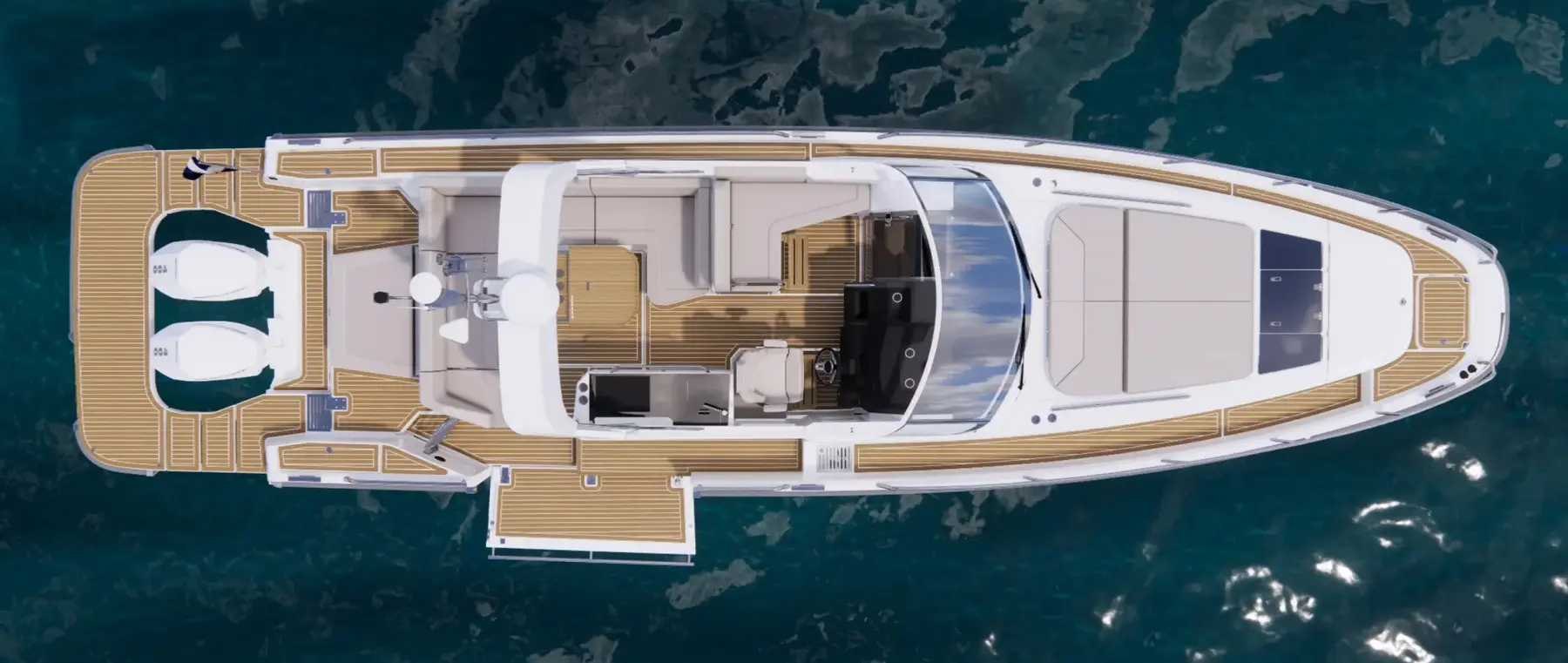
Nimbus refines a three-model 12-metre platform
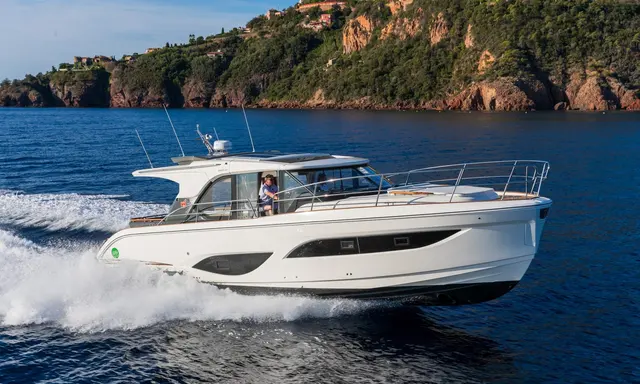
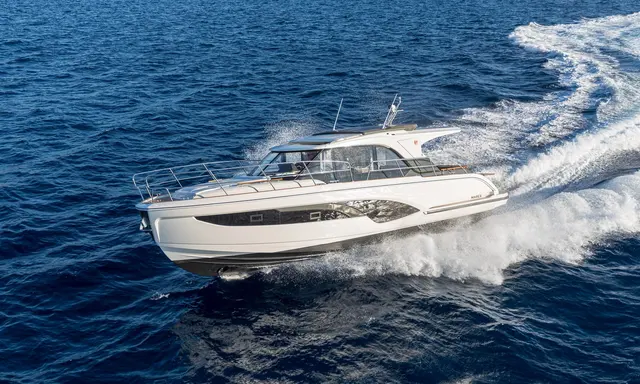
Nimbus has detailed an evolution of its 12 Series, with Commuter, Weekender and Tender variants sharing a 12.70-metre platform but addressing different ways owners use a yacht. The company describes the changes as refinements based on owner experience, spanning helm comfort, deck arrangements, bathing access and the amount of shade available. This is an important theme in a market where buyers increasingly expect a yacht of this length to perform more than one role through an ordinary cruising season.
The new range remains based on the twin-stepped, air-lubricated hull concept introduced with the earlier 11 Series. Nimbus positions that form as a means of combining responsive performance with comparatively easy planing, while reserving the familiar walkaround movement and adaptable social layouts. Those claims should be evaluated through properly loaded sea trials because speed and ride comfort remain dependent on engines, sea conditions and the way the boat is trimmed.
All three variants have a published beam of 3.46 metres, giving a meaningful amount of width to a yacht still intended for owner operation. The company describes new helm chairs with stronger lateral support, redesigned aft seating, more substantial railing and improved windscreen-wiper arrangements. Such details can determine how tiring the boat feels on a long passage, and they should be assessed by the person who will spend most time at the wheel.
The 12 Series is designed for experienced private boaters who want Scandinavian simplicity without sacrificing living space. A key question is which variant matches the owner's regular routine: year-round transport in a protected Commuter, sociable weekend travel in a Weekender, or a more open and flexible Tender platform. The common hull does not erase the significant differences in deck use and weather protection.
Tender 12 gains shade and a folding balcony
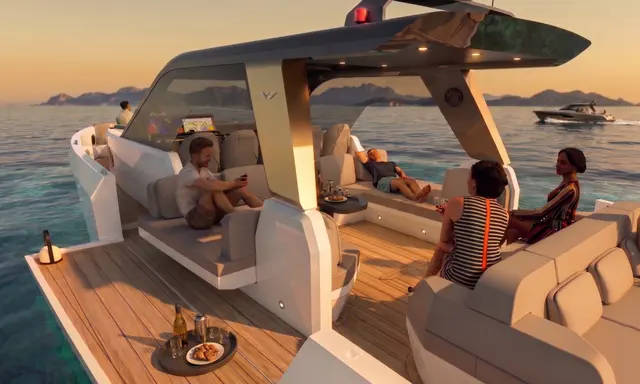
The Tender 12 receives what Nimbus describes as the most extensive visible updates. Its roof is wider and longer, with solar panels incorporated into the new T-top and translucent sections intended to retain daylight while providing protection from sun. That arrangement could be particularly welcome during Mediterranean anchor stops, although owners should confirm the actual electrical contribution and not assume solar generation can operate every heavy onboard load.
A new starboard folding balcony increases the usable space at anchor and provides an additional connection with the water. The pleasure of a folding terrace comes with practical conditions: it must be secured correctly, used only within the approved operating envelope and kept clear of obstructions during berthing. For some owners, the benefit is more room for a lunchtime gathering; for others, it may be a useful platform during swimming activities.
Nimbus says the T12 can now be specified with two Mercury V10 425-horsepower engines, broadening the performance options. That power level should be considered in the context of fuel use, service arrangements, insurance and the boat's actual operating profile. A family that normally travels at moderate speed may gain more from suitable shade and deck fittings than from selecting maximum propulsion.
The Tender 12 is therefore not simply a faster dayboat. The new features point toward a vessel that can spend extended time stationary, with passengers moving between seating, shade and water access. Owners should be clear about how often they intend to use a folding side terrace or high-powered engine before adding weight and complexity to the standard platform.
Weekender and Commuter receive different changes
The Weekender 12 gains a Targa-style alternative inspired by the Nimbus 32 Ballista, according to the builder, along with a starboard side balcony and refreshed social arrangements. Its focus is on making weekends more comfortable without abandoning the open-air character of a performance cruiser. A family who sleeps aboard occasionally may place greater value on seating flexibility and shade than on the maximum possible passenger number.
The Commuter 12 takes another approach by developing a more protected deck salon with a galley-up layout and curtains, while reshaping the aft seating for greater usable space. Nimbus identifies a folding sofa backrest as part of that evolution. The protected configuration is aimed at owners who use a yacht for regular transport or who want to keep cruising comfortably beyond the height of summer.
Those differences make an in-person comparison particularly useful. Two variants with nearly identical published length and beam can feel radically different at anchor or when boarding passengers on a gusty day. A buyer should walk from helm to foredeck and back, open every intended door, lower the relevant seating and imagine handling lines in the actual marina used most often.
The changes also underline why protecting access between people and the sea has become a design priority. Across the range, Nimbus describes an extended swim platform more closely integrated with the hull, redesigned rails and better aft-deck circulation. These are details that may support an easier trip, provided that skipper and guests follow safe boarding, swimming and manoeuvring procedures.
The common technical platform and buying decision
Nimbus gives the three versions a common overall length of 12.70 metres, 3.46-metre beam and fuel capacity of around 850 litres. The published technical table refers to two double cabins and four berths, with capacity ratings varying according to the relevant certification. The fact that the yachts share a technical base makes the choice between layouts more about lived experience than simply selecting a larger or smaller hull.
Standard twin Mercury Verado 300-horsepower power and alternative higher-output packages are described for the new range, with Volvo Penta diesel options identified for certain models. The company's material includes performance above 45 knots as a range capability, but owners should expect actual results to vary significantly. A proper comparison needs speed, sound, fuel-consumption and handling data from the exact engine combination being ordered.
Optional inverter-powered air conditioning reflects another aspect of contemporary private cruising: spending quiet time at anchor without depending exclusively on a running engine. The practical value depends on battery capacity, ambient temperatures and how the electrical system is installed and managed. Buyers should ask for an energy budget rather than assume that a marketing phrase establishes unlimited silent operation.
The new Nimbus 12 Series is a useful example of how the 12-to-24-metre sector is evolving through everyday details. The hull is familiar, but different deck arrangements now address different combinations of weather, family time and active boating. For a buyer, the right decision begins with an honest account of the trips taken most often and continues with the kind of thorough sea trial that a specification sheet cannot replace.