Two similar symptoms, two different repair projects
Amsterdam Yacht Service has described two recent repairs involving lifting-keel sailing yachts in a trade announcement dated 15 November 2026. Its account concerns the Trintella 52 Time in a Bottle and the 49-foot Sandy-Cay, designed by Olivier van Meer. In both cases, noise during movement of the keel was the starting point for investigation. The yard reports that the cause on Time in a Bottle lay in the hydraulic system, whereas Sandy-Cay required work to the structure around the movable keel. The cases are of particular interest to owners of sophisticated cruising yachts whose variable-draft arrangements are intended to give them access to a wider range of destinations. They illustrate the difference between identifying a symptom during operation and determining the engineering work necessary to correct it. The yard's account describes repairs it undertook; it is not an independent survey report, and neither yacht's complete engineering documentation has been released.
The operational value of variable draft
A lifting keel can allow a sailing yacht designed to make effective use of relatively deep underwater appendages to reduce its draft in suitable circumstances. Depending on the boat's design, this can extend access to shallow harbours and certain anchorages that would otherwise be impractical. The extra capability comes with a mechanism, supporting structure and associated equipment that need continuing attention. Owners should establish the operating limitations applicable to their own yacht rather than generalise from a description of another vessel. Some arrangements carry substantial ballast in the moving part, while other designs have separately arranged ballast and a movable appendage with different structural purposes. The yacht's stability information and the designer's procedures remain central to the way the equipment is used. The two November cases are not evidence that every lifting-keel design is vulnerable to the same problem. They show why an investigation must begin with the specific design and installation rather than the generic name of the mechanism.
Hydraulic investigation aboard the Trintella 52
For Time in a Bottle, the yard says that the keel produced considerable noise when being raised. Managing director Robert Binnekade attributes the diagnosis to the involvement of the shipyard's specialists and identifies the hydraulic equipment as the source of the problem. The company says it refurbished the main cylinder and the associated hydraulic system, and reports that the work resolved the symptom. No detailed service findings, operating pressures or component measurements have been published. It is consequently not possible to identify the exact internal defect from the announcement or conclude that a similar noise on a different yacht points to the cylinder. A qualified technician investigating such an issue would need to understand the design and the condition of the complete system. The way in which mechanical loads are transmitted, the condition of interfaces and the operating characteristics of the hydraulic circuit may all be relevant. The confirmed development is the yard's reported diagnosis and refurbishment work on this named yacht.
Sandy-Cay required work on the supporting structure
The second project involved a 49-foot yacht designed by Olivier van Meer. The yard reports that investigation of a comparable noise revealed unwanted keel movement around the keel box, the part of the arrangement that accommodates the lifting appendage. The company determined that structural modifications were necessary. It consulted the original designer and one of his engineers, working with its own engineering personnel to develop additions to the existing structure. According to the release, the process from identification of the problem through consultation and completed repair took approximately one month. That duration concerns this specific project and should not be interpreted as a standard quotation for other keel repairs. The announcement does not disclose the dimensions, materials or structural calculations used for the modification. It would be inappropriate to reproduce a similar arrangement on another vessel without an appropriate design assessment. The project illustrates why retaining access to original design expertise can be important when a repair extends beyond servicing an individual machine.
Distinguishing machinery faults from structural movement
The contrasting findings matter because an operating mechanism and the structure supporting it form one combined system. An apparent fault in one area can reflect a problem elsewhere in the assembly. Noise may be produced by several different mechanisms, including changes in the way loads are transmitted through components. Diagnosis requires inspection and evaluation by experienced personnel familiar with the type of equipment and the relevant yacht structure. A replacement component may not resolve a structural problem, just as alterations to a structure may be unnecessary when the actual fault lies in a serviceable machine. The result of the two investigations does not establish a universal decision tree for interpreting sounds from a lifting keel. What it does establish is that Amsterdam Yacht Service reports choosing different repairs after examining the individual vessels. An owner who encounters an unexpected operating symptom should seek competent assistance and obtain advice regarding safe continued use, rather than repeatedly operate the equipment in an attempt to reproduce the sound.
The importance of retaining the original documentation
Owners commissioning maintenance work on a sophisticated sailing yacht can benefit from maintaining records that identify the equipment and the structural arrangement originally installed. Previous repair records may also matter, especially when modifications have been undertaken during a yacht's earlier ownership. An apparently similar model of yacht may have received different equipment at the time of construction or have been altered later. The relevant drawings therefore need to be linked to the actual boat and its configuration. In Sandy-Cay's case, the yard reports involving the designer during development of the repair. That relationship can assist an engineering team in establishing the purpose of the existing structural details and the implications of a proposed change. It does not remove the need for appropriate verification of the completed work. The November account contains no statement confirming whether an external surveyor or other independent professional reviewed either repair, so the published outcome should be understood as the shipyard's own report.
Planning a haul-out around more than routine maintenance
Lifting a yacht for inspection can reveal work that was not apparent from the initial maintenance specification. Owners often plan a yard period around a defined list of ordinary service tasks, but findings that concern the structure or an essential operating mechanism can change the scope substantially. A yard with access to different technical disciplines may be able to investigate these findings without treating every unexpected problem as an isolated component replacement. The practical requirement is to allow enough time for inspection, obtain the necessary design information and establish the scope of the work before agreeing to substantial changes. The yard's one-month figure for Sandy-Cay demonstrates that the investigation and consultation were part of the project, not simply the time needed to fabricate and install components. Owners should ask their chosen yard how the possibility of additional work will be communicated and costed. There is no published price for either of the reported projects.
Verifying the condition after a repair
A completed repair is a distinct stage from the investigation that determined what work was required. Owners should establish with the responsible professionals what examination and tests are appropriate to the vessel's design and the particular nature of the repair. Where structural work has been undertaken, the relevant engineering records should identify what was changed and why. Where machinery has been refurbished, service documentation can be important for continuing maintenance and subsequent troubleshooting. The shipyard describes both projects as resolved, but its public statement does not specify the procedures used during final testing or the operational conditions under which the repairs were assessed. There is no basis in the announcement for promising an extended service life or a particular future maintenance interval. Each owner will need to retain the applicable instructions and arrange continuing inspections as recommended. The appropriate level of attention is dictated by the actual installation rather than the size of its owner's previous investment in the yacht.
A useful distinction for the luxury sailing yacht sector
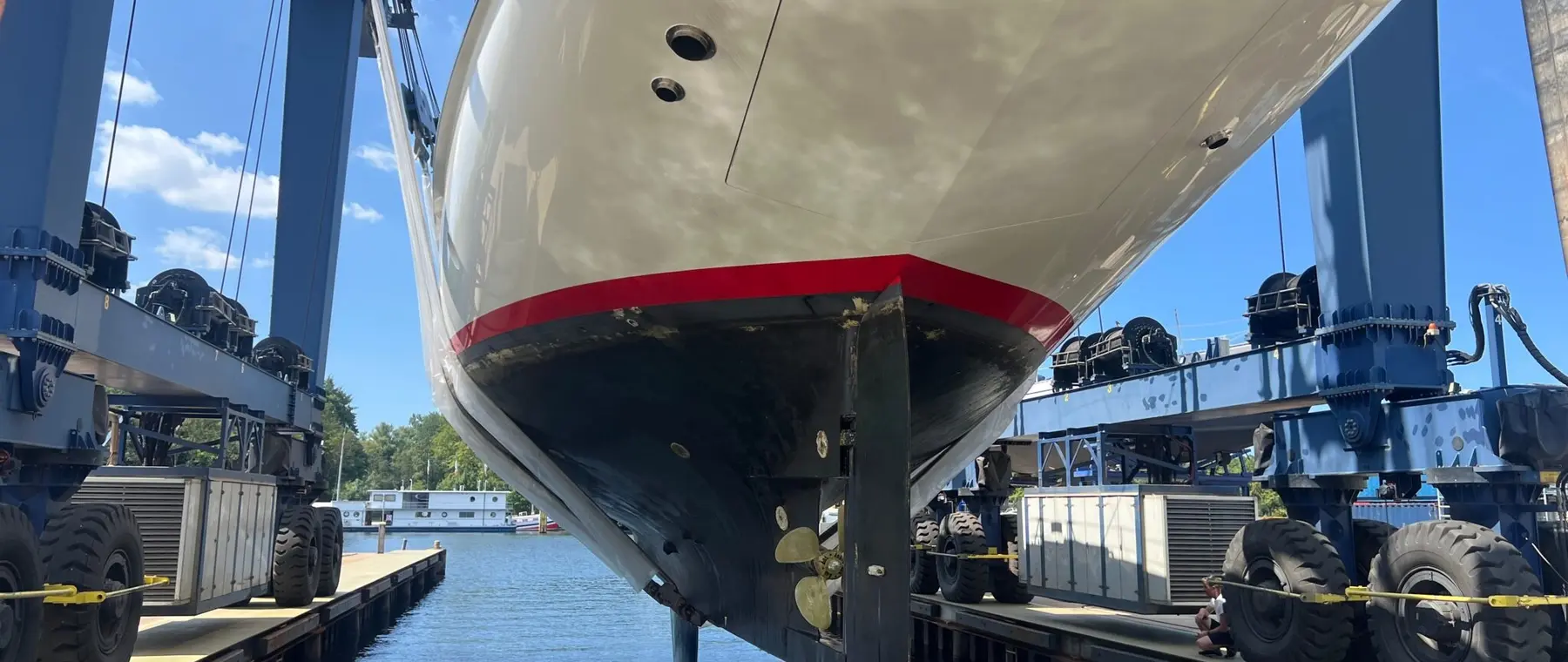
Amsterdam Yacht Service is using these examples to explain the range of expertise it brings to service and refit projects. Time in a Bottle and Sandy-Cay demonstrate how quite different technical investigations can begin with a comparable observation by the people operating a yacht. The yard's press release also discusses another, substantially larger vessel, but the focus here is on the two luxury sailing yachts of 52 and 49 feet. The official yard photograph illustrates underwater work and is not identified in its caption as either one of those vessels. The value of the report for owners lies in its description of two different responses: refurbishment of hydraulic equipment in one case and separately engineered structural modification in the other. Neither should be regarded as a prescribed remedy for another boat. A properly planned diagnosis, supported by the relevant engineering information and expertise, remains the basis for determining the appropriate work.
Sources and photograph
Source documentation: https://www.metstrade.com/exhibitors/amsterdam-yacht-services-b-v/news/licence-to-keel. Photograph: Amsterdam Yacht Service yard photograph illustrating underwater yacht work — Amsterdam Yacht Service, issuer-supplied photograph accompanying its 15 November 2026 Metstrade press release. Individual vessel identity is not confirmed by the caption.. Manufacturer-supplied image attached to the specific exhibitor press release made available through the official virtual press room for coverage of the announcement; copyright remains with the rights holder.