Luxury Yacht Guide News | 21 November 2026
An aluminium expedition-minded yacht returns to boot
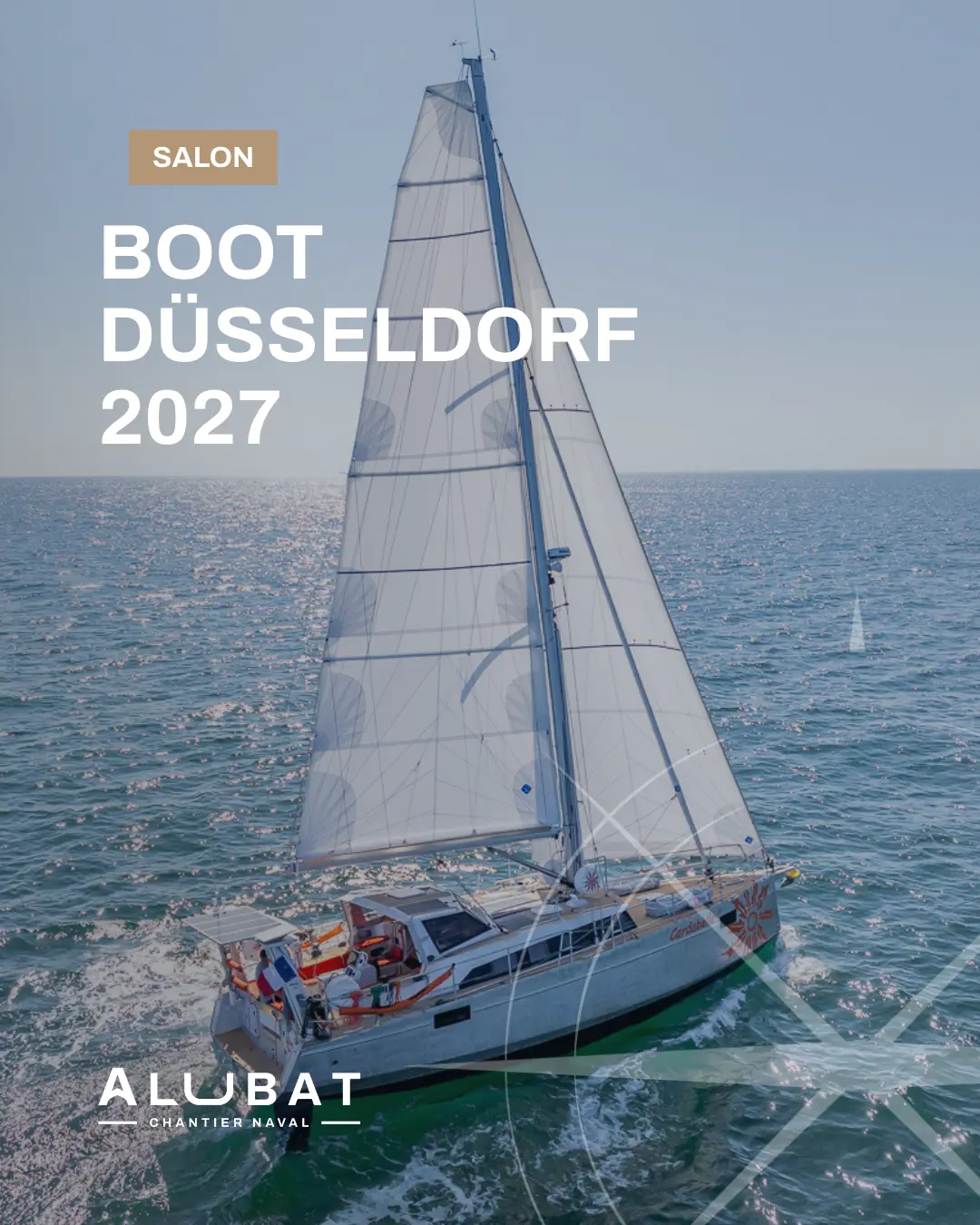
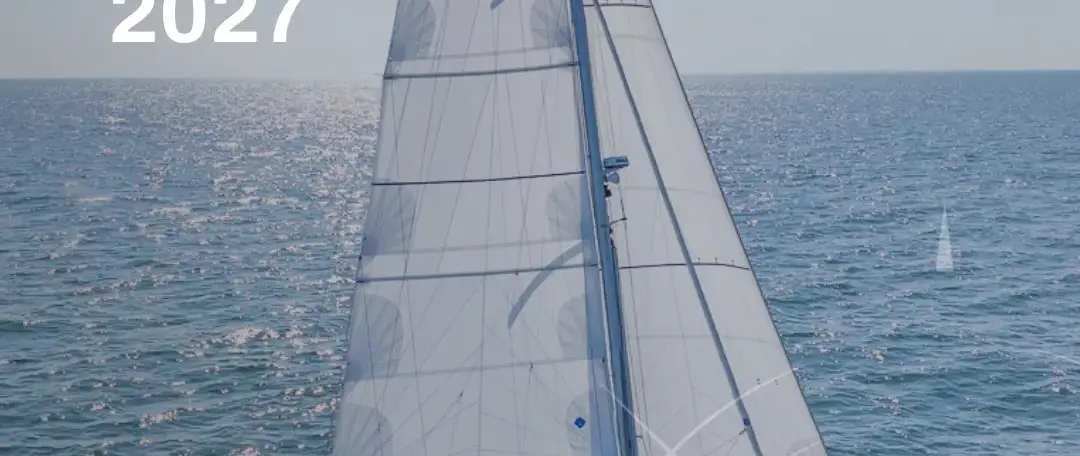
French yachtbuilder Alubat will bring the OVNI 430 to boot Düsseldorf from 23 to 31 January 2027, giving European visitors another chance to examine a mid-size sailing yacht designed around aluminium construction and a fully retractable centreboard. The company announced the appearance on 13 November 2026 and describes the boat as intended for long-distance voyages, comfortable coastal cruising and the possibility of exploring areas that conventional deep-keel yachts may find harder to reach. The model belongs to a sailing tradition in which practical seaworthiness and owner independence take precedence over purely decorative statements. At roughly thirteen metres, the OVNI 430 occupies a size that can accommodate meaningful cruising provisions while remaining within the operating scope of a competent private owner and small crew. Its new show appointment gives prospective customers a timely reason to revisit the advantages and trade-offs of that design philosophy.
What makes the OVNI approach distinctive
The OVNI family is associated with all-aluminium hull construction and the use of a lifting or retractable centreboard arrangement. That combination offers a different approach to long-distance cruising from the deep fixed keels found on many performance-oriented sailboats. A fully retractable board can make it easier to reduce the yacht's effective draught for selected sheltered anchorages, shallow-water cruising and particular maintenance operations. It does not mean the boat can safely enter every shallow location or disregard local bottom conditions. The owner's operating manual, keel or board mechanism and structural design determine practical limits. The interest is in versatility: an ocean-capable sailing yacht may also be configured to explore areas where depth constraints shape what routes can be attempted. Alubat emphasises freedom to cruise far rather than a claim that the boat is universally suitable for every seabed.
Aluminium as a structural choice
Aluminium construction is valued in some long-range yachts for its strength-to-weight characteristics, potential for repair and ability to withstand demanding service when properly designed. Yet an aluminium hull is not a maintenance-free object. Corrosion control, suitable electrical bonding, insulation from incompatible materials and professional inspection of welds and coatings remain important responsibilities. Owners evaluating the OVNI 430 should ask how the shipyard addresses these questions through hull construction, tankage and electrical installation. An exposed or painted metal structure may have different maintenance requirements from a conventional fibreglass yacht. The aim is not to declare one material universally superior, but to understand the consequences of the design choice for the way the owner intends to travel. A yacht commissioned for years of remote cruising should be evaluated through actual repair logistics and structural documentation rather than general claims about metal's toughness.
The centreboard and anchoring possibilities
A retractable centreboard changes how a yacht can approach a shallow anchorage, but only when combined with appropriate hull form, propeller and rudder arrangements. The deepest fixed component can still limit access even when the board is raised. A prospective buyer should therefore request the manufacturer's exact draught figures for the specific configuration and investigate grounding procedures. Long-distance cruising also places considerable value on anchoring reliability, chain capacity, windlass operation and the ability to inspect ground tackle. Some routes involve sheltered lagoons and broad tidal ranges, while others demand a conventional deep-water anchorage. The OVNI concept is particularly interesting because it encourages the owner to think about both extremes. There is no substitute for careful chart work, local knowledge and a conservative approach to water depth, regardless of the lifting-board arrangement.
Living aboard between passages
The ideal long-range yacht must also work as a comfortable home when not sailing. Owners may spend days at anchor waiting for weather or weeks in one country before continuing their passage. Storage, galley layout, ventilation and the availability of comfortable seating all influence how this time is experienced. The Alubat announcement describes the OVNI 430 as combining autonomy, comfort and performance, but the actual arrangement of a show boat is best assessed firsthand. Potential buyers should ask how different cabin configurations affect tankage and accessible technical volume, where heavy provisions are stored and whether the galley remains secure while the vessel is heeled. Small details such as handholds and the accessibility of a fridge underway can matter much more than a brochure photograph suggests.
Boatshow inspections versus a real sea trial
The January 2027 Düsseldorf exhibition provides a controlled setting in which buyers can compare several sailing yachts in a relatively short period. It is valuable for examining joinery, ergonomics, service access and general build finish. It cannot replicate an offshore passage or the sensation of sailing in a seaway. Owners seriously considering an aluminium centreboard yacht should arrange a separate sea trial or obtain appropriately documented operating information. Steering balance, sail handling and the behaviour of the board system under load are among the matters best understood away from the stand. A careful owner may also wish to speak with established OVNI owners about maintenance experience and longer-term use, recognising that one individual's voyage is not a controlled test of an entire product line.
The boot Düsseldorf 2027 programme
Alubat identifies the period 23–31 January 2027 for the show and invites visitors to meet its team and discuss their sailing plans. The manufacturer has not provided a public indication in this announcement that the OVNI 430 itself is making its world debut at Düsseldorf. It is a scheduled display of an established model in the current range. That distinction matters for accurate industry reporting: an exhibition appearance can be noteworthy without being a launch. Buyers who want a detailed visit should confirm where the yacht is positioned and whether a technical representative will be available. The shipyard also offers other models and services, so a discussion may appropriately cover the wider OVNI range or maintenance and refit support if the buyer already owns an aluminium yacht.
Autonomy has several meanings
Long-range cruising is sometimes reduced to a yacht's tank capacity, but autonomy depends on the whole system. Reliable navigation equipment, accessible spares, electrical generation, sanitation and fresh-water production matter alongside provisions and fuel. The OVNI 430's retractable centreboard may broaden the possible destinations, but it does not reduce the need for weather planning or practical self-sufficiency. A prospective owner should assess the proposed cruising region and ask the builder for an equipment list tailored to the expected passage lengths. In northern latitudes, heating and protection from condensation may be priorities; in tropical areas, ventilation, refrigeration and corrosion management can dominate. A good bluewater design does not provide one universal configuration for all of those environments.
The market for purposeful cruising yachts
The continuing appeal of aluminium expedition-minded sailboats reflects a segment of buyers who value capability and confidence over novelty. These customers may spend long periods away from busy marinas and prefer equipment whose operation can be understood and maintained by the crew aboard. That does not automatically make such yachts less luxurious. Quality can be expressed through well-planned living spaces, dependable hardware and the freedom to explore comfortably. In the thirteen-metre category, the compromise between sailing performance, interior volume and operating simplicity remains particularly visible. The OVNI 430's position within that debate is the reason its Düsseldorf display merits attention even though the model is not being presented as an entirely new release.
What visitors should establish before ordering
The January exhibition offers a chance to examine whether Alubat's approach suits a specific voyage or ownership plan. Questions should include the precise board and rudder geometry, allowable loading, hull protection, electrical installation, fresh-water arrangements and the support network for future maintenance. Buyers should ask for complete technical drawings and realistic delivery information rather than infer any from the exhibition announcement. It is also prudent to review the vessel's compliance documentation and options carefully, particularly where the intended cruising may involve remote regions. Alubat's latest communication confirms one clear point: the OVNI 430 will be available for visitors to see at boot Düsseldorf 2027, offering a practical platform for assessing a distinct style of modern offshore sailing yacht.
Sources and image credits
Reporting based on Alubat builder official 13 November 2026 boot Düsseldorf show release.
Lead photograph: Alubat OVNI 430 official boot Düsseldorf yacht image. Alubat Chantier Naval, original OVNI 430 press image accompanying its November 2026 exhibition release. Original official image source.