Luxury Yacht Guide News | 21 November 2026
A November agreement brings two specialist names together
French marine hardware company Karver has announced an agreement to take over Alphalock's business and develop the sail-hook innovations associated with American engineer Eric Hall. The 11 November 2026 announcement was also presented to the marine industry during METSTRADE in Amsterdam, held from 17 to 19 November. The deal is relevant to the owners and designers of substantial sailing yachts because reliable halyard locks help manage significant sail loads while reducing some of the handling work required at the winch. Karver describes a programme to extend its range with magnetic-assisted locking mechanisms and related solutions, rather than merely acquiring a name for use in marketing. For smaller professional racing teams and owners of luxury cruising sailboats, the question is how these technologies can be selected, installed and supported within real mast and deck arrangements.
Why a halyard lock matters
Sailing yachts may employ halyard locks to hold a sail's head or other attachment point securely without leaving the full working load on the halyard and its winch. The objective can include reducing compression in the mast and simplifying how demanding loads are maintained during a passage or race. But a mechanical lock must be predictable in both directions: engaging securely and releasing when the crew requests it. A device that is difficult to release can create a serious problem when weather deteriorates and a sail needs to be lowered. Locking systems therefore require careful engineering, appropriate load rating and procedures specific to the sail and rig. The value of an apparently simple improvement is greatest when it makes the mechanism easier to operate without introducing an unfamiliar failure mode. Karver's announcement addresses this practical design problem through the Alphalock technology.
The contribution of Eric Hall
Eric Hall is associated with the development of high-performance carbon spars and is known as the founder of Hall Spars. Karver's company release recounts his earlier work in aerospace composites and the America's Cup before his establishment of the mast business in 1980. The same announcement notes his induction into the US National Sailing Hall of Fame in 2024. Those details explain why his name matters in a discussion of rigging innovation, but they are not a substitute for engineering tests of any particular component. An accomplished inventor can develop a promising approach that still requires robust qualification for each intended load case. In this acquisition, the strategic value for Karver lies in linking Hall's ideas to an established manufacturing, service and distribution network. The founder's reputation supports interest; future installation performance will determine acceptance.
One moving component with magnetic assistance
Alphalock's patented mechanism is described by Karver as using magnetic assistance to control the locking element, with only one moving part and no spring or separate release cord in its core arrangement. Removing small components may simplify maintenance and reduce the number of elements whose condition must be monitored, although actual reliability depends on materials, tolerances and the complete installation. Magnetic assistance is not equivalent to an electronic locking system that can be operated remotely under every condition. Buyers should request the detailed operating principles and the applicable safe-working-load specifications. A mast engineer will also need to consider the interface between a lock, its sail attachment and the direction of load. Karver's description is meaningful because it sets out a specific mechanical idea, rather than a general promise of easier sail handling.
Applications beyond one sail type
The company identifies potential uses for internal or external mast locks, headsail halyards, reefing, tack connections and other rig or deck arrangements. That breadth is attractive to a supplier hoping to build a coherent family of components, but each application may involve different geometry and operating loads. A code sail furler, a mainsail headboard and a reefing hook are not interchangeable simply because each can benefit from a secure attachment. Manufacturers need to establish exactly which configurations have been tested and what safety margins apply. On an owner-operated cruising yacht, a lock that reduces crew workload may be valuable; on a performance yacht, the reduction of mast compression or rope loading may be equally important. Both groups should demand a clear operating procedure that can be understood by crew members who did not participate in the original installation.
What the agreement changes for Karver
Karver already offers a range of furling equipment, hooks, blocks and winches and sees the Alphalock technology as a way to complete and refine that portfolio. The company also refers to compatibility with the Antal range of mast tracks and cars, positioning the acquisition within a broader effort to supply integrated rigging solutions. Such combinations can reduce the complexity of sourcing components from unrelated manufacturers, provided that the claimed compatibility is established through appropriate engineering. A shipyard specifying a modern cruising yacht may prefer to work with a supplier able to provide linked hardware and support, but competition and choice still matter. The announcement does not establish that every Alphalock product will immediately become available in every Karver market or that all existing Karver hardware is already compatible with the new designs.
Continuity for current customers
Karver says existing Alphalock products will be progressively integrated into its catalogue and that technical and commercial support should continue during the transition. That is an important commitment for owners who already have the original devices installed, particularly on yachts that may be far from the manufacturer's principal base. A rigging component often remains aboard for years, so long-term availability of spares and technical documentation affects the owner's willingness to choose it. Current users should seek specific guidance on service, inspection and replacement parts rather than assume that a corporate agreement automatically changes warranty conditions. The clearest benefit would be a reliable transfer of knowledge from the original engineering team into a broader support organisation. That is also a more demanding task than applying a new logo to an existing part.
Integration aboard cruising yachts
Sailing yachts in the 12-to-24-metre range vary widely in rig arrangement, sail area and use. A lightly crewed cruising yacht may prioritise predictable sail reduction; a fast carbon-rigged design may place greater emphasis on load efficiency and weight. The Alphalock concept needs to be assessed against those specific requirements. On a mast already in service, retrofit feasibility can depend on fitting dimensions, access, line angles and the structural support behind the attachment. A new build offers more freedom to integrate the component from the earliest design stage. In either case, the owner should involve the mast and rigging specialists responsible for the vessel. A highly rated device is only as dependable as its installation and the training of the crew who operate it.
The METSTRADE 2026 opportunity
The Karver-Alphalock announcement was timed for discussion at METSTRADE, where builders, distributors, engineering specialists and professional crews could review the implications. Trade shows provide useful opportunities for manufacturers to demonstrate a mechanism, but the short demonstration of a component does not reproduce the loading cycles and environmental exposure of many years at sea. Designers should ask for formal data, endurance testing and references from comparable installations. The association with Eric Hall and the magnetic-assisted design gives the system a distinctive narrative, yet practical adoption will depend on proving that the advantages are consistent. A buyer interested in better rig operation can treat the trade-show announcement as the beginning of an evaluation, not the conclusion of one.
A wider movement towards more manageable rigs
The acquisition fits a continuing effort within performance and luxury sailing to reduce routine handling burdens without taking away an owner's understanding of how a yacht works. Electric winches, improved furlers and more carefully engineered hooks can make a large sail plan manageable with fewer crew. Each additional system also creates maintenance and operational considerations, so simplicity remains valuable. Karver's agreement to develop the Alphalock ideas offers a potentially useful contribution: a locking mechanism intended to achieve an essential task with fewer moving parts. The most persuasive outcome will be reliable, well-documented products that allow crews to operate confidently. For Luxury Yacht Guide readers, the story is a concrete example of how specialist engineering and corporate strategy can intersect to change what is available for the next generation of cruising yachts.
Sources and image credits
Reporting based on Karver Systems primary official 11 November 2026 Alphalock acquisition press release, Official Karver Eric Hall first party press photograph in November 2026 report.
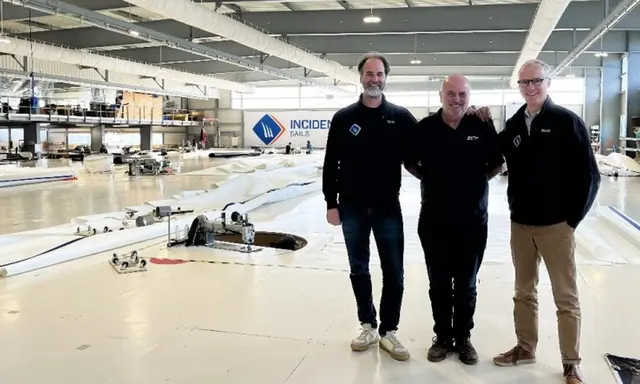
Lead photograph: Sail-hardware innovator Eric Hall, pictured in Karver official Alphalock acquisition release. Karver Systems / Alphalock, Eric Hall portrait from official 11 November 2026 company announcement. Original official image source.