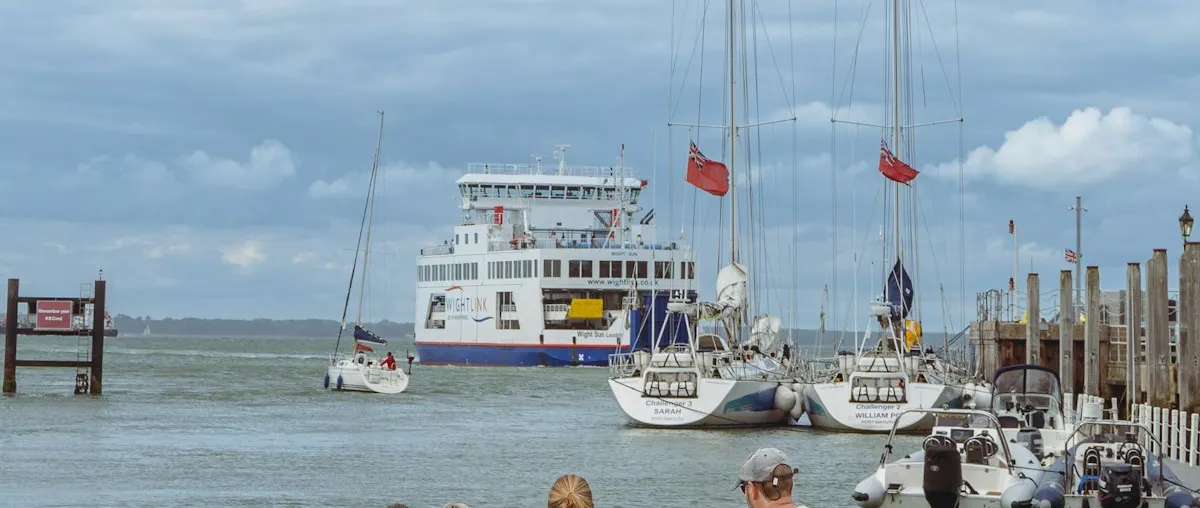
A harbour stop with a distinct sense of place
Yarmouth sits at the western entrance to the Solent, where a short passage from the mainland can lead into an unexpectedly self-contained island weekend. The harbour is not a private marina development cut off from its town. Pontoons, a working quayside, ferries and narrow streets meet within a compact space, so visitors can change from sea boots to a village walk without arranging a road transfer.
For a 12-to-23.99-metre yacht, that convenience is attractive but must be balanced against a busy entrance, tidal movement and the size of the berth actually offered. A twenty-metre motor yacht and a fourteen-metre sailing yacht need different space and handling margins. This guide treats Yarmouth as a real harbour to approach with current information, not as a guaranteed walk-ashore reservation.
Choosing among visitor moorings
Yarmouth Harbour Commissioners say there are more than 150 visitor moorings, including finger berths, walk-ashore and non-walk-ashore pontoons and mooring buoys outside the harbour. These are different experiences. A finger berth allows independent movement; a rafted space can be sociable but may require crossing other boats. A buoy may offer a pleasant outlook but depends on tender or water-taxi arrangements.
The harbour allocates most berths when vessels arrive, using berthing staff on the water. Visitors should not assume that a vacant-looking space belongs to them or that booking a hotel in town secures a marina berth. The harbour can direct arrivals to a suitable position according to length, beam and the day's traffic. Confirm where guests can disembark safely before making a shore itinerary.
Booking is limited for larger yachts
The published booking system permits a limited number of advance overnight reservations, mainly for vessels up to fourteen metres. The harbour identifies only one pre-bookable berth above that size; other larger yachts normally receive allocation when they arrive. Its dedicated booking guidance asks owners of vessels over fourteen metres, and owners of catamarans, to call the harbour office rather than assume the ordinary online process applies.
That distinction is crucial to the Luxury Yacht Guide readership. A twenty-metre yacht may be entirely welcome while still needing a flexible arrival plan. Confirm the boat's actual overall length including platforms and protrusions, beam and draught when speaking to staff. Ask about a suitable berth, possible rafting and expected departure arrangements. A reservation policy should never be mistaken for an unlimited capacity promise.
Calling the harbour and taking assistance
The harbour directs approaching visitors to call the berthing team on VHF channel 68. The Berthing Masters meet vessels near the entrance, explain the assigned berth and can help with the final manoeuvre. This human assistance is part of Yarmouth's appeal, especially for owners who usually manage without paid crew. It does not remove responsibility from the skipper for navigation, speed and control.
A practical arrival briefing should identify which side will go alongside, where lines and fenders are ready, and whether a neighbouring boat must be crossed. Crew need to hear the plan before the yacht turns into a confined fairway. On a larger sailing yacht, attention to windage and the distance between the helm and bow team matters. Waiting briefly for instructions is preferable to improvising.
Tidal streams and harbour traffic
Yarmouth's official safety advice warns of strong tidal flow within the harbour and entrance, sometimes crossing berths at awkward angles. This can make the final metres more demanding than the open-water passage suggested. Ferry traffic has priority considerations too: the harbour explicitly asks visitors to keep clear of the Wightlink vehicle ferry as it enters or departs. Working traffic and lifesaving vessels also use the approaches.
Use a current chart, tide prediction, published Notices to Mariners and the harbour's approach instructions on the day. The speed rules change between sections of the river and outer approaches; these are local requirements, not figures to reconstruct from memory. A yacht with sophisticated manoeuvring controls still has momentum and exposure to cross-tide. Leave a margin in schedule for a cautious entry.
Rafting with consideration for other crews
Many Yarmouth berths involve rafting, particularly on busy weekends. Harbour instructions tell visiting craft to be prepared to moor on either port or starboard side. That means placing usable fenders and lines on both sides in advance, even if a skipper hopes for a finger berth. If another yacht will be crossed, agree the safest route over deck and respect privacy in cabins and cockpits.
A larger yacht's high freeboard may make conventional stepping across awkward, while davits, rails and passerelles can reduce the available passage. Equally, an overhang or projecting anchor can create a conflict between craft that appear compatible by length. The correct berth is one endorsed by staff with adequate separation, not simply one that gives the shortest walk to supper. Be ready to move if instructed.
Services, shore power and practical limits
Visitor rates include access to the harbour's shower facilities, while water and electrical connections are available on its finger and walk-ashore pontoons. The harbour publishes separate charges for electrical hook-up and asks vessels to bring their own suitable cables and hoses. Not every berth has an identical service arrangement. Owners should check connection availability and power needs before relying on a shore supply.
A mid-size yacht may carry refrigeration, chargers, hot water and climate control that collectively need more than a basic socket can deliver. A correct cable, protection and connection procedure are essential; adapters must not be improvised. If allocating a buoy or non-walk-ashore pontoon, establish whether water and electricity are available at that berth and plan tank management accordingly.
The waterfront on foot
Yarmouth is unusually rewarding for a short stay because the waterfront is also the centre of town. From a walk-ashore berth, visitors can reach small streets, pubs, places to eat and the historic pier without planning a taxi. Yarmouth Pier gives a broad view over the western Solent, changing ferry traffic and visiting craft, so the scene makes sense even to guests who have spent the morning aboard.
A relaxed afternoon can begin with the harbour and pier rather than an attempt to cover the whole island. Allow time to identify the berth's access arrangements and settle the yacht before leaving. Guests unfamiliar with a working port should be reminded that the same quay may carry service vehicles, lines and equipment. The charm of a maritime town is inseparable from its everyday operations.
A compact route to Yarmouth Castle
The small Tudor coastal castle is among Yarmouth's most characteristic historical stops, close enough to make a half-hour or longer visit plausible during a short harbour call. Its position facing the Solent connects the landscape to centuries of defence and coastal trade. Opening times can vary seasonally, so guests should verify current arrangements with the site operator rather than build a rigid schedule around an assumed daily opening.
A short historical detour gives a useful counterpoint to the technology of a modern yacht. From the waterfront, the story becomes one of controlling the western entrance and watching ships move between island and mainland. Those who prefer not to visit indoors can still enjoy the streets and views. There is little need to turn a one-night call into an exhausting itinerary.
The Sandhard and quieter outdoor time
Yarmouth Harbour highlights The Sandhard, its own nearby beach, as an easy place for families to spend time. It is a simple pleasure after a coastal passage: a chance to sit beside the water, watch the harbour traffic and enjoy a change of pace. Conditions for swimming, beach use and any permitted barbecue should be checked locally; a pleasant photograph is not a substitute for sea-state or safety advice.
For owners cruising with children, a nearby beach helps bridge the gap between a sophisticated vessel and a genuinely relaxing holiday. Crew should plan how wet clothing, sand and gear return aboard without turning the cockpit into a storage problem. The best way to protect a comfortable yacht interior may be a modest transition point for shoes and towels rather than another expensive piece of equipment.
Walking the Western Yar
The Western Yar estuary extends inland from the harbour and provides a different landscape from the open Solent. Official visitor information points to a sensory nature trail by the river and wider countryside routes into West Wight. The contrast can be striking: a busy yacht entrance gives way to quieter paths, birdlife and shifting tidal scenery within a manageable outing.
Walkers should check path conditions, weather and the distance they actually intend to cover. The estuary is tidal, and mud margins should be respected; this is not an invitation to explore exposed ground away from marked routes. A morning walk followed by a leisurely lunch is often a better use of a two-day stop than a rapid drive across the island. Comfortable footwear earns its space aboard.
West Wight beyond the quay
Longer-stay visitors can use Yarmouth as a starting point for the western Isle of Wight's beaches, rural lanes and inland viewpoints. The harbour's own tourist guidance points toward walking, cycling and outdoor activities rather than limiting the visit to the waterfront. A yacht berth therefore provides both a maritime overnight base and a way into the island's landscape.
The right excursion depends on weather, guests' mobility and whether the boat may need moving. Do not book a distant afternoon activity until the skipper has confirmed the berth's conditions and latest departure time. If the yacht has a tender, ask staff about permissible use and landing arrangements instead of assuming that every open stretch of shoreline is suitable for disembarkation.
A two-day owner-led itinerary
One workable approach is to arrive with daylight to spare, call the berthing team, settle the lines and let guests explore the pier and town. After a relaxed evening, the second morning can be reserved for a walk beside the Western Yar or an easy visit to the castle. That still leaves room to fuel, dispose of waste and prepare a departure plan without treating the harbour as a hotel with an unlimited checkout.
Yarmouth Harbour's guidance says overnight visitors normally vacate by noon on the day of departure, while short-stay arrangements have their own conditions. Confirm the current allocation when you pay. Boats that need a particular tidal departure window should discuss it with the Berthing Masters. A flexible itinerary is not a compromise here; it is part of enjoying a real Solent harbour rather than fighting it.
What to confirm before casting off
Before leaving the mainland, review the harbour's current Notices to Mariners, entrance instructions, tidal streams and the size-based booking rules. Check water and electrical needs, confirm insurance and identify crew members who will handle the lines. If expecting a walk-ashore berth, prepare an alternative plan for a raft, buoy or different berth location. Good seamanship gives visitors more freedom, not less.
Yarmouth is a fine destination for the Luxury Yacht Guide audience because it rewards the practical cruising yacht, not merely the biggest one in the marina. Its appeal lies in the combination of shore access, capable harbour staff, historic streets and immediate access to West Wight. The official information supports that picture while leaving the day's actual berth and weather to be determined on arrival.
Image credit: Yarmouth waterfront with people and sailing vessel — Ben Elliott / Unsplash. Original photograph, used under the Unsplash License. The lead photograph is illustrative and does not depict an unverified product or berth.