A coastal berth with a capital city within reach
Dún Laoghaire occupies an attractive position on the southern shore of Dublin Bay. For a visiting yacht owner, its appeal is not limited to the marina: the harbour fronts a lively seaside town and offers connections into Dublin without a lengthy road transfer. A crew cruising a 12–23.99 metre yacht can settle into a berth, walk along a famous pier and decide whether the following day should be spent by the water or in the city.
The marina's official history says the harbour was completed in 1859 as a harbour of refuge and that the modern marina opened in 2001. That combination of historic stone infrastructure and contemporary yacht facilities gives the place its character. Owners should not mistake the broad protection of the harbour for a guarantee that every approach is safe in any weather. Passage planning, current charts and a proper allocation are still essential.
Dimensions that suit the luxury-yacht visitor
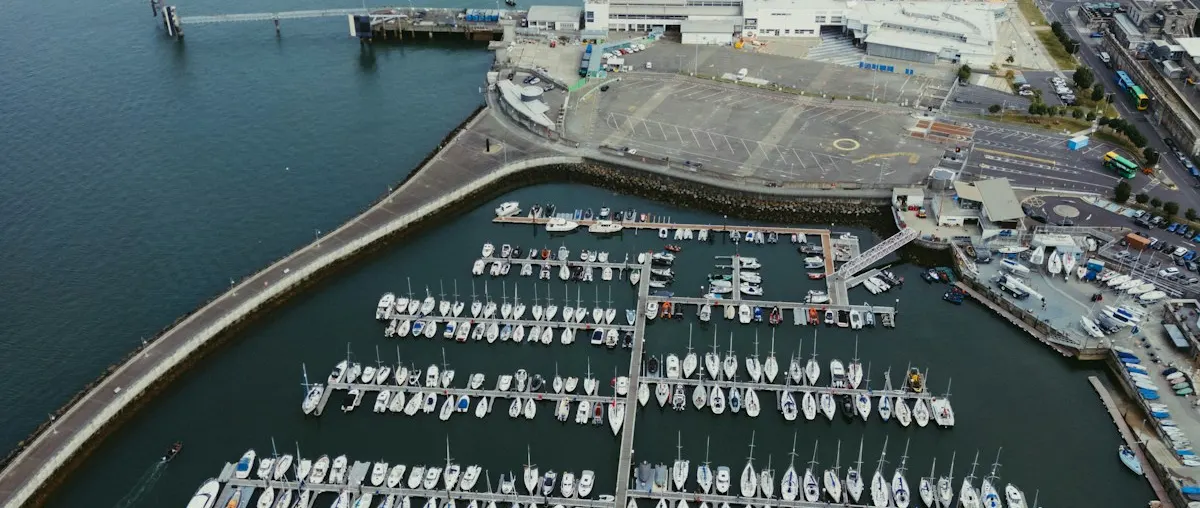
Dún Laoghaire Marina's own description gives a total capacity of 820 boats and says its berths accommodate vessels from 6 to 46 metres, with a stated maximum displacement of 240 tonnes. It also advertises 24-hour access for yachts drawing up to four metres. These published parameters are encouraging for Luxury Yacht Guide's 12-to-under-24-metre audience, although they are the marina's general capabilities rather than a guarantee of a particular free berth.
A 23-metre motor yacht and a 15-metre sailing yacht can have very different beam, draft, windage and shore-power needs. The best first step is therefore a direct enquiry with the marina office describing the exact yacht, desired dates and any special requirements. During busy periods, berth location may be the decisive factor. Even a well-equipped harbour works better when crew and staff agree the arrangement before the vessel appears at the entrance.
VHF and arrival registration
The marina asks intending visitors to call before arrival so a suitable berth can be allocated. Its published visitor page lists VHF M1 or 37a, M2 or 80a, and channel 16, as well as the office telephone number, for contact. Visitors should register at the marina office in the administration building at the top of the gangway after mooring. The page also suggests checking availability a couple of hours ahead in peak season.
Use the official harbour information and local notices to determine the correct approach and to understand commercial or other traffic. Prepare a clear briefing on fenders, mooring side and crew positions. Radio details and calling conventions can change, so the marina's current instructions take precedence over this article. The aim is to avoid a hurried search for a berth inside a large harbour while other vessels are manoeuvring nearby.
Fees and what should be checked in advance
The marina publishes visitor rates by vessel length and a separate category for short daytime visits. For a yacht owner, the important point is to obtain a dated quotation for the actual overall length and duration, including shore-power or other service charges. The official price table can change and there may be discounts for frequent visitors, so a generic cost estimate is less useful than the marina's confirmation.
Ask whether payment is taken at registration, what documentation is required, and how guests obtain access to facilities after office hours. A large yacht may need more than one ordinary electricity connection or have specific waste-management needs. These questions are routine but worth resolving before arrival. Budgeting is easier when the berth quotation is tied to the boat's actual requirements rather than an assumed rate taken from an old cruising guide.
A practical shore base for the crew
The marina lists fuel services, including diesel and petrol at its designated fuel berth, along with showers, toilets and laundry facilities. There is also access to ordinary town services, including restaurants, shops and a chandlery, within walking distance. This makes the stop useful on a longer passage: the crew can replenish supplies, attend to minor housekeeping and enjoy an evening off the yacht without travelling far.
Fuel arrangements deserve advance coordination, especially for a vessel with large tanks or an awkward berth. Confirm opening hours, hose access, accepted payment and safety procedures with the marina rather than turning up at a service berth without notice. Laundry and showers can be welcome conveniences, but a yacht's own systems still need regular attention. Treat the harbour stay as an opportunity to restock and inspect the vessel while still leaving time to explore.
Walking the East Pier and waterfront
Visit Dublin recommends the East Pier as one of Dún Laoghaire's characteristic outings. The broad harbour views make it a rewarding walk even for someone who spends much of their leisure time aboard a yacht. From the pier, visitors can look across the moorings and the working entrance and appreciate the engineering scale of the harbour. On a clear day, the waterfront provides a sense of the wider Dublin Bay setting that is less obvious from the cockpit.
The promenade also encourages a slower rhythm. Stop for coffee, watch sailing activity or return to town by a different street. Conditions can feel exposed on a windy day, so dress for the weather and use reasonable judgement near the water. Unlike a complicated inland excursion, the pier walk can fit easily around an afternoon arrival or the hours before departure. It is one of the pleasures that makes this marina more than a parking place.
People's Park and a Sunday market
Dún Laoghaire's People's Park adds greenery and a local gathering place to the itinerary. Visit Dublin and the town's own visitor information highlight the Sunday market, where food and craft stalls can lend a lively tone to a morning ashore. For a crew that enjoys finding provisions and small gifts, this may be more memorable than a formal shopping centre. Check the current schedule and any weather-related changes before relying on the market.
On other days, the park and nearby streets still offer a pleasant change from the yacht's deck. An easy route can connect the pier, town centre and gardens, with time for lunch before returning to the berth. This is not a fixed walking tour, and no one should feel obliged to do every stop. The real attraction is that Dún Laoghaire makes everyday shore pleasures accessible without the logistics of a separate marina transfer.
Dublin is close, but the town deserves its own day
The marina points out that rail and bus links to central Dublin stop near the waterfront. That provides the chance to explore the capital while leaving the yacht secure in a managed marina, and it can be particularly useful when different members of a crew have different interests. Some guests may prefer museums and city streets; others may choose a quiet day at the harbour and an unhurried meal.
Plan the city outing with the public-transport timetable and the berth's return-access arrangements in mind. Do not leave every person aboard dependent on the same transport connection if someone may need to return to the yacht earlier. It is also worth giving Dún Laoghaire a proper first afternoon, rather than treating it solely as a cheaper or quieter way to visit Dublin. The seaside character is a destination in its own right.
A flexible two-night itinerary
On arrival day, contact the marina, secure the berth and finish registration before going ashore. Use the afternoon for the East Pier and a casual dinner in town. The next day can be devoted to Dublin by train, or to a leisurely local programme that combines People's Park, the shops and a second waterfront walk. A Sunday visit might naturally revolve around the market if its trading hours suit the crew.
On the morning of departure, inspect lines and fenders, settle charges and review current forecasts, harbour movement information and the next route. If a long passage lies ahead, leave sufficient time for bunkering and any checks that must be completed under daylight. A marina close to a city can tempt crews into an overloaded schedule, but the yacht's safe departure should remain the organising priority.
Why Dún Laoghaire belongs on a luxury cruising route
The combination of substantial berth capacity, published accommodation for boats within the LYG length range, marina facilities and good shore connections makes Dún Laoghaire an appealing practical stop. Its official visitor guidance gives a clear route for berth allocation, and its history adds a distinctive sense of place. That is a more useful promise than implying there will always be a vacant berth or that Dublin Bay will be calm on the chosen day.
Owners should verify dimensions, draft, service needs and operating notices directly with the marina. With the logistics handled, the rewards are uncomplicated: an atmospheric harbour, a long waterfront walk, good access to town and the option of a day in Dublin. For a 12–23.99 metre yacht crew, it is a location where a sensible passage stop can become a satisfying short holiday.
Image credit: Dún Laoghaire marina, photographed by Jonathan Borba. Original photograph, used under the Unsplash License. The lead photograph is illustrative and does not depict an unverified product or berth.