The harbour as the starting point
Tobermory on the Isle of Mull combines the experience of arriving at a Scottish island town with the practical advantages of a managed harbour. Tobermory Harbour Association is a community company that received statutory harbour authority status on 12 June 2017. Its website identifies visitor moorings, pontoons, a fuel berth, a boat park, slipways, a fisherman's pier and facilities at Taigh Solais. For an owner of a luxury yacht between twelve and twenty-four metres, this is useful preliminary information because it identifies the operator responsible for a range of distinct facilities. It does not establish that any of those facilities has sufficient capacity for the owner's particular vessel at the preferred time. A yacht cruise built around Mull should start with a confirmed arrangement and allow the crew to make decisions about the surrounding waters according to actual conditions. The island's character can be appreciated from a town base without trying to approach every bay visited by road travellers.
Arranging a berth for a yacht over fifteen metres
The harbour authority expressly provides a booking contact for vessels over fifteen metres. This is a particularly relevant detail for the LYG readership because many marina reservation processes are principally designed around smaller recreational boats. Tobermory publishes the marine enquiries and booking number 07917 832 497, with bookings handled from 9 am to 5 pm, and identifies VHF channel 68 for marine enquiries. Its ordinary harbour office number is 01688 302876. The captain should use the appropriate contact and provide the actual vessel length, beam, draft and other material requirements. In particular, it is important to establish whether a pontoon berth is available or another arrangement would be more appropriate. Owners should not interpret the presence of visitor moorings as evidence that an individual mooring is suitable for the yacht's displacement or that a particular facility can be reserved by arriving without warning. Consult the current harbour instructions and confirm the actual arrangements directly.
Choosing how to connect the yacht with shore
The difference between lying alongside a pontoon and using a visitor mooring can materially affect a family's experience. A suitable alongside arrangement may simplify access to land and the movement of provisions, whereas a mooring requires a separate means of transferring people and equipment. The latter can be attractive to guests who appreciate being afloat away from the immediate quay, but depends on practical considerations such as safe access to the tender, prevailing conditions and the mobility of the people travelling. A family with young children or guests who require assistance may have different priorities from an experienced sailing crew. Discuss these requirements before choosing the arrangement. Do not assume a harbour operates a particular transfer service unless it has confirmed the details. The yacht's crew should know how the intended shore access works after dark and in less favourable weather, and which alternative would be appropriate if conditions change.
Seeing the town as a place rather than a backdrop
The built waterfront is among the most recognisable features of Tobermory. Its appearance has become closely associated with the visitor's impression of Mull, but spending time ashore allows the relationship between the town and the harbour to be understood rather than merely photographed. A walk along the waterfront can take in the different types of activity surrounding the boats, including local businesses and services used by residents. An owner arranging a family holiday can allow guests to explore independently for part of the day, rather than schedule everyone to return aboard after a single predetermined activity. The appeal of a yacht base is that the private accommodation remains available when a person prefers a quieter afternoon. As with any island destination, opening hours and the range of services may vary during the year. The harbour's website offers information about visiting and identifies local facilities; individual arrangements should be confirmed with the businesses concerned.
Taigh Solais and the community behind the harbour
The harbour authority is based at Taigh Solais, at Ledaig, and presents itself as a community organisation. That structure adds an interesting dimension to the visitor experience. A harbour serving an island settlement needs to accommodate local users, commercial activity, visitors and the maintenance of infrastructure. A yacht arriving for a holiday participates in that environment rather than acquiring exclusive use of the waterfront. Responsible visiting includes respecting designated areas, local instructions and the needs of people carrying out normal harbour activities. The association's website provides access to information about governance, safety management, harbour users and its projects. For owners who take an interest in the management of maritime destinations, this gives context to the services they encounter during a stay. The harbour's published facilities can serve as a starting point for a conversation about the yacht's needs, rather than a reason to assume that every service will be provided under the same terms.
Refuelling and preparations for the next passage
A published fuel berth can be particularly relevant to a motor yacht undertaking an island itinerary, but the existence of the service does not resolve every practical question about the operation. The captain should establish the product available, the supply arrangements, permissible dimensions alongside, opening conditions and the procedure for arranging the visit. Fuel requirements depend on the vessel's actual consumption and the intended route, including an appropriate reserve. Estimating consumption solely from the distance between two places can be misleading when the voyage is affected by sea conditions, speed or the need to alter the route. An owner should also avoid arranging a passenger departure at a time that leaves no allowance for provisioning or routine preparations. A harbour day can be planned to give the crew space for these responsibilities while the guests pursue an independent activity ashore. Nothing in the association's published facility list constitutes confirmation of a specific quantity of fuel or an individual booking.
Local notices and the yacht's actual operating constraints
Tobermory Harbour Association publishes notices to mariners on its website. A crew visiting an unfamiliar harbour should know how to obtain current local information and check it alongside the authoritative charts and notices relevant to the route. Changes affecting the use of a facility or the movement of traffic can be important even when the yacht has visited before. In addition to the physical dimensions of the vessel, the skipper may need to consider the windage and manoeuvring characteristics of the boat. A large flybridge motor yacht and a sailing yacht of a similar length may respond differently to the same conditions at low speed. The owner's preferred arrival time is only one element of the planning process. It should be possible to revise the schedule if the captain identifies a material concern. Guests who understand the provisional nature of yacht movements are better placed to enjoy the journey without placing unnecessary pressure on the people responsible for navigation.
Exploring Mull from a town base
An island visit can encompass far more than a sequence of yacht passages. Tobermory can serve as a point from which to arrange land-based excursions, walks and visits of interest to the family. The advantages of doing so include the ability to leave the yacht in an agreed location while guests explore parts of the island that are not readily accessible by sea. Confirm the availability of suitable transport in advance, particularly when the group includes several people or has special accessibility requirements. A route along the island's roads can take a different amount of time from that suggested by the distance on a map. Build a realistic programme around the actual excursion rather than trying to fit remote activities into a narrow interval before sailing. The crew can also arrange a quieter day aboard when the guests wish to rest. The ability to make those choices is one reason to allocate more than a single brief overnight stop to a destination of this character.
A flexible approach to an island holiday
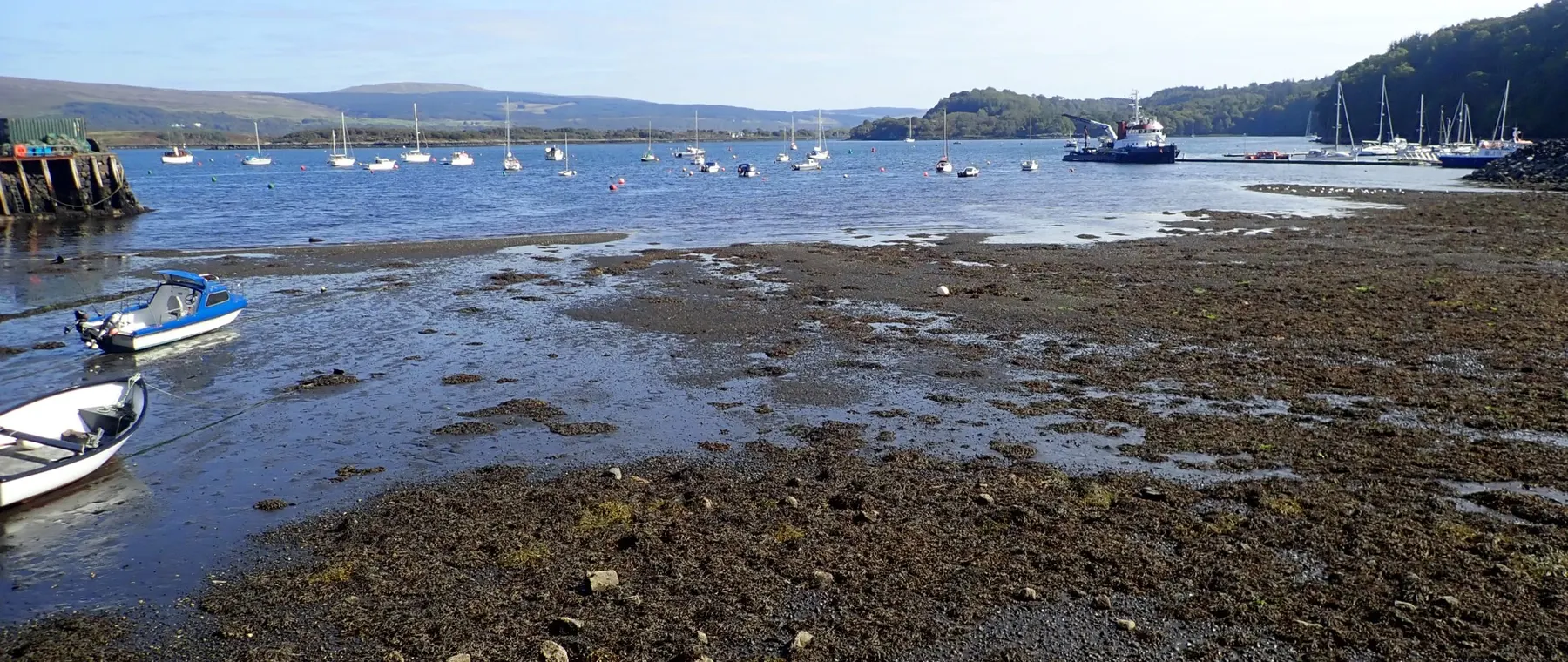
Tobermory's attraction for a luxury yacht owner lies in the combination of a recognisable waterfront, access to Mull's island landscape and an established harbour authority with clearly identified contacts. A sensible itinerary might begin with an agreed arrival, allow a day for the town and its surroundings and then reserve time for an independently arranged excursion. A later movement can be decided after the crew has assessed the conditions and confirmed the destination. The facilities described by the association are useful for that preliminary planning, but the individual yacht's requirements determine the final arrangements. The accompanying licensed photograph depicts boats in Tobermory harbour and provides a record of its maritime setting rather than an indication of current availability. Treat the town as a place to spend time, not a compulsory waypoint in a rigid circuit of the western islands.
Sources and photograph
Source documentation: https://tobermoryharbour.co.uk/, https://www.visitscotland.com/places-to-go/scottish-towns/harbours-seaside, https://www.visitscotland.com/places-to-go/islands/mull-iona. Photograph: Boats in Tobermory harbour — Eirian Evans / Wikimedia Commons, CC BY-SA 2.0. Resized for web display under CC BY-SA 2.0.