Thirty-four lots, many artistic voices
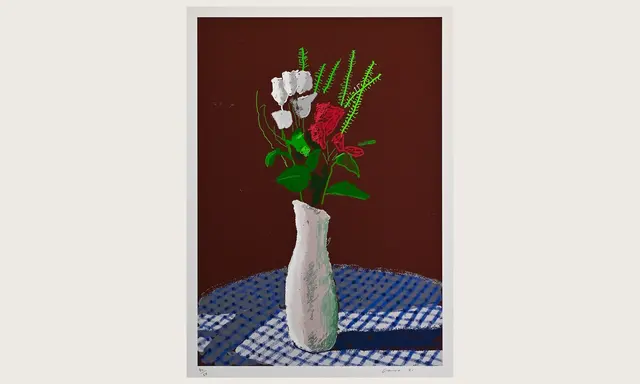
Sotheby’s Modern British & Irish Art Evening Auction is scheduled for 14 October 2026 in London, with 34 results listed in its catalogue. The opening work is an untitled piece by Dame Magdalene Odundo, followed by pieces by Gerald Laing, Henry Moore and Dame Barbara Hepworth. It is an unusual way to encounter the breadth of the category, from studio ceramics to painting and sculpture.
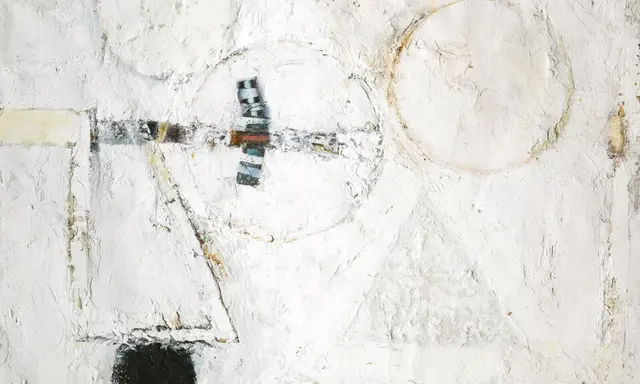
The auction includes further work by Frank Auerbach, Lynn Chadwick, Bridget Riley, Sean Scully and Jack Butler Yeats. Collectors who approach British and Irish art through a single period or familiar medium may find the mix instructive. Connections between artists exist, but the catalogue also demonstrates the independence of different practices and regions.
Ceramics alongside modern sculpture
Magdalene Odundo’s presence at the start of the catalogue places ceramics in a prominent position in a modern-art setting. Her vessels are valued for form, rhythm and surface as much as for their relationship to an ancient functional archetype. Such work challenges a rigid separation between fine art and applied craft.
Henry Moore’s Rocking Chair No. 4: Miniature and Hepworth’s Small Form (Amulet) offer very different ways of thinking about sculptural scale. Small sculpture is not necessarily preliminary to something larger; it may have an intimate relationship with the viewer that a monumental work cannot reproduce. Buyers should study casting, materials, dimensions and edition status for the exact object.
Auerbach, Riley and the language of painting
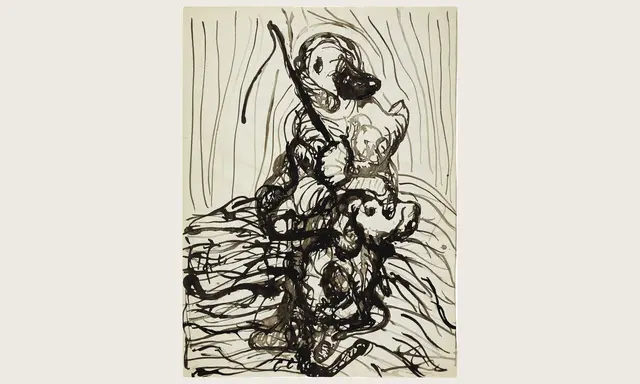
Auerbach’s Head of Julia and Figure on a Bed introduce painting and drawing informed by his sustained engagement with the figure. In the same catalogue, Bridget Riley’s Intervals 6 represents a very different exploration of looking, repetition and rhythm. The two practices invite different modes of attention, demonstrating why a collection can be coherent without being stylistically uniform.
The Scottish Colourists and Irish painters further enlarge that conversation. Works listed by F. C. B. Cadell, Samuel John Peploe and Jack B. Yeats reflect different approaches to colour and depiction. A careful collector will consider individual works in relation to an artist’s career, exhibitions and the available scholarship rather than depend only on a catalogue’s broad national designation.
Viewing an evening auction responsibly
Art offered in London can carry complex shipping and tax considerations for an overseas purchaser. Buyers should obtain a condition report, review the auction’s terms, understand buyer’s premium and discuss any export controls relevant to the item. These steps are particularly important where an older or fragile work is expected to travel far.
The intended setting also influences acquisition decisions. A significant sculpture requires appropriate structural support and safe handling, while a painting may need careful lighting and environmental stability. Measurements taken from the catalogue should be checked against the space in which the artwork will actually be seen.
What the sale says about an evolving field
The prominent placing of Odundo alongside modern British sculptors and painters reflects an expansive approach to artistic significance, one not limited to the most familiar hierarchy of media. The collection makes room for ceramic form and contemporary abstraction while maintaining a conversation with twentieth-century British and Irish traditions.
Sotheby’s catalogue identifies the individual artworks and supplies the operative bidding information. The announced 14 October event has not yet taken place, so estimates should not be confused with results. The strongest collecting decisions will be based on research, close observation and an understanding of how each work belongs within its maker’s wider achievement.