Classic Design arrives on the New York calendar
Sotheby’s has scheduled its Classic Design auction in New York for 14 to 28 October 2026, with an online catalogue currently showing 17 lots. The group places antique furniture and decorative objects at the centre of the discussion rather than treating them as secondary accessories to modern paintings. It includes a pair of Italian red porphyry urns as well as British furniture associated with the Georgian period.
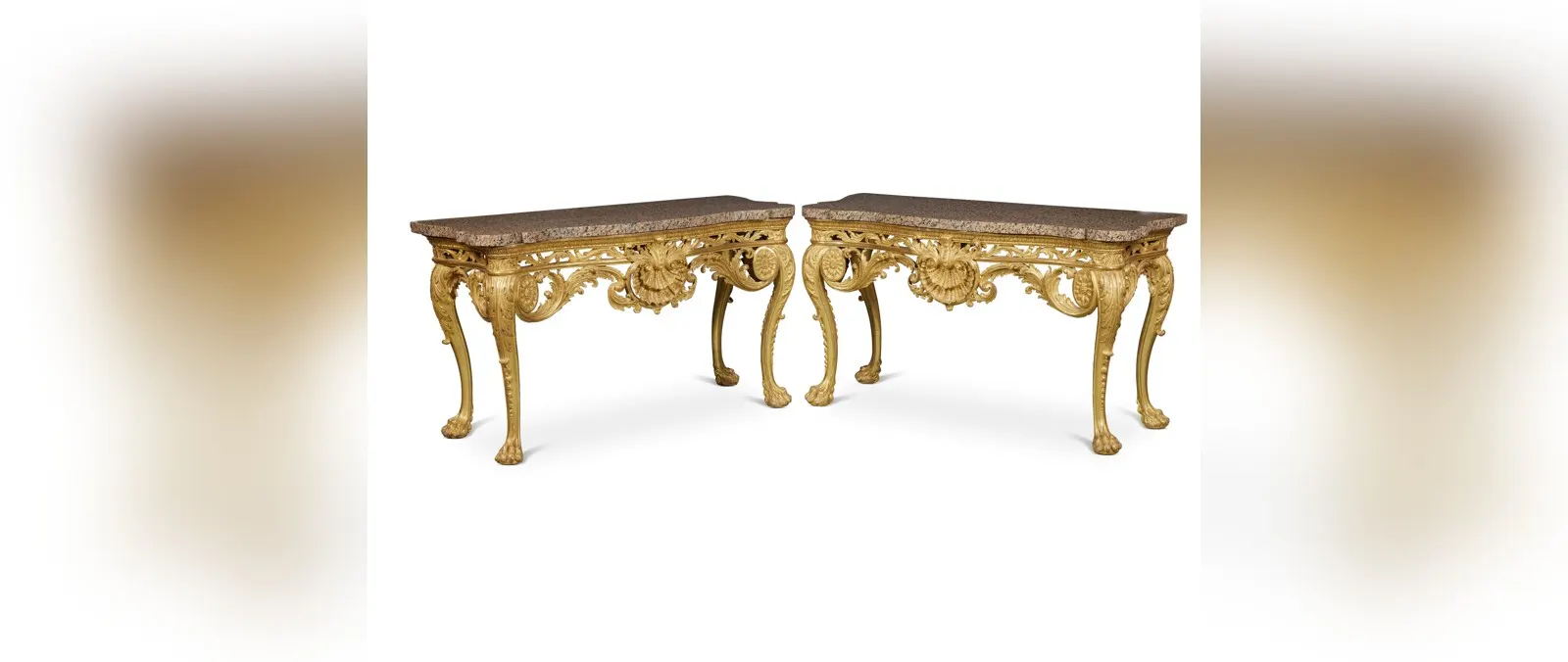
The published catalogue highlights a pair of George II giltwood console tables dating to around 1745, estimated at $80,000 to $120,000. A George II mahogany library table, described as in the manner of Benjamin Goodison and also dated to about 1745, carries an estimate of $10,000 to $15,000. The difference in price brackets illustrates why construction, attribution, rarity and decorative impact must be studied separately.
Why Georgian furniture still matters
Georgian furniture holds an enduring place in grand residential interiors because it combines confident proportions with a vocabulary of architectural detail. Giltwood mirrors and console tables often establish symmetry in entrance halls or reception rooms, while library furniture brings visual weight and utility. These objects can form the historical anchor of a contemporary collection without requiring the entire home to reproduce an eighteenth-century decorative scheme.
The auction also offers George III giltwood mirrors, demonstrating variations within a broad stylistic tradition. Period terms can make objects sound more uniform than they are: a piece’s region of manufacture, surviving original surface, later alteration and decorative programme can materially affect desirability. A collector interested in combining antique and contemporary work should therefore look closely at the actual object, not purchase on the basis of a period label alone.
Attribution is a technical question
The wording used for historical furniture is meaningful. A table described as in the manner of a named cabinetmaker is not represented in the same way as an item documented as having been made by that person. Cataloguing terms often reflect the available evidence, stylistic analysis and scholarship. They deserve careful reading, particularly where a maker’s name influences both the appeal of a lot and a bidder’s valuation.
Construction details can help corroborate or complicate those descriptions. Joinery, timber selection, carving, metal mounts and later repairs each tell part of the story. Sophisticated buyers commonly request photographs of undersides, drawer interiors and backs as well as the formal front view. It is equally prudent to obtain any available conservation record and ask whether gilding or surface finishes have been substantially renewed.
From saleroom to private residence
Antique furniture is an acquisition with practical dimensions beyond the aesthetic decision. Collectors should verify every measurement against a proposed room, allowing for door openings, circulation space and modern lighting. The fragility of gilding or veneered surfaces also influences how a piece should be crated, carried and installed. These requirements become especially important when moving works internationally between residences.
Insurance values and conservation plans should be considered from the outset. A historically significant table can be used, but frequent movement or exposure to changing temperature and humidity should be assessed with a specialist. Some collectors place antique furniture alongside contemporary art to create dialogue between periods; others prefer purpose-built rooms. Neither approach is inherently better, provided the object’s condition and authenticity are respected.
What makes this auction distinctive
Classic Design is a useful reminder that luxury collecting includes the applied arts and the materials of daily life. Porphyry, giltwood, mahogany and gilt-brass mounts represent different traditions of making, requiring their own expertise and care. A smaller published selection of 17 results may help buyers examine each object in greater depth before the closing dates.
Sotheby’s catalogue is the primary reference for the current descriptions and estimates, which may change as the sale progresses. Interested bidders should confirm lot details, condition reports and the terms of sale directly before bidding. The strongest acquisition will be one that can be appreciated not only for its prestigious origin, but for craftsmanship, documented history and a convincing place in an existing collection.