Saai Yue Heen at Four Seasons Hotel Dalian has introduced a winter menu that brings together seafood from northern China's coast and the patient techniques of Cantonese cooking. Announced on 19 November 2026, the seasonal selection is available through 28 February 2027 at the hotel's restaurant on the 39th floor. Executive chef Guo and his team have placed carefully treated abalone, long-simmered soup, braised lamb, swimming crab and geoduck among the dishes designed for the colder months. For travellers who enjoy fine dining as an essential part of visiting a city, the menu offers a way to explore the relationship between a coastal region's ingredients and a culinary tradition more commonly associated with southern China.
Winter has a distinctive place in Cantonese cooking
It is easy to describe a restaurant's seasonal menu merely as a list of new dishes. The more interesting question is how the chef responds to changes in climate, appetite and the market's produce. Cantonese cooking places great value on freshness and control of heat, but it also has a sophisticated tradition of slow-braising, double-boiling and preserving ingredients to develop depth. In winter, these methods can yield dishes that feel generous without depending on overwhelming seasoning. Saai Yue Heen's announcement places these methods at the centre of its approach. Guests who are unfamiliar with the cuisine may discover that a refined winter dinner involves a series of different textures, careful contrasts and clear broths as well as richly flavoured main courses.
A northern port city brings its own ingredients
Dalian's proximity to the sea gives the restaurant access to local seafood associated with the surrounding region. That context is important because Cantonese cooking does not have to be reproduced as an exact copy of a menu served in Guangzhou or Hong Kong. A chef working in Liaoning can draw on northern catches and adapt preparation techniques to express the quality of those ingredients. The resort describes this balance as part of the menu's identity. It would nevertheless be inappropriate to assume that every component is sourced locally or that the chef has personally inspected every catch without supporting evidence. Diners interested in provenance should ask where particular fish and shellfish were obtained, especially when availability changes with the season.
Abalone as the opening statement
The menu's marinated fresh abalone with caviar is one of its clearest expressions of slow preparation. According to the hotel's description, the Dalian abalone is treated gently at a low temperature and then braised for six hours in a seasoned soy marinade. The aim is to develop flavour without losing the seafood's characteristic texture. Caviar provides a contrasting saline note and a different mouthfeel. This is a dish where restraint matters. Excessively aggressive seasoning could obscure the ingredient the chef is trying to showcase, while insufficient care could leave the abalone chewy. Guests should expect a composed seafood course rather than a theatrical display of expensive products. The origin of the caviar itself is not detailed in the announcement, so it should not be attributed to a particular producer.
The patient technique behind double-boiled soup
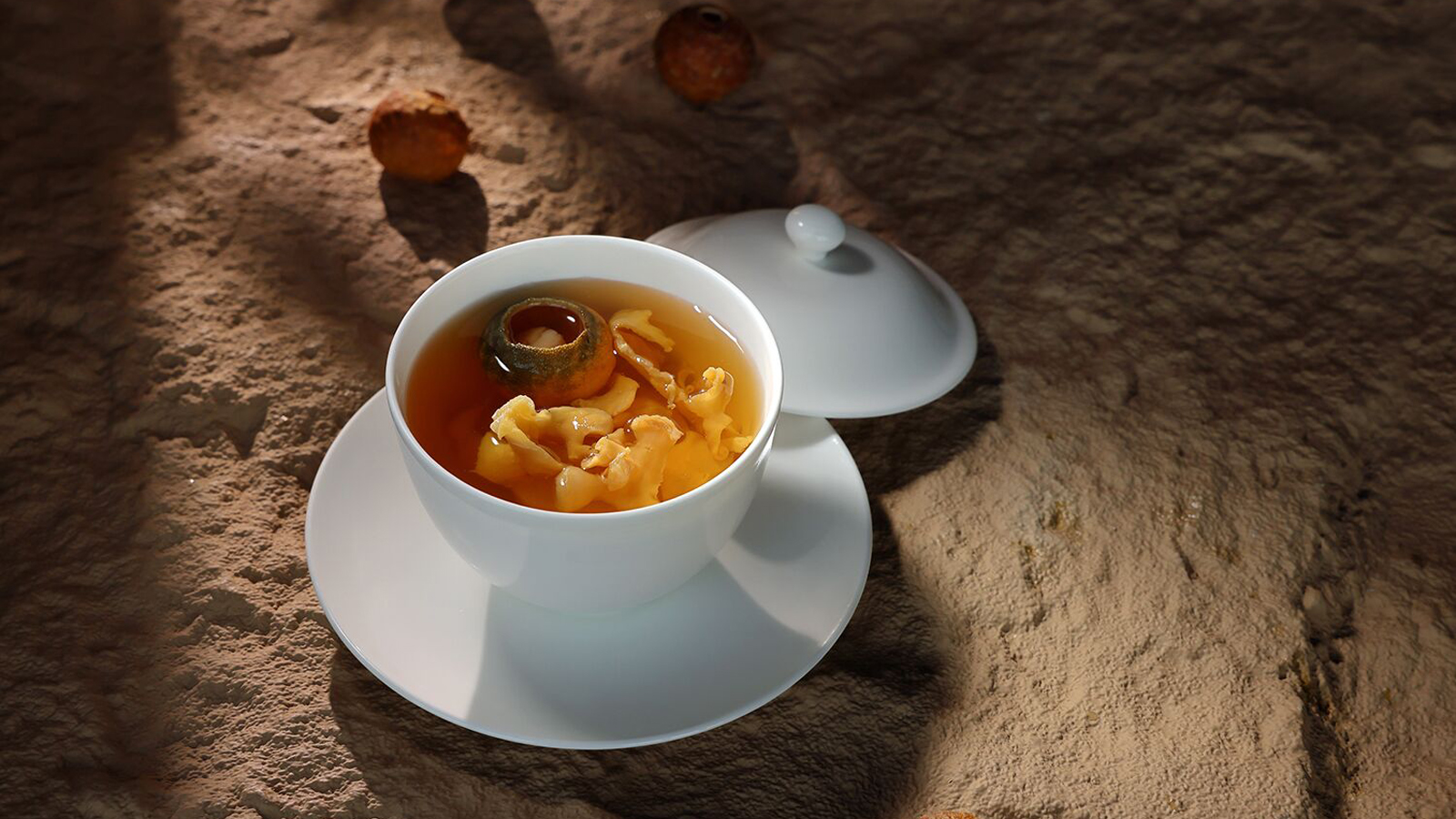
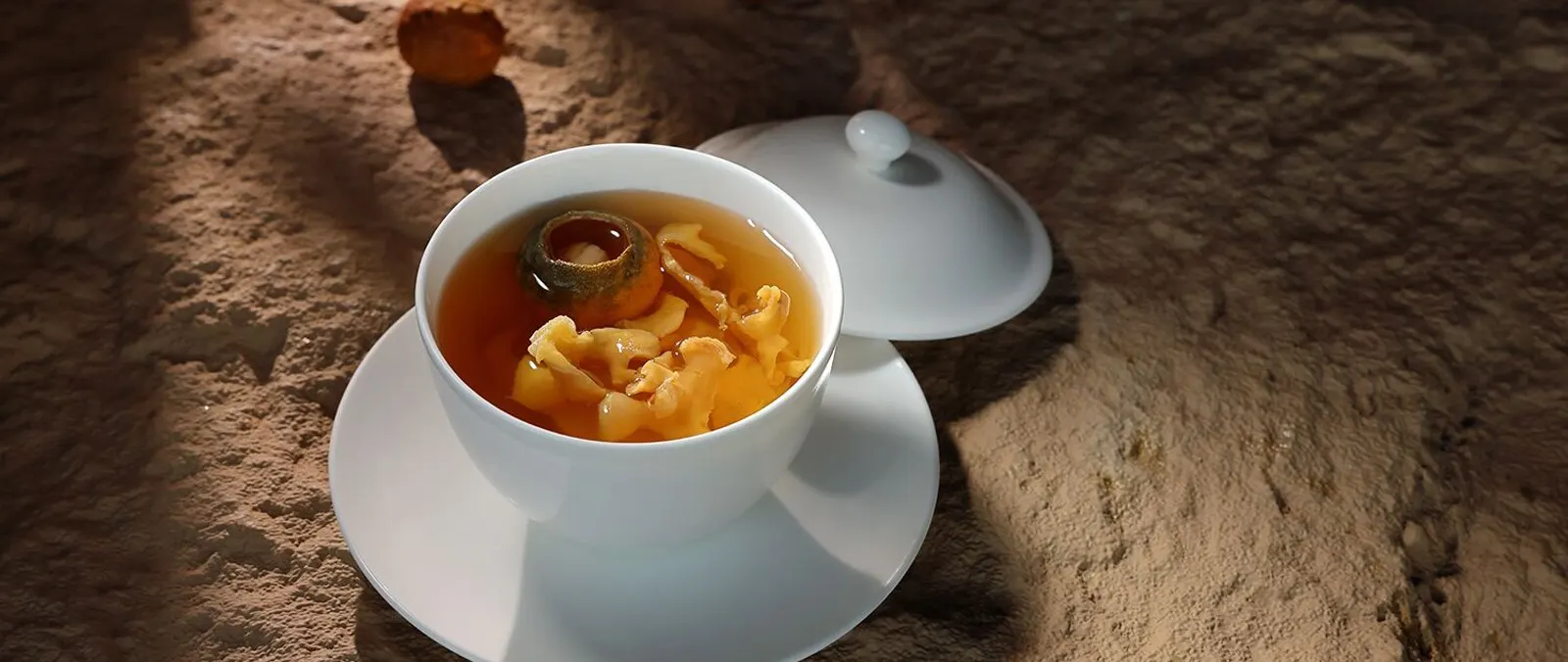
A conch and dried-scallop soup features a five-year-old green mandarin from Xinhui. The hotel's release describes a broth developed through several hours of gentle double-boiling, a process intended to draw flavour from ingredients without rapidly evaporating or muddying the liquid. The dried scallops contribute concentrated savoury depth, while the aged citrus is expected to introduce aromatic freshness and subtle bitterness. This is a good example of why an apparently simple bowl of soup can carry a great deal of technical work. The result depends on balance and timing. A properly prepared clear broth should allow diners to notice different elements rather than taste a single dominant seasoning. Its value is not measured simply by the ingredients' cost.
Aged citrus brings a different kind of luxury
The Xinhui mandarin element deserves particular attention. In Chinese culinary culture, aged citrus peel is associated with flavour complexity that develops through careful storage and time. The hotel's release specifically describes a whole five-year-old green mandarin in the soup. It does not provide a detailed explanation of grading, storage conditions or the exact preparation of the citrus. The essential point is how the ingredient contributes to the broth's character, balancing the savoury richness of conch and dried scallop. Diners who approach the dish with curiosity may find the subtle bitterness and fragrance more interesting than a simple display of rare seafood. It illustrates that high-end cooking can rely on patience and ingredient knowledge as much as elaborate plating.
Braised lamb offers a warming centrepiece
The menu also includes lamb brisket with yuba and mushrooms, presented in a clay pot. Four Seasons describes slow-braised black goat lamb belly accompanied by winter bamboo shoots, shiitake mushrooms, dried bean-curd sheets and water chestnuts. The result is intended to combine tender meat with a series of contrasting textures. The bamboo shoots bring a crisp element, mushrooms contribute earthiness, bean-curd sheets absorb the sauce and water chestnuts add a delicate sweetness. A clay pot supports the experience by keeping the dish warm at the table. It is also a format designed for sharing, which can make a meal more convivial. Guests should confirm portion sizes and any particular dietary needs; complex braises can contain ingredients not evident from the short menu title.
Swimming crab and handmade rice cakes
A dish pairing braised swimming crab with rice cakes from Taizhou explores the relationship between seafood juices and a starch that absorbs them. The rice cakes are described as tender outside with a pleasant chew, allowing the crab's sweetness to become part of the whole dish rather than remaining separate in the shell. It is a reminder that luxury dining need not make an expensive protein the only source of interest. Good rice cakes, carefully prepared, can carry flavour and give the composition its distinctive character. For guests who rarely eat crab, asking about preparation and service can make the experience more comfortable. Some dishes may require handling shells or the assistance of restaurant staff. Allergies to shellfish should always be communicated in advance.
Geoduck, pickled radish and bean noodles
Another seafood course combines geoduck clam, house-pickled sour radish and fine noodles from Taizhou. The hotel's description emphasises the contrast between sweet shellfish and the natural acidity of fermented radish. The noodles are expected to take on the flavour of the broth while retaining their resilience. This composition uses acidity to bring freshness to a dish that might otherwise feel rich. A refined balance is especially important with geoduck, whose texture can be a defining characteristic. The release does not specify a universal cooking time or a standard degree of firmness, and guests should avoid inferring one. What can be appreciated is the chef's attempt to make pickling, seafood quality and noodle texture equally important.
The pleasure of eating across several courses
A winter Cantonese menu can be particularly enjoyable when approached as a progression, beginning with delicate seafood, moving through a clear soup and then exploring richer braised dishes. The new Saai Yue Heen selection lends itself to that rhythm. The restaurant has not announced a fixed compulsory tasting-menu sequence for every table in the release, however. Diners should ask whether they are ordering à la carte, from a set menu or through another arrangement before planning an evening. People accustomed to European fine dining may also find sharing dishes an appealing change. A knowledgeable service team can explain portion sizes and appropriate combinations so that guests experience the cuisine without ordering too much food or repeating similar flavours.
A 39th-floor setting changes the occasion
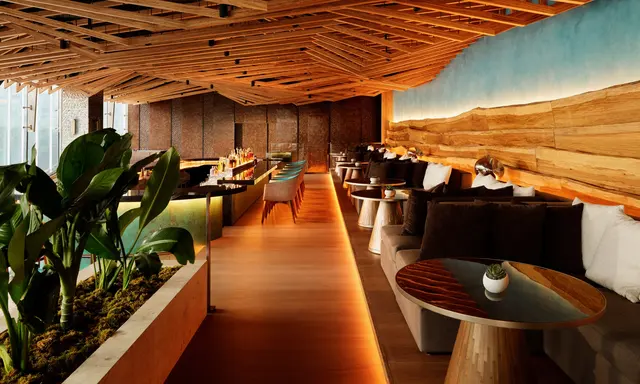
Saai Yue Heen operates on the 39th floor of Four Seasons Hotel Dalian. The height gives the restaurant an urban identity distinct from a standalone waterfront dining room, even though the menu celebrates coastal ingredients. The announcement does not guarantee a particular view from every table, nor does it describe the visibility or weather on any given evening. Guests planning a special occasion should request an appropriate reservation and clarify seating preferences. For visitors unfamiliar with Dalian, the hotel's location in the Zhongshan District can also make the restaurant part of a wider urban itinerary. The best dining plans leave room for travel time, local traffic and the possibility of spending more time at the table than originally expected.
Cultural curiosity matters more than an ingredient checklist
A diner could reduce this menu to abalone, caviar, crab and a list of luxury ingredients. That would miss much of its culinary point. The combinations also involve dried scallops, aged mandarin, fermented radish, bean-curd sheets and carefully made noodles. These are ingredients whose contributions depend on local knowledge, skilled preparation and the way they interact with seafood. Guests may discover something new by asking how a dish is traditionally made or why the chef has adjusted it for winter. Such curiosity is a respectful way to engage with the cuisine and avoids assuming that an internationally recognised hotel must serve food according to Western expectations. The distinctive pleasure lies in the kitchen's particular interpretation.
Planning a winter visit to Dalian
The hotel says the seasonal menu is available through 28 February 2027, at Saai Yue Heen on the 39th floor. Reservations are offered directly through the restaurant and Four Seasons Hotel Dalian, located at No. 45 Zhuyu Road, Zhongshan District. Those details should be reconfirmed when booking because menus, opening hours and specific ingredients can change. An international traveller should also check entry conditions, regional transport arrangements and any relevant food allergies. A visit built around one restaurant can work especially well when combined with time to explore the city's coastal scenery, but local weather in winter should inform the wider schedule. The experience is not contingent on visiting by yacht or on any particular marina arrangement.
A seasonal interpretation worth following
Saai Yue Heen's winter programme is notable because it places technique and local seafood at the centre of its luxury proposition. The abalone's long preparation, the complexity of the conch soup and the combination of geoduck with pickled radish all provide a stronger story than a generic announcement about seasonal fine dining. The restaurant is presenting a Cantonese culinary vocabulary through the ingredients and winter context of Dalian. Its success will ultimately depend on the quality of execution at the table, but the published menu gives discerning travellers a detailed basis for judging whether the experience suits their interests. For yacht owners whose journeys extend into Asian cities, it offers an opportunity to explore coastal culture through cuisine rather than treating the destination merely as a stopover.
Sources and image credits
Reporting based on Four Seasons Hotel Dalian official winter menu announcement, 19 November 2026.
Lead photograph: Saai Yue Heen Cantonese winter seafood menu at Four Seasons Hotel Dalian, original official press photography. Four Seasons Hotel Dalian original official winter-menu press photograph, made available with the 19 November 2026 media release for editorial reporting; image ownership remains with issuer Original official image source.