When a motor car is commissioned around life at sea
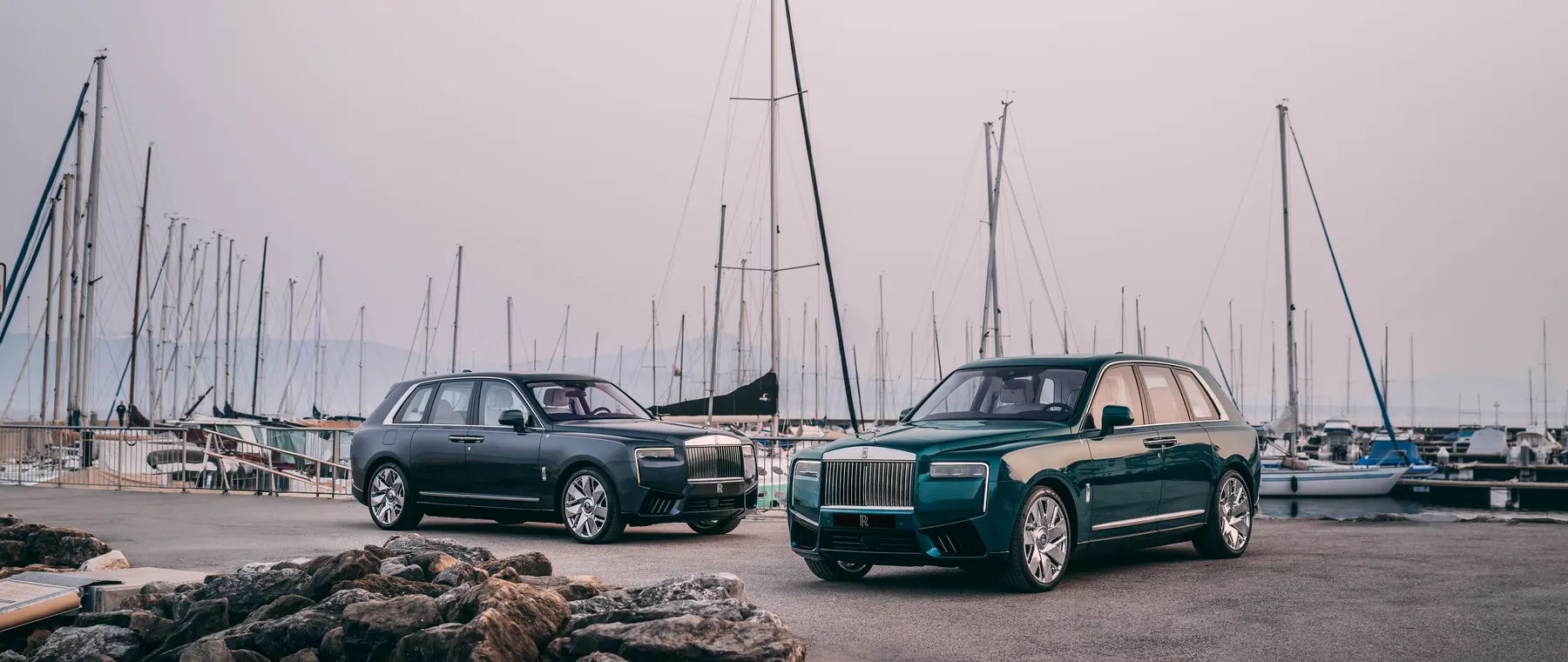
Rolls-Royce's Cullinan Yachting programme is an unusually direct translation of nautical craftsmanship into a luxury motor car. Presented in March 2026, it comprises four private Cullinan commissions, each named for a point of the compass: North, South, East and West. The quartet was conceived for a clientele familiar with the materials and visual language of yachting, yet the idea is more specific than placing a few maritime symbols on a dashboard.
Each car has its own exterior colour treatment and directional identity, while the shared interior vocabulary includes teak, a hand-painted wake across the fascia and fibre-optic headlining inspired by Mediterranean wind patterns. The project illustrates how a personal commission can begin with a familiar world and produce something that remains recognisably a Rolls-Royce. It also asks a useful question for yacht owners: which elements of life aboard are genuinely worth carrying into other designed objects?
These are four completed bespoke interpretations, not a new mass-produced trim grade with a standard option list. Rolls-Royce describes them as private commissions, and the release does not establish a general retail order book or a publicly quoted price for identical replicas. Buyers should make that distinction before treating photographs as a catalogue of features available without a separate commissioning conversation.
A painted tender wake as a signature
The central visual treatment occupies the fascia and picnic tables. Rolls-Royce artisans have painted a flowing wake intended to recall a tender moving across the water toward a yacht at anchor, with the direction of the composition tailored to each compass-point commission. That variation gives the four cars a coherent relationship without making their individual surfaces identical.
The manufacturer says the team spent two months refining pigments, application techniques and lacquering. Its described method involves introducing colour through airbrushing onto wet lacquer, then guiding the form with a fine brush and controlled airflow. The process is noteworthy because it relies on judgement about movement and depth rather than reproducing the same printed pattern every time.
A fascia finish named Piano Milori Sparkle supplies a deep metallic-blue ground for the work. In the yacht world, a wake is usually evidence of an event that vanishes almost immediately; here it becomes a permanent artwork. The strongest aspect of the idea is that it captures a memory of motion rather than literally attempting to make the dashboard look like a piece of deck equipment.
Why teak is more than a nautical decoration
Open-pore teak appears in the rear Waterfall panel, the rear centre-console lid and the doors. Teak's association with classic and contemporary yacht decks makes the reference easy to understand, but the use inside a climate-controlled cabin is a different proposition from an exposed marine deck. Its role here is to add warmth and tactile character rather than to make claims about waterproofing or practical seaworthiness.
The wood sits beside Arctic White and Navy Blue leather, a palette that recalls traditional yachting combinations without turning every surface into a costume. Rolls-Royce describes contrasting stitching, headrest monograms and detailed inserts as part of the treatment. The effect is intended to be layered, rewarding close inspection rather than announcing a theme through a single oversized emblem.
Material choice has an important lesson for both yacht and motor-car commissions. A wood can be selected for its grain and feel in one setting, while a marine installation might need entirely different treatments, fixings and maintenance procedures. Transferring the emotional appeal of teak does not mean the technical demands of a moving boat and a luxury cabin are interchangeable.
Forty-plus pieces in a compass motif
At the rear of the passenger compartment, a compass design is built from more than forty individual pieces of veneer. The maker identifies sycamore, teak, ash and Black Bolivar in the assembly, creating contrast through natural tone and grain. It is an intimate detail, closer to a piece of furniture-making than to the familiar application of a badge.
Marquetry requires the craftsperson to consider how cut pieces will read as a single surface, including the direction and behaviour of the grain. The number of elements alone does not prove quality, but it does reveal the design's complexity. A client may reasonably value the time spent choosing and fitting each small part more than a simpler decorative plaque in a more expensive material.
On a yacht, compass references can be overused in obvious places. The Cullinan design is more persuasive because the symbol is tucked into an interior architectural element, in dialogue with the wood around it. It provides a point of discovery for passengers who take the time to examine the rear cabin.
Mediterranean winds above the passengers
Each of the four motor cars receives a distinctive Starlight Headliner based on the wind patterns of the Mediterranean. Rolls-Royce describes a combination of static and animated fibre-optic points that translate interpreted air currents into a ceiling composition. Rather than showing literal navigation information, the design transforms weather into atmosphere.
For someone who regularly cruises the Côte d'Azur or the western Mediterranean, the concept may carry personal associations. Winds influence passages, anchorages and a captain's planning, but the roof graphic should be understood as an artistic interpretation rather than a live weather chart. Its purpose is to recall a seafaring environment in the quiet setting of the car.
The decision to vary the headliners parallels the four compass themes. It also offers an example of how digital and traditional techniques can coexist in high-end design: electronically controlled illumination accompanies hand-painted lacquer, stitched upholstery and assembled veneer. None of these crafts needs to displace the others when the overall visual brief is disciplined.
Four different exterior identities
North is finished in Crystal over Light Blue, chosen by the design team to suggest cooler seas. South appears in Crystal over Arabian Blue IV, while East uses Dark Silk Teal and West receives Sapphire Gunmetal. The colours establish different moods without abandoning the recognizable form of the Cullinan.
A compass emblem painted on the front wings highlights the relevant direction in red, while a two-colour coachline uses Phoenix Red and Arctic White. Rolls-Royce specifies fully polished 22-inch wheels, which it relates visually to bright yacht fittings. These smaller notes tie the cars together, leaving the main body colour to provide each one with its own identity.
The most interesting part of a four-car set is the restraint required to make every example distinctive. The compass marks could easily have become theatrical, yet the manufacturer placed them within established coachline and wing-detail traditions. That approach may resonate with yacht owners commissioning tenders, vehicles or residences intended to share a family resemblance with their principal vessel.
The Rolls family's connection with yachting
Rolls-Royce's explanation reaches back before the formation of the motor-car company. Charles Rolls' family owned Santa Maria, a substantial steam-assisted schooner, and the young Rolls spent time as her third engineer after graduating from Cambridge. The company cites cruises that took the family from England's south coast into Mediterranean waters, including calls at Malta and ports along the French Riviera.
The story matters because marine culture was not merely added as a contemporary luxury trend. The company argues that nautical proportion and surface treatment have influenced its design language for generations, pointing to the way the bodywork's lower line visually connects the car with the road. Modern commissions continue that relationship in more conspicuous forms, including yacht-inspired marquetry and coachbuilt models.
Historical references should still be separated from claims of direct engineering inheritance. The existence of a family yacht does not mean the Cullinan uses marine propulsion methods or equipment. What survives is a culture of personal travel, considered design and craft collaboration across different kinds of vehicle.
What yacht owners can learn from the commissions
These four Cullinans suggest a useful approach to connected design projects. Start with a specific experience, such as the rhythm of a tender wake or the prevailing winds along a familiar cruising route, and decide which aspect deserves to be translated into another object. The goal is not to reproduce an entire yacht salon on land, but to find a theme that remains meaningful after the context changes.
Prospective commissioners should also insist on clarity about materials and service requirements. A bespoke headliner, lacquered artwork or complex marquetry panel is an individual work that may require specialist repair if damaged. The same is true of extraordinary finishes aboard a yacht, where access, humidity and continued use can make maintenance planning as important as visual ambition.
Rolls-Royce has not supplied a general price list for the four private commissions in the announcement reviewed here, and it would be unhelpful to speculate about their resale values. The compelling aspect is the visual and craft programme: four related cars shaped by marine materials, directional themes and personal association. For collectors who already regard yachts as designed environments, the project shows how those values can carry into the arrival ashore.
The descriptions, dates and technical craft details in this feature are drawn from the official Rolls-Royce Motor Cars press information distributed through BMW Group PressClub, published on 26 March 2026. The accompanying photograph was issued by the manufacturer for editorial use. This article is an original interpretation for Luxury Yacht Guide, not a reproduction of the press release.