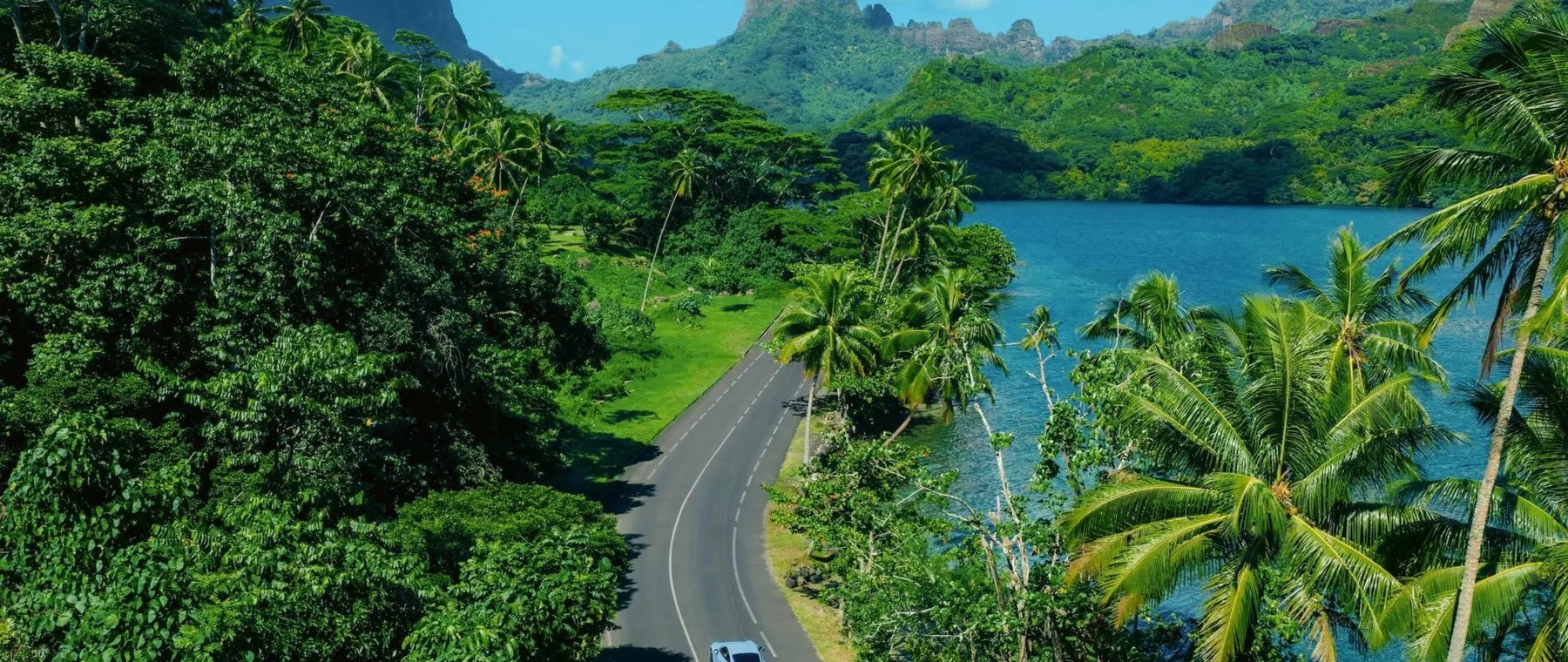
A sports car whose first journey was by sea
The first meaningful miles in the story of one Gulfblue Porsche 911 Carrera GTS were not driven at all. Before its owner could take the wheel in Tahiti, the car crossed oceans, changed vessels and made its way to an island market almost as far from Porsche's German manufacturing base as a customer can be.
Porsche published the account on 19 October 2026, describing a shipping itinerary of approximately 23,000 kilometres completed over 78 days earlier in the year. The unusual delivery gives a familiar luxury object an entirely different setting: the practical infrastructure that connects European manufacturing to the islands of French Polynesia.
The car belongs to Paul Pouvil, an established Porsche customer in Tahiti whose taste for the marque predates this purchase. It was configured in Gulfblue, a colour that draws a visual connection to racing history and works particularly well against the striking blues and greens of a Pacific lagoon.
This is a lifestyle story about travel, logistics and the anticipation of ownership, rather than a new model launch. The 911 was already a completed vehicle when it entered the transport chain, and the shipping distance must not be confused with mileage accumulated on its own odometer.
From a North Sea port to a Pacific island
The itinerary began at Bremerhaven in northern Germany on 20 February 2026. Porsche says the first vessel was the car carrier Höegh Trove, which proceeded through the Atlantic, around the southern end of Africa and across the Indian Ocean toward Australia.
After passing the southern Australian coast, the carrier continued to Auckland in New Zealand, arriving on 28 April. The route illustrates why a destination that looks deceptively close on a world map can demand an extensive chain of ports, sea passages and cargo handling when the goods are a specialist vehicle.
A second voyage was necessary for the final stretch. Porsche identifies the container vessel Capitaine Kupe, departing Auckland on 29 April and reaching Tahiti on 9 May, where the car arrived at Papeete's Motu Uta container terminal.
Porsche puts the distance at roughly 12,400 nautical miles, or about 23,000 kilometres, and describes the full transport period as 78 days. Those are manufacturer-reported figures for this particular delivery, not a normal published delivery time for every Porsche destined for the islands.
The merchant ships behind the glamour
The journey gives its owner an unusual link to a part of the maritime industry that remains largely invisible when a car is displayed in a showroom. Vehicle carriers are designed around the efficient stowage and movement of wheeled cargo, not the cabin amenities or outdoor spaces associated with leisure vessels.
Höegh Autoliners independently lists the Höegh Trove in its official fleet, identifying the ship as a vessel built in 2000 with capacity for approximately 6,500 car-equivalent units. That confirms the identity of the transport ship while adding useful scale to the otherwise personal account of a single 911.
The carrier's wider fleet includes newer ships and newer technologies, but the Trove should not be mistaken for its latest-generation Aurora class. The distinction matters because a journey this interesting needs no inflated claims about the specific vessel involved.
Transferring the car in Auckland also underlines the role of smaller regional connections. A major intercontinental carrier can bring cargo to a hub, while another ship and its port network carry the consignment to the final island destination.
The road begins in Papeete
At the destination, the vehicle emerged into the very different rhythm of Tahitian roads. Porsche's report follows the collection by Pouvil and the involvement of Jérôme Lety, the head of German Motors, which represents the brand in French Polynesia.
The centre in Papeete serves customers at extraordinary distance from Stuttgart-Zuffenhausen. That remoteness changes the experience of ownership: maintenance logistics, specialist parts and responsive local service can be as important as the desirability of the car itself.
Under the rear deck of this Carrera GTS is Porsche's 3.6-litre boxer powertrain with T-Hybrid technology. The manufacturer quotes 398 kW, or 541 metric horsepower, and 610 Nm for the configuration described, figures that are striking in the context of the modest speed limits on island roads.
A road capable of offering ocean views is not necessarily one suited to exploiting the full potential of a performance car. The interest lies in the steering feel, connection to the landscape and the contrast between highly developed engineering and a relaxed coastal driving environment.
Mooréa: the island journey continues
Porsche's account does not finish at the Tahiti showroom. The newly delivered 911 later took a local ferry to nearby Mooréa, swapping global freight shipping for a short island crossing that is part of everyday transport in French Polynesia.
On Mooréa, the coastal road threads through villages with mountains inland and lagoons offshore. A memorable vehicle may transform the drive into an event for its owner, but the island's appeal comes from the landscape and communities rather than the badge on the bonnet.
Porsche describes a route around the island and the road toward Belvédère d'Opunohu, where the elevated outlook encompasses Mooréa's distinctive bays. This is a drive best approached with room in the schedule for stops and local conditions, not as a high-speed circuit.
For visitors who ordinarily explore Pacific destinations from the water, the juxtaposition is especially vivid. The ferry terminal, reef-fringed bays and shore roads offer connected but quite different perspectives on an archipelago built around the sea.
What a remote delivery says about luxury ownership
Luxury purchasing can be presented as a moment of instant gratification, yet this delivery is built around waiting, specialist handling and an elaborate physical route. The product may come from a globally recognised factory, but its successful arrival depends on ordinary maritime competence.
The account also makes clear why a highly personalised vehicle requires care long after it clears a port. Reliable support from a local importer and the ability to arrange servicing and parts have special weight in a small market far removed from European distribution centres.
None of this turns an intercontinental shipping journey into an environmental statement. The published account establishes a route and a delivery story; it does not provide an independently audited carbon footprint for the car's voyage, and such a claim would require specific transport and vessel data.
The image that remains is simple: a Gulfblue 911 finally in the sun after weeks spent inside cargo ships, its real driving life beginning beside the Pacific. For an owner who loves both the machine and the islands, the long voyage is now part of the car's provenance.