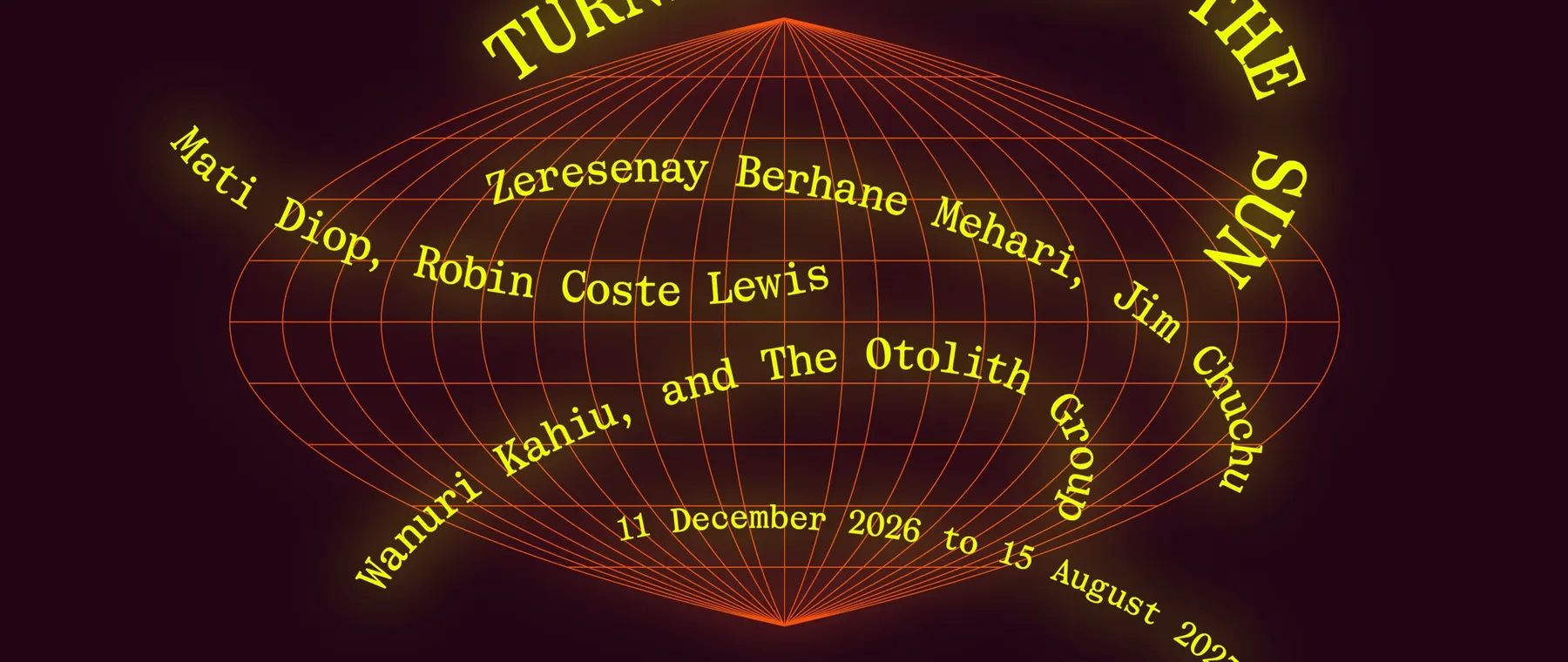
Cape Town's next major cultural appointment
Zeitz Museum of Contemporary Art Africa has announced Turning Towards the Sun, a substantial moving-image exhibition created with the African Film and Media Arts Collective and BMW. The programme is scheduled to open in Cape Town on 11 December 2026 and run until 15 August 2027, making it a timely addition to cultural itineraries for the coming Southern Hemisphere summer.
The exhibition is not a conventional luxury-brand display arranged around a product. Its centre of gravity is contemporary filmmaking from Africa and the diaspora, with artistic perspectives that ask how moving images, communities and institutions can build relationships across borders.
BMW's involvement began with artist Julie Mehretu's commission for the twentieth BMW Art Car, but the partnership has developed into a wider creative process. The completed Art Car will be presented in the museum's Atrium Bowl while the exhibition occupies Level Four, placing an automotive artwork in dialogue with film and collective practice.
For an art-interested traveller visiting Cape Town, the important distinction is between seeing a famous decorated vehicle and making time for an exhibition with an independent curatorial purpose. Both may belong on the itinerary, but they deserve room to be experienced on their own terms.
From an Art Car commission to a continent-wide exchange
Mehretu approached the Art Car project as an opportunity to create connections among filmmakers and artists, working with filmmaker Mehret Mandefro and the late Koyo Kouoh, Zeitz MOCAA's former executive director and chief curator. The resulting African Film and Media Arts Collective became a means of organising encounters and developing new work.
The project's five workshops were held in Lagos, Tangier, Nairobi, Dakar and Cape Town. That geography matters, because the exhibition is presented as the outcome of repeated exchanges across different places rather than an isolated commission prepared entirely for a single gallery.
Participants have examined how African cinema and moving-image work address identity, historical memory and collective imagination. The organising partners describe the workshops as spaces for dialogue and learning, a process that cannot be adequately understood through a single publicity photograph.
The collaboration also changes the usual story of an art-and-automotive partnership. Instead of ending with the unveiling of a decorated car, it continues through an institution, commissioned film and a public exhibition that visitors can encounter months after the original vehicle's debut.
Six artistic voices, connected but distinct
The announced artists and filmmakers are Zeresenay Berhane Mehari, Mati Diop, Jim Chuchu, Wanuri Kahiu, Robin Coste Lewis and The Otolith Group. Their work is brought together under the exhibition's title, but the programme is not presented as a single film or a uniform visual style.
According to the museum and its partners, the works engage with themes including Pan-African solidarity, personal and collective identities, complex political experiences and the ways moving images can carry knowledge. These are serious subjects, and visitors should expect a thoughtful museum encounter rather than an entertainment screening.
The exhibition's title draws on a statement associated with Senegalese filmmaker Ousmane Sembène, reworked to place African cultural production at the centre of the conversation. That framing is useful before a visit, because it helps explain why the curators are foregrounding multiple voices and the structures that enable them to be heard.
Some travellers may recognise individual names from cinema, poetry or the broader international art world. The rewarding approach is to arrive with curiosity rather than treating prior familiarity as a requirement, and to allow enough time for moving-image works to unfold instead of passing through each installation at photographic speed.
The Art Car as a companion work
BMW Art Car number twenty, designed by Julie Mehretu, is expected to be displayed in the museum's Atrium Bowl for the exhibition period. Its presence gives the project a striking physical marker, but the galleries' film commissions remain a separate and substantial part of the programme.
The BMW Art Car tradition has long placed contemporary artists in conversation with vehicle design. Here the more interesting evolution is institutional: a car commission helped catalyse workshops, film commissions and opportunities for exchange extending beyond the original automotive object.
For visitors interested in craftsmanship, design and collecting, the relationship can be revealing. A luxury object may attract attention, but the longer-lived cultural value often lies in the people and ideas a commission helps connect and the institutions able to support their work.
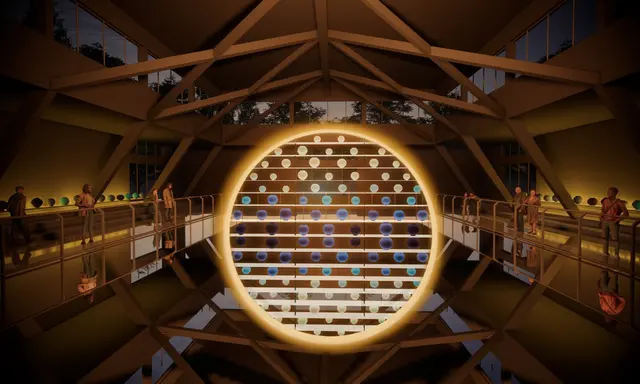
An image of the exhibition supplied through BMW's official press material accompanies this article with credit to Zeitz MOCAA. It should be read as documentary material for the forthcoming programme, not as evidence that all galleries were already installed or open in October.
Planning a considered museum visit
Zeitz MOCAA is in Cape Town, a destination with a strong cultural identity beyond its established leisure and hospitality circuit. The museum is an appropriate anchor for a day that also explores the city's design, architecture and contemporary creative communities.
The organisers currently state that Turning Towards the Sun will occupy Level Four between 11 December 2026 and 15 August 2027. These dates describe a planned exhibition period; prospective visitors can consult the event listing and should verify the museum's live calendar, ticketing and any closures before arranging travel.
Guests with a particular interest in moving-image work may benefit from a longer museum appointment than they would allocate to a collection of static objects. Film installations often demand time, so it is wiser to leave the schedule flexible than to assume that every work can be meaningfully absorbed in a brief walkthrough.
A knowledgeable local arts guide can help place the programme in the wider story of Cape Town, while the museum itself remains the definitive source for tours, accessibility arrangements and exhibition rules. Neither a private guide nor a hotel concierge should imply access to galleries outside the institution's own published conditions.
Why it belongs on a luxury travel itinerary
The most memorable private journeys do not necessarily depend on finding experiences unavailable to the public. A strong museum exhibition can enrich a stay precisely because it offers encounters with perspectives and histories beyond the carefully managed world of premium travel.
Cape Town's forthcoming exhibition is especially compelling for guests who follow contemporary African art, international cinema or the changing relationship between patrons and creative institutions. It can also appeal to collectors who want to understand the work and communities behind a high-profile corporate art commission.
For a family or group with different interests, the Art Car provides a natural introduction, while the films and related curatorial ideas invite deeper attention from those who wish to stay longer. Planning enough time for both avoids reducing the visit to a single object or a brand photograph.
Turning Towards the Sun is ultimately a story about artists, collaboration and the movement of ideas between cities. Its announced run into August 2027 gives travellers a generous planning horizon, provided they check the final programme with Zeitz MOCAA and make space for the art itself.