An English Channel harbour with a royal identity
Ramsgate's Royal Harbour is a memorable place to enter from the English Channel. High stone walls, working fishing boats, yachts and a long waterfront create a distinctly maritime arrival. Thanet District Council describes it as Britain's only Royal Harbour, a designation with history behind it rather than a modern branding exercise. Its outer marinas place visiting yacht crews close to cafés, restaurants and streets that rise beyond the quay.
For owners of 12-to-23.99-metre yachts, Ramsgate can be both a destination and a practical point on a longer coastwise or cross-Channel itinerary. Its position in East Kent makes France feel comparatively near, but proximity does not simplify customs rules, shipping traffic or weather. The best visit begins with careful navigation, a berth suited to the yacht and an honest view of how much the crew wants to do ashore.
A harbour with several distinct basins
The marina's own information distinguishes an Inner Marina, Western Marina and Eastern Marina. The inner basin principally serves permanent berth holders and has tidal access limitations around high water. Visiting craft are generally accommodated in the outer Western and Eastern areas. This means a visitor should not study an attractive photograph of one basin and assume their yacht can berth there.
The Western Marina lies to port after entering the Royal Harbour, while the Eastern Marina is further ahead and serves a mix of fishing, angling and visiting boats. Some manoeuvres demand care around banks, pontoons and other traffic. The harbour staff select a suitable position, and a berth assignment takes precedence over a visitor's preference for one skyline. Confirm available depth and access for your loaded draught.
Making the first radio calls
Ramsgate's official guidance distinguishes Port Control from marina staff. Port Control operates on VHF channel 14, while the marina berthing team uses VHF channel 80. The port says Control is staffed around the clock, and visiting boats should communicate as directed in the official approach procedure. Skippers must not treat one channel as a substitute for the other. Clear communication makes an already busy harbour markedly easier to use.
The order and wording of calls should be checked against the current harbour approach page and Notices to Mariners before arrival. Have vessel name, overall length, beam and draught to hand, together with an honest arrival time. An experienced skipper may still appreciate a second crew member monitoring communications while the helm focuses on steering. If the radio exchange is unclear, ask for it to be repeated rather than guessing at a berth.
Beware the banks and the harbour entrance
The harbour's approach notes warn about a drying bank on the eastern side of the Royal Harbour entrance and vessels emerging suddenly around the pier head. They describe the approach into the marina behind its substantial walls, where the perspective changes as the yacht comes closer. The official guide also references buoys, lights and the difference between the outer basins.
Such detail needs to be followed from up-to-date charts and official information, not converted into a fixed track from a lifestyle article. A visiting skipper should allow for commercial and fishing traffic, check tide and local visibility and make a conservative speed reduction. In stronger winds, high-sided motor yachts can be pushed toward a berth more quickly than intended. A sailing yacht may need additional time to prepare its lines after dropping sail.
A useful distinction for larger motor yachts
The visitor-berthing website provides a dedicated Western Marina request process for vessels over fifteen metres in length or over four metres in beam. That threshold is particularly relevant to Luxury Yacht Guide readers; many yachts that otherwise feel modest in a marina exceed it. A sixteen-metre cruiser may require advance contact even if its crew is accustomed to turning up at smaller harbours without a reservation.
Owners should take overall length seriously, including a permanently fitted bathing platform, tender equipment or bow projection where applicable. Beam and draught can matter more than nominal model designation in a confined basin. The safest plan is to ask the harbour office for a berth appropriate to the actual configuration. If the intended visit is during a popular event, contact staff early and keep another harbour option available.
Facilities for a comfortable stay
Ramsgate Royal Harbour lists water, electrical connections, showers, toilets, laundry, Wi-Fi and recycling among its marina facilities. It also identifies repair services, chandlery, a sail loft and lifting capabilities in the wider harbour. Those services can turn a leisure stop into a practical maintenance pause during a longer passage. However, availability, socket capacity and the operating hours of individual providers should not be inferred from a broad facilities list.
A mid-size yacht should confirm electrical requirements, fuel type, hose access and waste arrangements before arrival if a particular service is critical. A full freshwater tank and working battery system are reassuring even in a marina with shoreside facilities. Crews needing a specific repair or spare part should telephone the supplier, not simply rely on the general existence of marine trades. A good stopover offers options, not guarantees.
A real distinction between inner and outer access
According to the marina's guidance, the Inner Marina is accessible for roughly two hours each side of high water and is used primarily by permanent berth holders. That tidal gate should not be confused with the experience of a visiting yacht assigned to a suitable outer-marina position. The harbour's varied basins are a useful reminder that a single place name can describe several operating environments.
Similarly, a quoted dredged depth for an area should not be taken as a promise of depth under every berth or across every bank. The master needs current hydrographic information for the chosen route and position. If a deep-draught yacht is being considered, obtain specific advice from the harbour rather than extrapolating from an average figure. Seabed levels can change, and local control notices deserve more weight than a dated cruising blog.
Step ashore to Military Road and the arches
One of Ramsgate's pleasures is how closely the waterfront and town connect. Thanet District Council points to the cafés, bars and restaurants among the arches along Military Road, with many other places to eat and stay within walking distance. That gives visiting crews a genuine choice between dinner aboard and an evening among the quayside buildings. The transition from working harbour to social promenade is part of the destination.
The waterfront can be enjoyed without a packed list of attractions. After checking the berth, go ashore for a walk beneath the arches, look back at the marina in evening light and choose a table. On a brief visit, the atmosphere of the place may be more rewarding than racing between museums. Guests unfamiliar with the berth's security gates should note access procedures before returning after dark.
The piers and the shape of the harbour
The East and West Piers define the outer harbour and offer a visible frame for the arrival. From ashore, their long stone lines help explain why Ramsgate developed as a port and why vessels have traditionally sought shelter here. The council also highlights historic harbour buildings, including the nineteenth-century Smack Boys' Home associated with the fishing fleet's apprentice sailors.
A shoreline walk can therefore combine views and local history without requiring transport. Keep to publicly accessible areas and respect any working-port restrictions or temporary closures. In strong weather the outer breakwaters are not ordinary promenades; spray and exposure may be considerable. If the conditions are unsuitable, admire the geometry of the harbour from a safer sheltered viewpoint and save the longer walk for another day.
A working fleet beside the leisure yachts
Ramsgate is not a marina isolated from maritime labour. The council identifies fishing boats and vessels supporting offshore wind farms among its regular harbour users. That mix gives the waterfront character and also explains why clearance, professional traffic movements and harbour instructions matter. Visiting crews should expect a working schedule that does not stop merely because an owner wants to enjoy the view.
On arrival and departure, leave room for craft that may have different manoeuvring characteristics or operational priorities. The presence of a fishing vessel at a quay is not an invitation to berth alongside without permission. For guests, this working aspect can be a source of interest: a short harbour visit becomes a lesson in how coastal communities still connect commerce, food, marine engineering and recreation.
A Channel crossing requires separate preparation
The harbour's visitor information places Ramsgate approximately thirty-five miles from the French coast, which helps explain its attraction as a Channel gateway. But a coastal cruise and an international passage are different undertakings. A skipper considering a crossing must plan for shipping lanes, forecast, visibility, tide, passage duration, crew readiness and the relevant border formalities on both sides.
Do not use a destination feature as a clearance guide. Requirements for arrivals and departures, reporting and documents can change; confirm them with official authorities for the intended date and nationality of boat and crew. Weather may also dictate a completely different departure time from the one a restaurant booking suggests. The value of Ramsgate is having a useful harbour at the end of a prepared passage, not a shortcut around preparation.
An unhurried two-day itinerary
The first day works well when built around a daylight entry, a calm berth and a harbour walk. Guests can eat by the waterfront and spend a little time looking at the historic buildings before retiring aboard. The following morning leaves room for the piers, town streets and perhaps a longer excursion into East Kent if the boat is secure and the departure window allows.
That pattern suits a couple or family aboard a comfortable yacht because it protects the enjoyable parts of the trip from unnecessary pressure. If the forecast turns or the harbour has operating demands, a planned second night may be valuable. Confirm the current visitor tariff and any extension with the office instead of assuming a berth can automatically be kept. Good flexibility is one of the real advantages of private cruising.
Season, fees and what they include
Ramsgate Royal Harbour publishes a visitor charging schedule that distinguishes summer and winter periods and bases charges on the vessel's length. The authority's 2026–27 information also describes applicable service arrangements. Because fees can be revised and individual consumption or service terms may differ, readers should calculate costs from the currently published table rather than an unsourced figure in an older travel account.
For a large family cruiser, the berth rate is only one part of the call. Electricity, fuel, catering ashore and any professional assistance can affect the total. None of those costs should be guessed from a photograph of the yacht. Ask the marina exactly what the quoted rate includes and whether any seasonal booking condition applies. The answer is often more useful than comparing headline per-metre figures in isolation.
Why Ramsgate merits a deliberate stop
Ramsgate offers the combination that makes a short luxury-yacht visit satisfying: berths close to town, visible maritime history, an active working harbour and access to a larger cruising region. Its Royal Harbour name is supported by a real place with piers, architecture and daily marine activity, not by luxury retail alone. The practical attraction lies in having useful services and a waterfront to explore on foot.
Arrive with the correct official navigation information, request the right berth for the yacht's size and use both harbour radio channels as directed. Then slow down. A promenade, dinner ashore and a morning among the old harbour buildings can fill a weekend without demanding more miles. For yachts between twelve and 23.99 metres, that blend of planning and simple pleasure is the point of the visit.
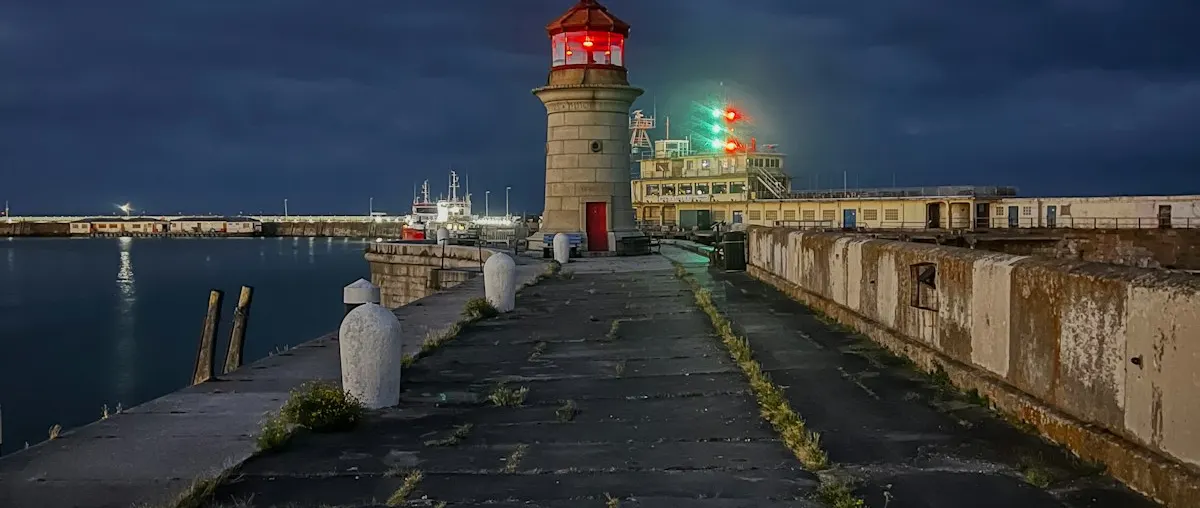
Image credit: Ramsgate harbour lighthouse in a dramatic sky — Patrick Federi / Unsplash. Original photograph, used under the Unsplash License. The lead photograph is illustrative and does not depict an unverified product or berth.