An encounter that carries a conservation responsibility
Four Seasons Resort and Residences on the East Cape of Los Cabos announced an initiative in November 2026 linking guest experiences with Whale Shark Mexico, a research organisation concerned with the protection and study of the world's largest fish. The programme allows visitors to support the organisation through an adoption-style donation and, subject to conditions, to arrange a guided excursion to observe whale sharks in the La Paz area. For luxury yacht owners and guests exploring Baja California Sur, the idea is particularly relevant because the surrounding marine environment is not merely scenery. Large fish, coastal habitats and seasonal wildlife movements are part of what makes cruising in the region memorable. A wildlife experience becomes more meaningful when visitors understand the limits of observation and the importance of research. The resort's initiative does not guarantee an encounter or confer ownership of a particular animal; it is a way of supporting the organisation's work.
Why whale sharks draw such attention
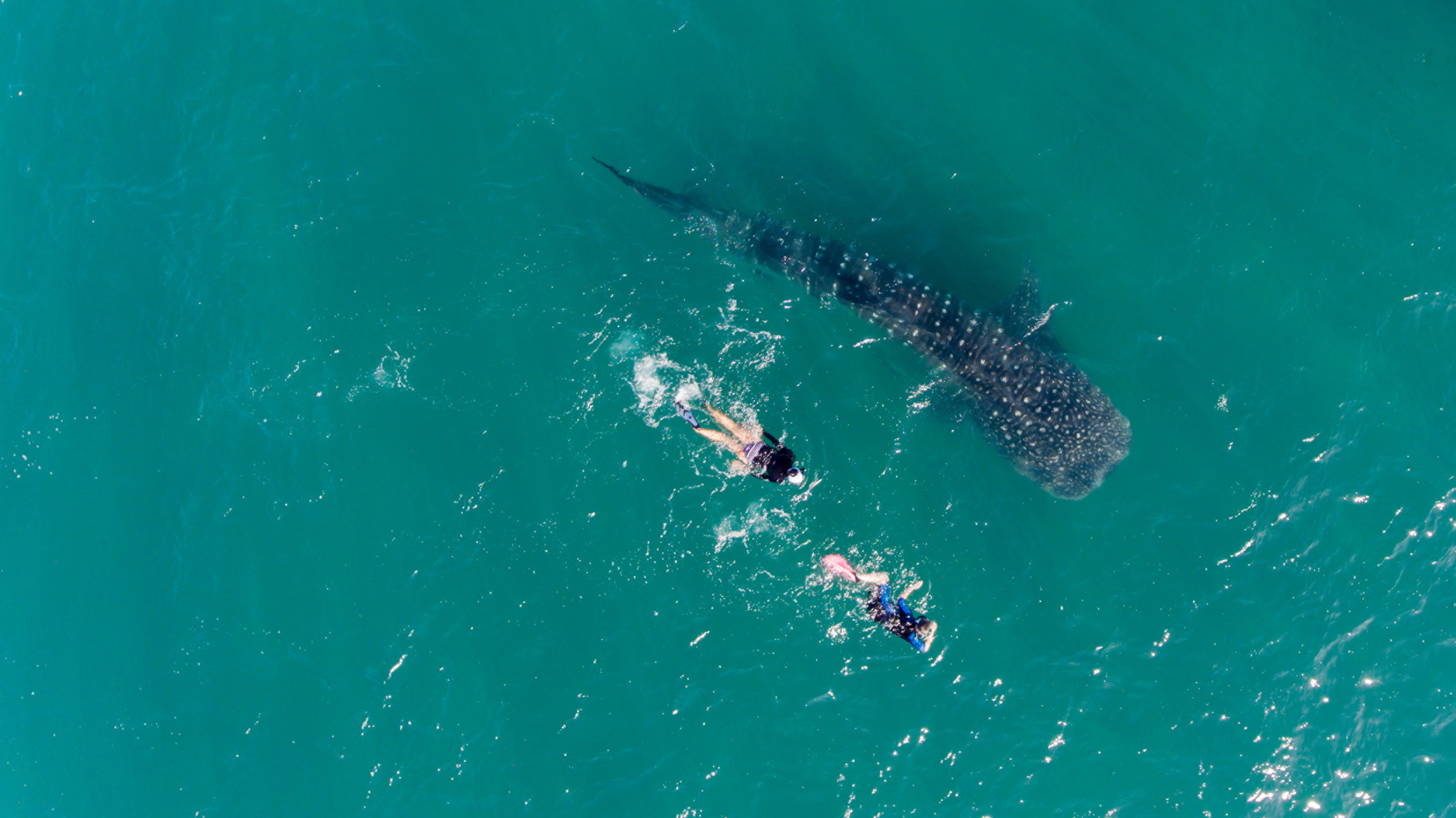
Whale sharks are remarkable because they are fish rather than whales, yet can grow to a size associated with very large marine animals. Their distinctive patterning makes individual animals potentially identifiable through photographic research. The resort's release highlights their seasonal presence near La Paz and describes the possibility of observing them in the water under an organised programme. This should not be interpreted as permission for an unplanned encounter from any yacht or tender. The species' movements depend on environmental conditions and local protection measures, while activities around them may be regulated. A responsible visitor should use an appropriately authorised operator, follow current local rules and accept that a sighting cannot be promised. The sense of wonder comes from observing a wild animal in its own environment, not from controlling its behaviour to produce a photograph.
The role of Whale Shark Mexico
The resort identifies Whale Shark Mexico as the organisation receiving the adoption donations. Its work is described in terms of monitoring, education and research into the animals' behaviour and the pressures that may affect them. Such projects can provide information useful to long-term conservation, but a hotel announcement cannot establish the detailed scientific outcomes of every contribution. Visitors who want to understand the programme should ask what the organisation is monitoring, which methods it uses and how it reports its findings. An adoption certificate can be a pleasant reminder of participation, yet the meaningful benefit depends on the work financed. This is a useful distinction for philanthropic travellers: personal recognition may make a donation memorable, but it should never be confused with ownership of wildlife or a guarantee that a particular animal will be protected by the action alone.
A donation rather than a purchase
The original announcement states that contributions begin at USD 100 and that proceeds from the adoption option go to Whale Shark Mexico. It describes an adoption certificate and additional mementos associated with the guest experience. Visitors should confirm the current terms directly because prices and programme details can change. A contribution is best understood as support for a conservation initiative rather than the purchase of an exclusive animal encounter. The resort notes that guests may adopt without participating in a day trip, a helpful option for people who prefer not to enter the water or cannot travel at the appropriate time. Someone visiting Baja aboard a yacht could therefore support the project while continuing a different itinerary. The strength of the programme lies in allowing participation at several levels and recognising that financial support and responsible observation are separate choices.
Correcting the geography of the experience
La Paz lies on the Sea of Cortez, also known as the Gulf of California, along the eastern side of Baja California Sur. It is not in the Gulf of Mexico, despite that wording appearing in the resort's press release. This distinction matters when planning travel because Los Cabos, the East Cape and La Paz are different locations within the peninsula, and the journey between them requires realistic scheduling. Yacht travellers should not assume that a whale shark excursion departs directly from their anchorage or that a resort transfer is automatically included. The captain may need to coordinate land transport, accommodation and suitable weather conditions. Clear geography prevents an ambitious wildlife excursion from turning into an uncomfortable or rushed day. A well-designed visit allows sufficient time for both the journey and the experience, with the possibility that circumstances may require a change of plans.
Seasonal movements are not a timetable
The resort identifies the period from November to April as associated with whale shark visits to the La Paz region. That is useful background, but wildlife does not operate according to a fixed hotel calendar. Water conditions, animal movements, local restrictions and the availability of authorised tours can all affect whether an excursion is possible. A responsible operator should explain the current situation rather than promise a sighting based on the date alone. For yacht owners, it may be worth building flexibility into the itinerary so that a day can be adjusted without pressuring the guide to approach animals under unsuitable conditions. The experience should not be judged a failure if wildlife is not present. Travellers who choose a conservation-oriented excursion need to accept the uncertainty that comes with observing wild species respectfully.
The difference between watching and pursuing
A whale shark is not a marine attraction that can be directed to a particular location for guests. Ethical observation requires minimising unnecessary interference with the animal's movement and feeding. Visitors should follow the guide's instructions on distance, entering the water and the use of cameras. The specific restrictions may change according to local authorities and conditions, so a publication should not invent a universal distance or claim that rules are identical worldwide. A yacht tender should not be used to chase or surround an animal simply because it has been sighted nearby. Guests who cannot swim comfortably or who prefer to remain aboard may still appreciate learning from trained guides, but participation options should be confirmed in advance. A memorable encounter can be quiet and brief. Its quality is not measured by the number of images collected.
How photography can support understanding
The spotted pattern of a whale shark can be valuable in research and identification when recorded using appropriate methods. Yet wildlife photography for personal enjoyment should not interrupt professional monitoring or encourage guests to enter unsafe positions. The most useful photograph may be one that shows the animal moving naturally, without crowds pressing close around it. Travellers can ask whether any images from their experience may be shared with the research organisation and what information would be useful. The resort's release does not establish a standard citizen-science procedure for every guest, so that participation should not be assumed. Cameras and underwater housings can also distract swimmers from their surroundings. A sensible visitor puts safety and the animal's welfare first, then records the experience if conditions permit. Sometimes the strongest memory is formed without looking through a lens.
Conservation and the luxury travel industry
Private travel can create opportunities to visit remarkable habitats, but it also imposes responsibilities. Yacht operators need to consider anchoring practices, waste management, tender movements and disturbance near sensitive wildlife areas. A single donation cannot offset every environmental impact associated with a voyage. The whale shark adoption initiative is therefore best viewed as one positive element within a broader approach to responsible travel. Owners may wish to support research organisations directly, use local guides with appropriate credentials and follow access restrictions even when they limit an itinerary. The resort's collaboration can help bring attention to a species that visitors might otherwise regard only as a photographic attraction. A meaningful programme encourages curiosity about conservation beyond the excursion itself and avoids treating the animal as a prop for luxury experiences.
Planning the excursion from an East Cape stay
Guests staying at Four Seasons on the East Cape should contact the property for current arrangements, seasonal availability and the precise scope of any excursion. Yacht travellers need to consider the location of their vessel, onward transport and the return journey. The original November announcement describes a potential day trip, not a guarantee that every date, guest group or operating condition will allow it. Visitors should ask about permits, operator qualifications, maximum group size and procedures if the weather changes. Safety equipment and the guide's briefing matter as much as the journey's presentation. Children or guests with mobility or health considerations may need different arrangements. A well-planned experience respects the guide's judgement if an activity must be cancelled. Wildlife is most rewarding when guests are prepared for uncertainty as well as the possibility of a remarkable sighting.
A wider connection with Baja's marine environment
Baja California Sur is attractive to travellers for its dramatic coastal landscapes and access to marine life. A whale shark programme can be a gateway to understanding how seasonal movements, protected areas and research all influence the region's relationship with the sea. It is worth resisting the temptation to interpret one species as representative of the entire ecosystem. Fish populations, water quality, coastal development and tourism pressures create a more complicated picture. Local scientists and conservation organisations are better placed to explain those relationships than a hotel brochure. Visitors can use the adoption initiative as a starting point for further learning and may discover other causes deserving support. For a yacht itinerary, this can add depth to time spent in sheltered waters and offshore passages, connecting leisure with informed appreciation of the environment.
What should last beyond the holiday
The strongest outcome of a conservation-oriented encounter is not necessarily a certificate or a photograph, but a change in the way visitors think about marine wildlife. The Four Seasons announcement provides concrete programme elements: partnership with Whale Shark Mexico, an adoption option beginning at USD 100 and the possibility of an organised encounter in the La Paz area. It does not establish guaranteed sightings or a universal season-long operating schedule. Those details must be checked with qualified local providers. For guests on 12-to-23.99-metre yachts, the experience offers an opportunity to link the freedom of a coastal voyage with support for the species that make such journeys exceptional. Responsible travel recognises that the animals belong in their habitat and that our most important contribution may be to leave them able to continue their lives with as little disturbance as possible.
Sources and image credits
Lead photograph: Baja Whale Shark Adoption Connects Coastal Travel With Marine Conservation — official Four Seasons first-party press photograph. © Four Seasons Hotels and Resorts, original property press photograph Original official image source.