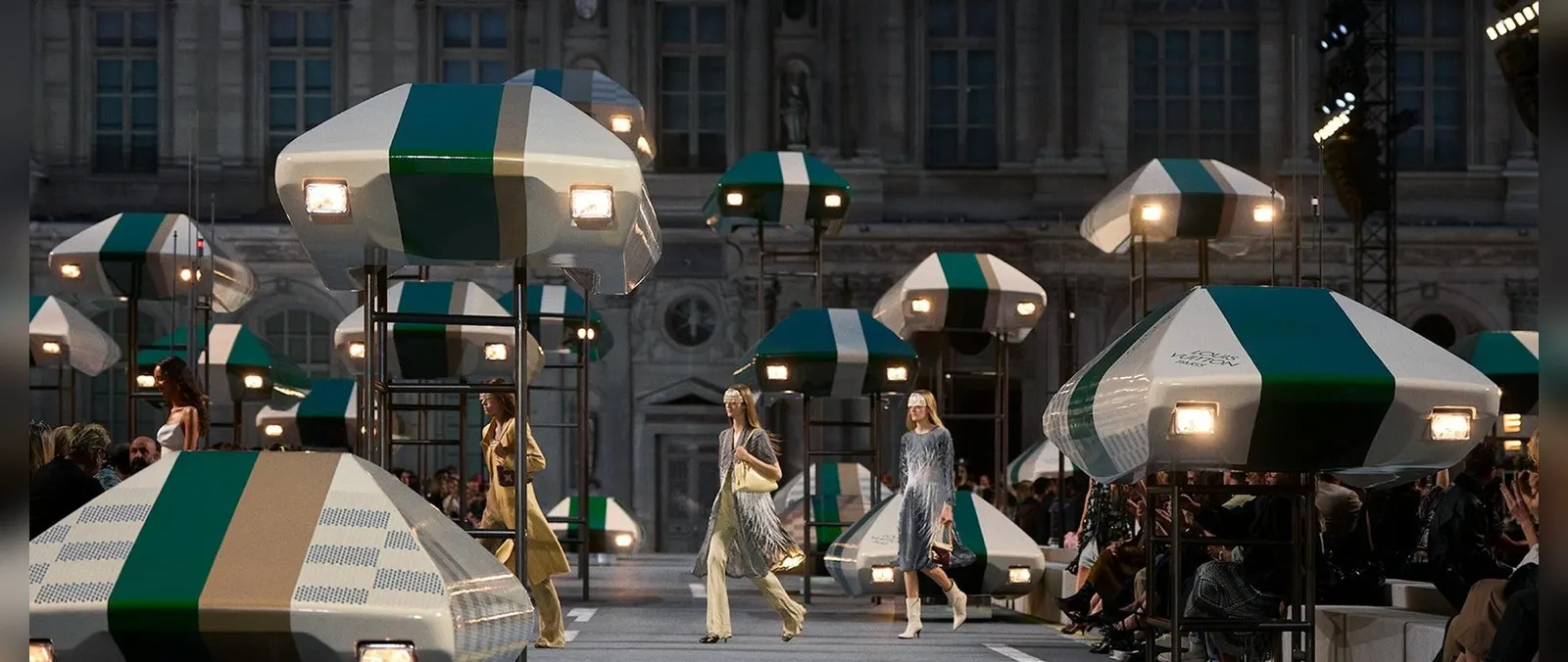
A runway proposition built around the body
Louis Vuitton's Spring-Summer 2027 presentation in Paris takes the idea of ergonomics as its starting point. Nicolas Ghesquière has approached form as something shaped by movement, rather than by rigid clothing structures alone. The house describes an ideal of lightness, bringing a practical question into the vocabulary of luxury runway design.
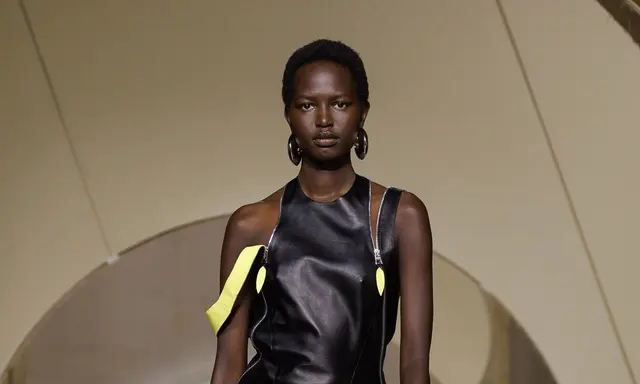
The collection was shown in the Cour Carrée of the Louvre, where an imagined cityscape framed the models. The setting created a deliberate contrast between urban infrastructure and clothing that appears almost weightless. The symbolism is striking, but the more important design issue is how tailoring and materials affect the wearer's freedom.
Fabric becomes an engineering problem
Louis Vuitton says its designers worked with double and triple composite chiffons, as well as silk and cashmere materials associated with scarves. These fabrics are intended to create movement and softness without sacrificing the control needed to hold a silhouette. The apparently simple appearance can conceal a complicated process of cutting and assembling.
For a wearer, comfort cannot be established merely through the way a garment falls on a runway. Fabric weight, seams, lining, temperature and ease of movement all matter in everyday use. The challenge for luxury fashion is to make sophisticated construction feel unobtrusive once the garment leaves the carefully controlled presentation.
Tailoring without unnecessary weight
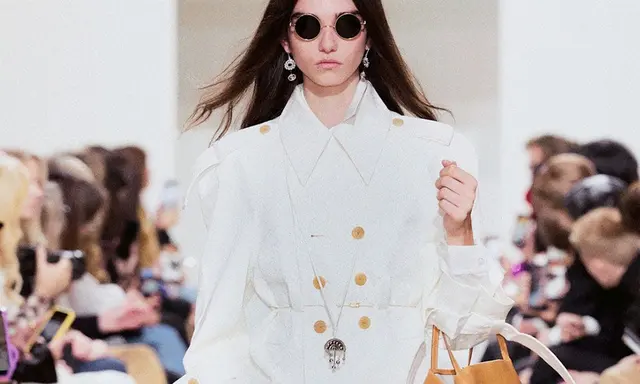
Ghesquière's approach includes removing internal layers from traditionally structured tailoring. This reduction changes how a jacket or dress responds when the wearer sits, walks or reaches for something. It also places greater demands on the precision of external cuts, because fewer hidden structures remain to correct or support the shape.
The house describes shoes that ground otherwise airy silhouettes, a reminder that an outfit is experienced as a complete system. Weightless upper garments do not necessarily feel balanced with every shoe or accessory. Clients interested in the new collection should assess the entire look, rather than assume an editorial photograph can answer practical questions.
Travel informs the house's design history
Louis Vuitton has a long association with travel, luggage and objects designed to move with their owners. An ergonomic fashion idea connects with that history without simply reproducing trunks or monograms on garments. Functional elegance can mean clothing that layers easily, resists unnecessary bulk and responds to the changing pace of a journey.
Travellers crossing climates need clothing that can be packed and worn in very different settings. Light textiles offer advantages, but care instructions and durability still deserve attention. A technically complex fabric may require more specialist handling than the relaxed silhouette suggests, so design innovation should be evaluated alongside long-term practicality.
A runway collection is not an immediate wardrobe
The October 2026 show previews Spring-Summer 2027 and should not be mistaken for a collection already available in every boutique. Individual styles, sizes, materials and delivery windows may change between runway presentation and commercial release. Collectors should confirm the final offering directly with Louis Vuitton rather than rely on speculative availability claims.
The enduring question is whether the concept of bodily freedom translates into garments that people choose to wear repeatedly. Fashion achieves a different kind of luxury when a design's complexity disappears into ease of use. Ghesquière's ergonomic language offers an interesting test of that principle for the coming season.
The relationship between runway and craftsmanship
Lightness in a finished garment can require more precise labour than a visibly structured piece. Seam placement, fabric tension and the interaction of different textiles determine whether the intended fluidity survives regular movement. The wearer may never see these decisions, but will feel them during a long day of travel or social engagements.
Louis Vuitton's design language also invites a discussion about what constitutes luxury in a changing climate. Breathability and ease are practical priorities, while expensive materials alone may not solve them. The collection's success with clients will depend on whether its proposed elegance remains convincing away from the runway lights.