M7 in Doha is presenting ERDEM: About Time, About Her, a retrospective marking twenty years of the British-Turkish designer Erdem Moralioglu's fashion house. Running until 26 December 2026, the exhibition brings together more than 150 objects, including garments, drawings, studio material and personal ephemera. Selected works from the Museum of Islamic Art are placed alongside pieces from the fashion archive, giving visitors an opportunity to consider how clothing can enter into a wider conversation with painting, sculpture and decorative arts. Curated by Olivier Gabet, with exhibition design by P. Joseph and an immersive installation by Robin Brown, the show is organised across five thematic chapters. For luxury travellers and collectors, this is not simply a display of expensive dresses. It investigates how a designer builds a visual language through research, materials, memory and the stories of the women who inspire the work.
A twentieth anniversary without a simple chronology
Fashion retrospectives often begin with the earliest collection and proceed year by year, making design history feel like a sequence of seasons. The Doha exhibition takes a different approach by using five themes to examine recurring ideas and relationships. This allows a garment made at one moment to be considered beside another that expresses a similar interest many years later. The result can reveal continuity that a chronological display might conceal. However, it also asks visitors to pay attention to curatorial interpretation: the arrangement reflects decisions made by the exhibition team and does not mean every object was originally designed as part of the same project. The twentieth anniversary provides a reason to revisit the archive, but the exhibition's value lies in the questions it opens about fashion as creative work rather than merely in the age of the label.
Erdem Moralioglu's creative identity
Erdem Moralioglu is associated with elaborate textiles, floral references, sophisticated pattern and collections that frequently draw on historical research and imagined characters. His work can appear romantic at first glance, yet careful observation reveals attention to structure, surface and the relationship between fabric and silhouette. A designer's signature is not a fixed formula; it develops as new materials, collaborations and cultural interests enter the practice. The exhibition's anniversary format makes it possible to examine those changes through objects rather than rely on the narratives of a runway campaign. Visitors may find that an early sketch illuminates a later garment, or that an unexpected construction detail explains how a familiar visual effect was achieved. Such evidence matters to collectors because it moves discussion beyond brand recognition toward the decisions involved in making the work.
The Human Hand: In the Atelier
The first thematic chapter, The Human Hand: In the Atelier, examines formative material including early sketches, work from the designer's education and objects connected with his studio practice. This is an important part of the exhibition because a finished garment can conceal the experimentation and labour required to produce it. Drawings may show ideas that changed during development, while fabric samples or atelier notes can reveal the process of refinement. The title also acknowledges the role of skilled people who translate a design into wearable form. Luxury fashion often emphasises the creator's name, but exceptional work depends on pattern cutters, embroiderers, seamstresses and other specialists. A retrospective can encourage visitors to value those contributions without pretending that every individual maker is identified in the public programme. The process itself is worthy of attention.
Typologies: ERDEM Codes
Another section, Typologies: ERDEM Codes, looks at the recurring visual language of the house. A motif can become recognisable through repetition, but repetition alone does not create a meaningful signature. The interest lies in how a designer returns to familiar forms and changes them through different materials, scales or contexts. A floral textile, for example, may appear delicate in one collection and dramatic in another depending on construction and presentation. The official exhibition description does not provide a complete object-by-object comparison, so a report should not invent pairings that visitors have not been shown. The curatorial concept nevertheless invites close examination of line, colour and surface. For collectors, understanding a designer's visual codes helps distinguish a representative piece from an attractive but less characteristic work. That judgment should be grounded in research and condition as well as appearance.
Objects of Affection and the museum collection
The chapter Objects of Affection places ERDEM garments in dialogue with works selected from the Museum of Islamic Art in Doha. This is a particularly interesting curatorial decision because clothing and historic decorative objects can share interests in ornament, craftsmanship and symbolic detail while serving very different purposes. A museum object may have been made for a specific social or religious context that should not be flattened into a generic source of inspiration. The exhibition can be most effective when those differences remain visible. Visitors may look for relationships between pattern, material or colour, but should distinguish what the designer directly studied from what the curator has brought together for interpretation. A fashion display gains cultural depth when it acknowledges the independent history of the objects with which it is presented rather than treating them as interchangeable decorative references.
The Muse and the idea of an imagined life
The exhibition's chapter The Muse explores personalities and stories that have informed Moralioglu's work. Fashion can create a character without copying the wardrobe of an actual person, using research to imagine how someone might dress, move or inhabit a particular world. That is one of the creative strengths of narrative-led design. It is also important to distinguish historical evidence from invention. A character inspired by a real individual may become an artistic interpretation rather than a documentary reconstruction. The garments should be appreciated in that spirit, with attention to how emotion and imagination influence construction. Collectors sometimes attach special importance to pieces associated with particular figures, but a strong story should not replace verification of an object's provenance. Design narrative and ownership history are related but separate aspects of meaning.
An imaginary conversation with the present
The closing chapter, The Imaginary Conversation, celebrates the house's autumn/winter 2026 anniversary show. By bringing a recent collection into the same exhibition as archival work, the curators demonstrate that the designer's practice is continuing. A retrospective need not imply that a career has reached a final conclusion; it can provide an opportunity to understand the present through the past. The approach also changes the way visitors see contemporary fashion. A garment from the latest collection may contain an idea developed many years earlier, while new techniques make an old interest appear different. The public programme calls the final chapter a vibrant conclusion, but individual visitor responses will naturally vary. The significance lies in the connection it invites between memory and invention, rather than the claim that any one collection represents a definitive final statement.
More than garments on mannequins
M7 says the exhibition includes over 150 pieces and materials, including sketches and personal or studio objects. That range gives visitors more than a parade of finished clothing. A garment can be judged for visual impact, but process material may explain why it takes a particular form. The inclusion of archival ephemera can make the designer's working life visible, though it also creates conservation and display challenges. Fragile textiles and papers require careful environmental control, and some objects may not be suitable for prolonged exposure to strong light. The institution's official programme does not publish every conservation method used in the installation. Nonetheless, presenting varied materials within a coherent setting is an important curatorial task. For collectors, it reinforces the idea that fashion history can be documented through objects that were never intended to be sold as luxury products.
Fashion as an object of collecting
High-fashion garments can be collected for aesthetic, historical or personal reasons. An important early design, documented runway piece or garment associated with a significant exhibition may attract attention beyond its original use. Yet not every expensive dress becomes a desirable archive object. Condition, provenance, rarity, size, alterations and the designer's place within fashion history all matter. A retrospective can strengthen scholarship and awareness, but it does not create a guaranteed secondary market for everything bearing the label. Collectors should be especially careful with textiles that have been worn or stored in unsuitable conditions. Conservation may require expert advice, and inappropriate cleaning can cause permanent damage. The exhibition offers an educational framework, not an invitation to treat clothing automatically as a financial investment.
A cultural destination in Msheireb
The exhibition is hosted at M7 in Msheireb Downtown Doha, a venue devoted to fashion, design, technology and creative entrepreneurship. Its location makes it possible to include the show in a wider cultural visit to the city. Travellers who come to Qatar for business or leisure may wish to pair the exhibition with museums, dining and other design programmes. The official visitor information lists the exhibition through 26 December 2026, with Saturday-to-Thursday hours of 11 a.m. to 9 p.m. and Friday opening from 3:30 p.m. to 9 p.m. Visitors should verify ticketing and any schedule changes with M7 before arrival. The museum is a cultural venue, not a yacht marina or private charter service. Its relevance to the LYG audience is the chance to engage with international design while travelling through the Gulf.
Qatar's wider cultural programme
M7 describes the exhibition as part of the Qatar, Canada and Mexico 2026 Year of Culture, placing the designer's retrospective in a broader programme of cultural exchange. Such initiatives can create new audiences and opportunities for artistic dialogue, but a single exhibition should not be presented as a complete representation of every country involved. Fashion is one form of expression among many, and Moralioglu's own identity and practice involve particular personal histories. The curatorial team includes specialists with experience in museums and exhibition-making, giving the presentation a framework beyond retail fashion promotion. The value of international cultural projects depends partly on whether audiences can encounter work with sufficient explanation and critical context. Simply bringing famous names together is not enough; a well-designed exhibition should make relationships understandable without suppressing their differences.
The significance of the official portrait image
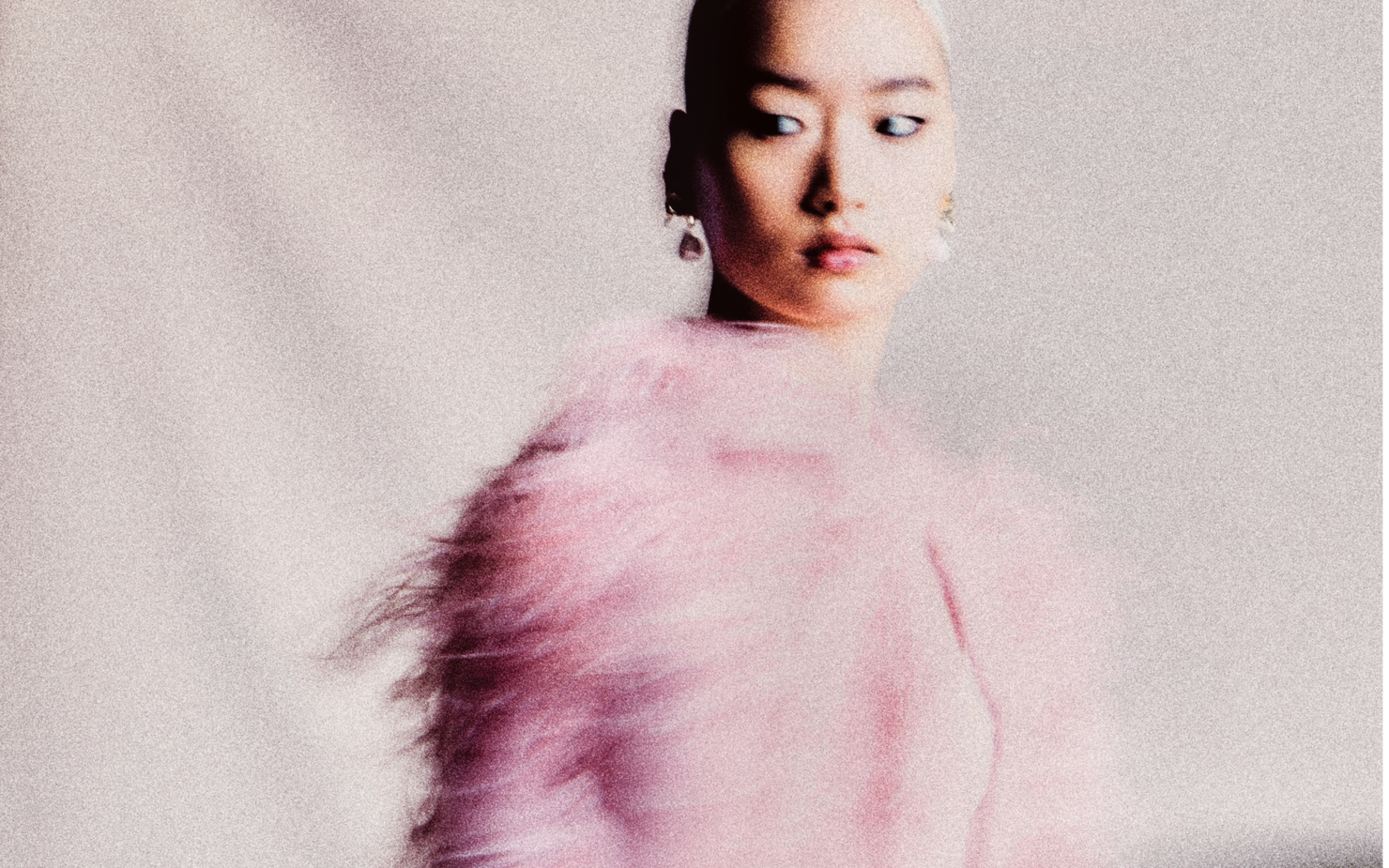
The original M7 exhibition banner used here features a fashion portrait with a pale pink, highly textured garment. It illustrates the visual character of the retrospective, but is not a photograph documenting every object on display. It should therefore be captioned as official exhibition artwork rather than as an independent installation photograph. This distinction matters when discussing museum presentations. A campaign image is chosen to communicate an identity and invite attention, while an installation photograph would show the physical arrangement of objects within the gallery. Both can be useful, but they provide different kinds of evidence. For readers planning a visit, the exhibition description and official practical information should be relied upon for contents and scheduling. The photograph invites visual interest without substituting for that documentation.
What ERDEM's Doha retrospective establishes
The confirmed programme brings more than 150 fashion and archival pieces to M7 through 26 December, arranged across five chapters that trace the designer's visual language, studio methods and inspirations. The exhibition marks twenty years of the ERDEM house and includes selected works from the Museum of Islamic Art, with a named curatorial and design team. For the luxury-travel audience, its interest extends beyond the clothes themselves: it is an opportunity to consider how a designer's ideas gain meaning through history, craft and changing cultural contexts. A memorable retrospective should leave visitors with questions about making and interpretation rather than simply a catalogue of desirable objects. This one is presented as a conversation between past work and a continuing creative practice, offering a timely addition to Doha's cultural calendar.
Sources and image provenance: M7 / Qatar Museums official ERDEM: About Time, About Her exhibition programme, current through 26 December 2026. Lead artwork: M7 official ERDEM retrospective campaign portrait featuring a pink garment. Exhibition facts are attributed to M7; collecting, conservation and design observations are independent Luxury Yacht Guide editorial interpretation.
Sources and image credits
Reporting based on M7 / Qatar Museums original ERDEM: About Time, About Her exhibition programme, current through 26 December 2026.
Lead photograph: M7 Doha ERDEM About Time About Her official exhibition portrait artwork with pink fashion design. Image: M7 / Qatar Museums official ERDEM: About Time, About Her exhibition banner featuring a fashion portrait, provided by the organiser as exhibition artwork. Original official image source.