A town divided by the tide
Looe offers an interesting contrast to the larger coastal resorts of South West England. The river divides East Looe from West Looe, and the Victorian bridge links the two communities. Visit Cornwall describes a substantial fishing heritage, a sandy beach on the eastern side and a quieter rocky coast around Hannafore on the western side. For a family travelling aboard a private yacht between twelve and twenty-four metres in length, the town's strength is its range of shore experiences within a relatively compact area. It is not appropriate to infer from the presence of fishing and recreational boats that such a yacht can be accommodated at any location in the river. The entrance and harbour are tidal, and the actual vessel's beam, loaded draft and displacement need to be considered by the captain and harbour operator before any proposed visit under power or sail. An independently arranged land excursion from a confirmed yacht base is a perfectly satisfactory alternative, allowing the guests to appreciate the village without making an unsuitable approach part of the holiday.
The railway offers its own perspective on the river
Visit Cornwall identifies the Looe Valley Line as an attractive branch railway linking the town with the mainline at Liskeard. Its relationship with the river is one of the most interesting aspects of the journey. A visitor accustomed to observing coastal landscapes from a yacht can experience the same geography through a sequence of views framed by the railway windows. The route also offers a practical way of joining or leaving a family holiday independently of the vessel. Check the current timetable, the actual connections at Liskeard and the arrangements for passengers carrying luggage. An owner who wants to spend a day in Looe does not need to arrange an overnight berth there to enjoy the experience. A return journey by railway from a suitable established base can make the exploration of the valley itself part of the holiday. The quality of the outing depends on allowing sufficient time for the visit and return journey rather than packing the day with successive reservations.
The fishing fleet and the character of the quayside
The official destination information describes a working fishing port with a fleet that continues to supply the town's food businesses. The connection between the boats and the culinary life of Looe is an important part of its identity. Yacht owners who normally purchase food through specialist provisioning services can enjoy a more immediate encounter with local produce by visiting a suitable shop and discussing what is actually available. The tourism guide identifies a fishmonger on the quayside as well as restaurants specialising in seafood. Ask about the origin and seasonality of the ingredients rather than assume that every product described as local was landed in the harbour on the same day. A working quay has its own access and safety requirements. The visitor's desire to photograph boats or watch catches being landed should not interfere with the people performing their work. If the yacht's chef wishes to purchase supplies, arrange appropriate transport and storage, taking account of the distance from the vessel rather than treating the excursion as an ordinary restaurant visit.
Looe Island and the conservation of a distinctive habitat
Looe Island, off the western side of the town, has a history distinct from that of the harbour itself. Visit Cornwall reports that the Atkins sisters left the island to Cornwall Wildlife Trust in 2004, following decades of private ownership. It is now managed as a nature reserve. The destination guide identifies cormorants, shags, oystercatchers and great black-backed gulls among the birds associated with it. For a yacht guest, the appeal of a visit is not simply obtaining an exclusive view of an island but appreciating the reasons for its management. The welfare of wildlife and the protection of habitat determine the arrangements for access. The trust offers organised visits by boat during the appropriate season. Owners should consult its actual programme and access requirements before making arrangements. Do not assume that independently landing from a private yacht or tender is permitted merely because the island is visible from the coast. A qualified, properly arranged local visit can give a more meaningful interpretation of the island's conservation work than an unplanned approach from the sea.
Seabirds and the evidence provided by ringing programmes
The local destination guide describes a ringing project started in 2010 for the island's breeding population of great black-backed gulls, with observations of ringed birds reported as far away as northwestern Spain. This provides a particularly interesting example of the relationship between a small coastal habitat and movements across a much wider geographical area. A bird observed during a yacht cruise may be associated with habitats far removed from the particular place where it is seen. Scientific monitoring can help establish those relationships, whereas a casual sighting on its own usually tells a visitor much less about the individual animal's history. For families travelling with children, the distinction is an opportunity to introduce the value of careful observation, recorded dates and locations, and the contributions made by specialists. Guests should not attempt to handle nesting birds or disturb them to obtain a better view of a ring. Observation from a suitable distance and participation in activities arranged by the responsible conservation organisation are more appropriate ways to develop an interest in the subject.
Hannafore and the changing world exposed by the tide
Visit Cornwall contrasts the sandy beach of East Looe with the rocky shore at Hannafore. It identifies Looe Marine Conservation Group's organised rockpool excursions as opportunities to observe species including squat lobsters, sea lettuce and strawberry anemones. A rockpool is a relatively accessible place in which to appreciate how a coastal environment changes as water levels rise and fall. For children who have spent several days aboard a yacht, it offers a different scale of observation from watching birds or the shape of an island from a deck. Adults should choose outings appropriate to the group's abilities and pay careful attention to actual tide, access and weather information. Rocks can be slippery, and a return route that is available at the beginning of an excursion may change with the tide. Observe animals without unnecessarily moving or removing them. Check current group activities and arrangements in advance, and do not treat a general recommendation to visit the shore as evidence of safe access at a particular time.
East Looe Beach and the distinction between bathing and navigating
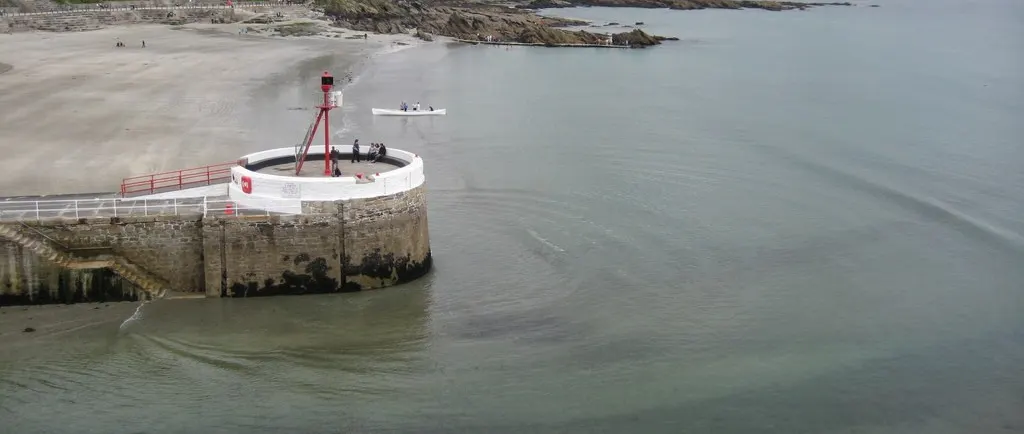
The destination guide identifies East Looe's sandy beach and the Banjo Pier as distinctive features of the town. Its frequently asked questions specifically warn visitors against swimming in the river or jumping from the pier, and state that the beach does not have lifeguards. The distinction between a beach used for recreation and a navigable river used by vessels is important. A yacht owner organising activities for family members should obtain current information about bathing conditions and local restrictions, assess the capabilities of participants and provide suitable supervision. A visit to the waterfront can be equally enjoyable without entering the water. Families may prefer a short walk, a meal or time on the beach itself. A beach that appears sheltered is not necessarily appropriate under every set of conditions, and the absence of large waves does not establish the absence of currents or other hazards. The yacht's own convenient bathing facilities should not be allowed to encourage water activities in inappropriate locations.
A fictional Devon setting in a real Cornish town
Looe has acquired a further visitor identity through its use as the location for the fictional town of Shipton Abbott in the television drama Beyond Paradise. Visit Cornwall draws attention to the contrast between the programme's fictional setting and the actual Cornish location. For an owner travelling with television or film enthusiasts, the association offers an additional way to investigate the streets and their relationship with the waterfront. Screen productions can combine locations and alter their apparent geography, so a visitor should not expect that every fictional scene can be reconstructed by following the town's actual streets. The genuine maritime community remains the principal interest. A visit motivated by a popular story can become an opportunity to explore the fishing economy, railway, landscape and history of the place on its own terms.
A day shaped around nature and the river
A rewarding itinerary might combine the railway, harbour and a separately arranged conservation excursion, or allocate a second day for a walk along the west side of the river. Select the activities according to the season and actual availability. The yacht's captain should independently establish whether a suitable berthing arrangement is available, using current official information and the advice of the responsible harbour operator. The accompanying Creative Commons photograph by Philip Halling shows the entrance to Looe harbour; it is a historical geographical illustration, not navigational guidance. Looe's particular attraction for yacht owners is the possibility of combining the comfortable private environment of their vessel with experiences of a working fishing town and a carefully managed coastal habitat, without requiring the boat itself to penetrate every part of the landscape.
Sources and photograph
Source documentation: https://www.visitcornwall.com/destinations/looe. Photograph: Entrance to Looe Harbour — Philip Halling / Wikimedia Commons, CC BY-SA 2.0. Resized for web display under CC BY-SA 2.0.