A finish with roots in industrial design
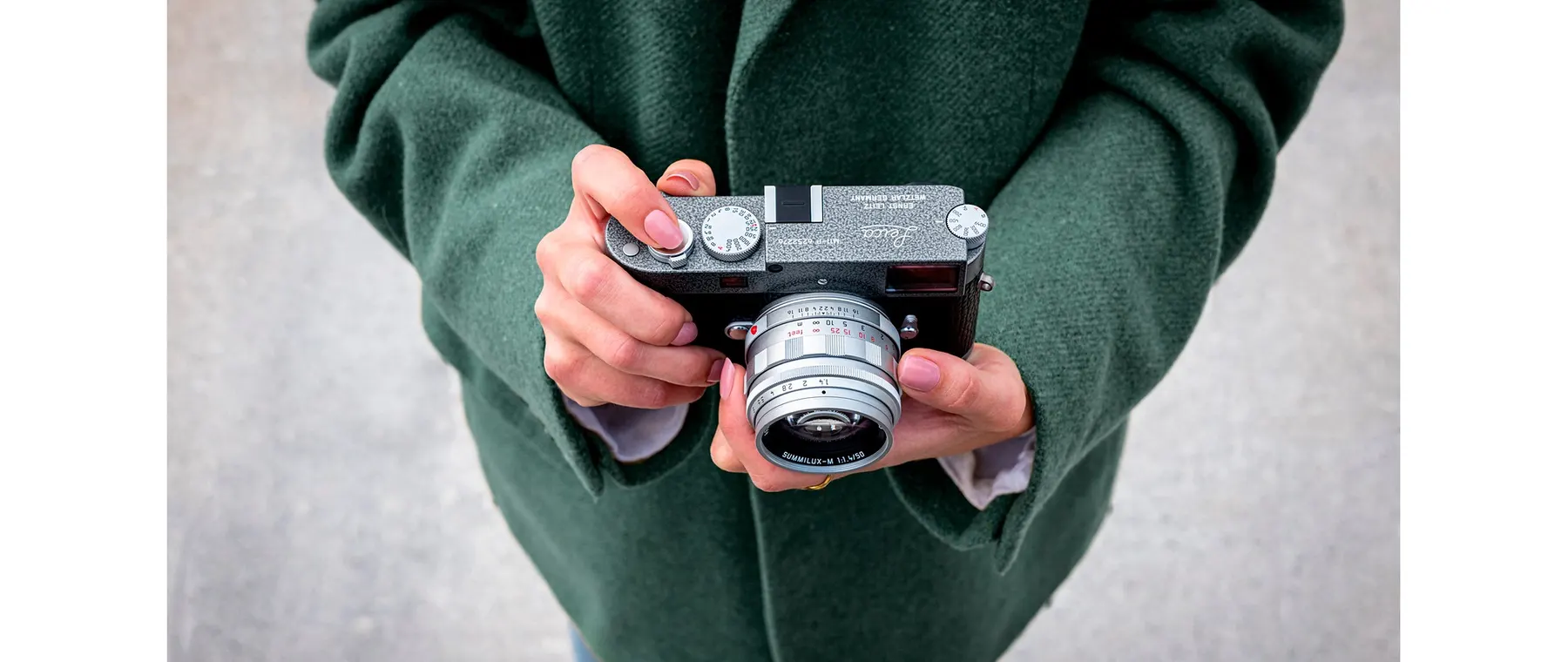
Leica's new M-A Hammertone and M11-P Hammertone bring a distinctive textured coating to two quite different photographic instruments. Announced in Wetzlar on 12 November 2026, the variants are offered at US retail prices of $8,000 and $10,950 respectively. One operates with film and mechanical controls, while the other is a full-frame digital camera. The changes concentrate on the design and finish of the camera bodies rather than a new optical or sensor system. This makes the pair particularly interesting to yacht owners who enjoy photography during their travels: the choice is not simply between two levels of specification, but between two approaches to making and retaining an image.
Textured finishes have long been associated with industrial instruments. A piece of equipment can have an attractive surface without ceasing to communicate its practical purpose. Leica traces the hammertone tradition to the 1930s and identifies a series of unusual earlier cameras employing it. The latest editions offer collectors a connection to that history without requiring the acquisition of an original example from an earlier generation.
The character of a textured coating
The manufacturer explains that the appearance develops as its coating dries. Interactions between metallic pigments, additives and the surface of the coating generate variations in the texture. The result is a surface whose visible pattern differs between individual bodies. It is not a separately engraved design repeating exactly from one camera to another. Leica's specialists in Wetzlar have adapted the process for production of these two editions.
The upper and lower brass plates also give the coating a defined architectural position within the camera's design. Their textured appearance contrasts with the dark covering around the central body and the engraved markings. The controls retain a tactile pattern of their own. On the digital edition, the company has adjusted the contours of the upper and lower plates and the appearance of a front screw to complement the more traditional character of the instrument.
A collector should distinguish these details from the photographic performance of the camera. The coating does not establish an improvement in sensor resolution or lens quality. Nor should its industrial heritage be interpreted as a guarantee against seawater, immersion or other unusual exposure. Its attraction is the way it changes the visual and tactile character of an experienced design.
The M-A and the discipline of working with film
The M-A is a mechanical camera based on the existing analogue model. Its operation involves the photographer selecting the exposure parameters and managing the photographic film. The process encourages attention to the available light and to the way each frame will be used. It provides a different relationship to time from a camera that can immediately display an image and allow the photographer to inspect or repeat it.
For someone exploring a destination from a yacht, this approach can be particularly rewarding on shore. A limited number of frames may encourage a more considered record of a market, a piece of architecture or an encounter with a landscape. There is no need to treat the film format as inherently superior to other means of recording that experience. Its value is the particular way it invites the photographer to work. A visitor who is more interested in the immediate sharing of an image may prefer another instrument.
Film also introduces practical requirements during an extended journey. The photographer must carry suitable supplies and establish how the exposed material will be processed. Airport security procedures and storage conditions deserve consideration. A household whose itinerary extends across several weeks may need to organise those arrangements before departure rather than assume that the required services will be available at every port.
The M11-P and a different form of continuity
The digital counterpart retains the specifications of the standard M11-P. Its full-frame sensor offers selectable resolutions of 60, 36 and 18 megapixels. The camera incorporates 256 gigabytes of internal storage, a sapphire-covered display and connectivity with Leica's FOTOS application. The manufacturer's emphasis on embedded Content Credentials is particularly noteworthy for photographers interested in maintaining information about the origin and processing of an image.
Such records can help establish aspects of a photograph's documented history, where supported and retained throughout the relevant workflow. They should not be interpreted as an absolute guarantee that the depicted circumstances are accurately represented. A photograph remains a selection made by a person, and context may still be required to understand it. A careful photographer should also preserve the original files and appropriate records independently of the particular application used to share them.
The M11-P may suit a travelling owner who wants to review images promptly, prepare a collection of photographs from several destinations or transfer selected work to another device. Its aesthetic relationship to the mechanical M-A illustrates that continuity of design does not necessarily require continuity of underlying technology.
Collecting cameras with a documented history
Leica identifies earlier textured editions dating to 1964, 2003, 2011 and 2016 among the precedents for the present designs. The 1964 MD reference is especially interesting because the manufacturer records only ten examples of one exceptionally rare configuration. That historical production figure should not be applied to the new cameras. The November announcement does not specify an equivalent production ceiling for either of the 2026 variants.
Collectors often evaluate a camera in relation to its documentation, completeness and condition as well as its technical specification. A distinctive finish can be a meaningful reason to prefer an individual camera, but it does not establish a future resale value. The history of another edition is not sufficient evidence that a newly issued model will follow the same market trajectory.
For an owner primarily interested in photography, the instrument's everyday usability deserves particular attention. A camera that remains unused in its packaging may satisfy a collecting objective but cannot provide the experience of making photographs during a voyage. The purchaser can make that distinction consciously and should establish what value is placed on ownership, actual operation and preservation of the original condition.
Photography from a yacht and the moving viewpoint
A luxury yacht gives a photographer opportunities to observe coastlines and harbours from changing positions. The relationship between foreground and background may alter dramatically during a relatively short passage. Light reflected from the water can also influence the appearance of the scene. These conditions make the process of selecting a photograph interesting quite independently of the equipment employed.
The photographer should organise activity around the safe operation of the vessel. Using an instrument near a moving deck or exposed rail is different from working in a stationary street. A secure carrying arrangement and a sensible location on board are important, especially where the person's attention is principally directed towards an optical viewfinder. Neither of the special editions is presented as a purpose-designed underwater camera.
For the owner spending time ashore, the more controlled environment of a city or village may offer a better opportunity to work slowly with one of these instruments. A series of images can use that contrast deliberately, alternating the broad geographical viewpoint from the water with the individual details of the places visited.
Choosing a lens and organising the travelling collection
Both special editions belong to Leica's M photographic system. A prospective purchaser should consider the lenses already owned and the intended subjects before selecting additional equipment. Carrying numerous lenses and accessories may create difficulties in a compact yacht cabin without necessarily improving the photographs obtained. A small kit chosen deliberately can be particularly useful when a shore excursion involves several changes of transport.
Storage requirements deserve attention irrespective of the chosen camera. Sensitive optical and electronic equipment should be stored according to the manufacturer's guidance, away from unnecessary exposure to seawater and moisture. The owner should establish how the kit will be carried during tender transfers and how used film or digital files will be kept. A dedicated secure place for the equipment is more useful than an attractive display that leaves it exposed to the conditions of ordinary cruising.
Photographic records may also contain private information about family members or guests. The arrangements for storing and sharing images should reflect the expectations of the people involved rather than assume that all pictures taken during a trip are intended for public distribution.
Two editions, two reasons to own them
The cameras became available from authorised Leica sales channels on 12 November, according to the manufacturer. Regional prices and actual stock availability should be confirmed locally. The special finish establishes a visual link between the two editions, but the practical choice remains whether the owner prefers the measured process of film or the more immediate possibilities of digital photography.
For a yacht owner who considers photography part of the experience of travel, the appeal of a finely made instrument lies in its ability to accompany that activity. The hammertone versions add an unusual expression of traditional industrial design to the choice. Their most enduring value may be found not in the uniqueness of the coating alone, but in the images and personal records that emerge from using them.
Sources and photograph
Source documentation: https://www.prnewswire.com/news-releases/new-leica-m-a-hammertone-and-leica-m11-p-hammertone-302937234.html. Photograph: Leica M-A Hammertone and Leica M11-P Hammertone — Leica Camera Inc. — official product photograph supplied with the 12 November 2026 press release via PR Newswire.. Official issuer-supplied press photograph, reproduced for editorial coverage of the specific announcement and resized for web display.