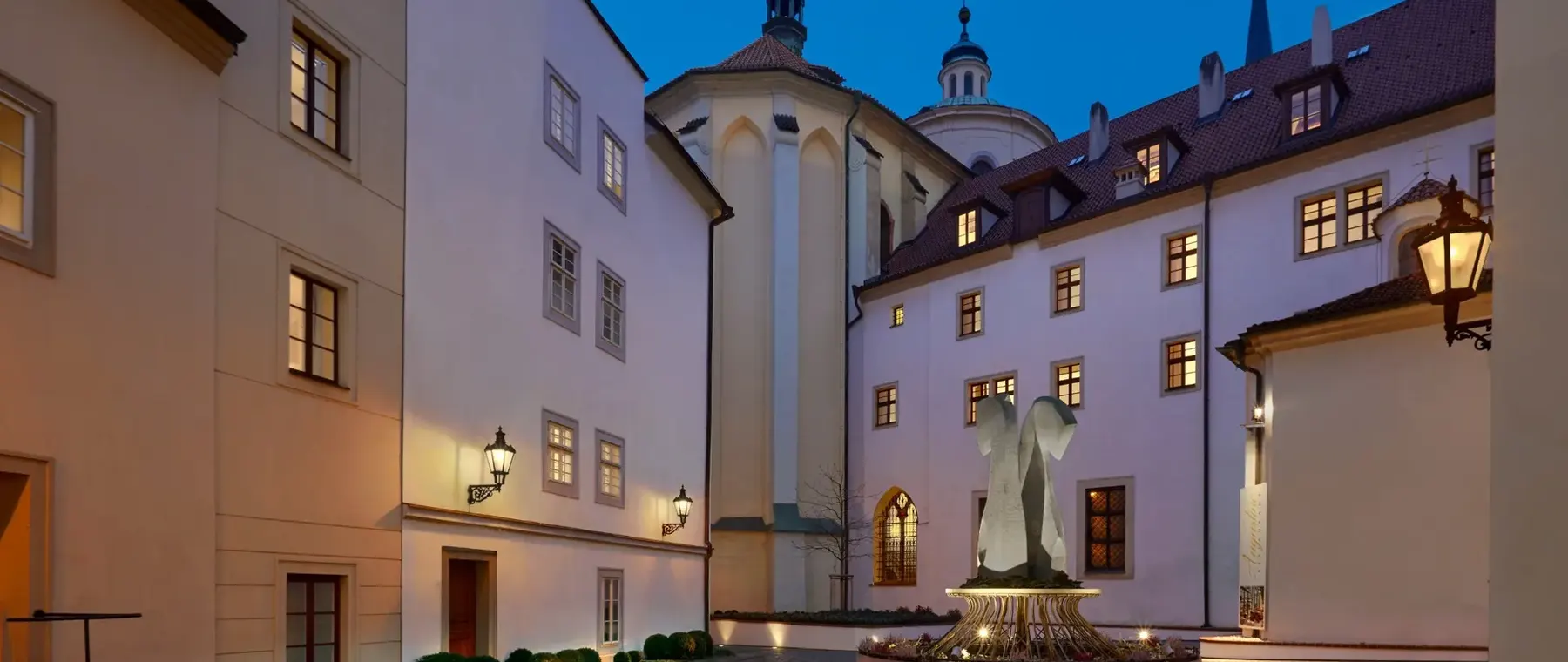
A monastery hotel prepares its next chapter
Kempinski has set out plans to reintroduce Augustine Hotel, Prague under a renewed luxury concept in early 2027. Located in the historic Malá Strana quarter below Prague Castle, the property occupies seven buildings associated with the 13th-century Augustinian Monastery of St Thomas. The unusual feature of the setting is that the religious community has not disappeared into history; the monastery remains a living place of worship and study, with hotel life unfolding in a carefully separated part of the complex.
The group acquired Augustine earlier in 2026 and has since described an extensive transformation intended to respect the architecture while creating more expressive social and residential spaces. An October announcement places the new Kempinski chapter in early 2027, later than an earlier estimate of late 2026, so travellers should confirm the refurbishment programme and the status of any desired facilities before booking. The building's history makes this more complex than refreshing a typical city hotel.
Seven historic buildings with contemporary purpose
Augustine's setting is central to its identity. The hotel is not simply a modern structure styled to resemble a monastery but part of an architectural ensemble accumulated over centuries. Original vaulted ceilings, heavy timber beams and other traces of the site's monastic past continue to influence the rooms. That layered setting brings a sense of location which many conventional international hotels struggle to recreate, especially in a city with as much built heritage as Prague.
The latest concept has been described as a balance between contemplation and celebration, with the design work led by LDS Design Studio. The proposed interiors draw on the Gothic, Baroque and Bohemian visual traditions of the city while introducing more unexpected details. The challenge for the designers is to retain the individuality of the old structures without asking visitors to accept the limitations of a historic building as an inevitable part of luxury accommodation.
Rooms and suites with distinctive narratives
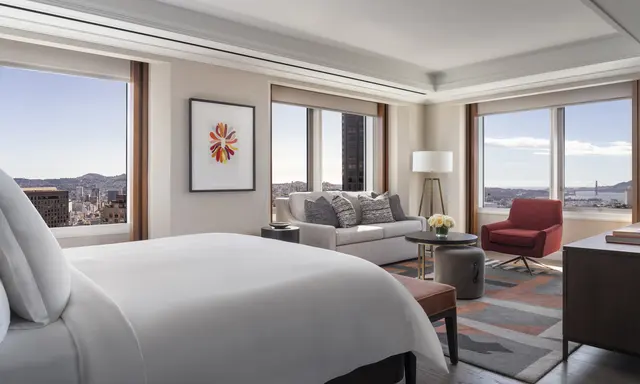
Kempinski lists 101 guest rooms, including 20 suites, across the property. Its October concept description envisages bespoke canopy beds, carefully chosen tapestries, sculptural lighting and contemporary bathrooms. The palette includes terracotta, muted indigo, olive and aged brass, tones intended to connect the private interiors to the rooftops and garden landscapes visible around the hotel. Not every guest room will be identical because the historic spaces differ in their shapes and architectural features.
The named suites are particularly revealing about the direction of the refurbishment. A Presidential Suite honours Václav Havel, while other accommodation references Prague's artistic and intellectual history through names such as the Philosopher's Stone and Fresco suites. The three-level Tower Suite, planned for a subsequent development phase, draws inspiration from astronomer Johannes Kepler. Anyone attracted by a particular suite concept should verify its completion date and actual availability rather than assuming every advertised design will be ready at the first reopening.
A social heart for hotel guests and Prague residents
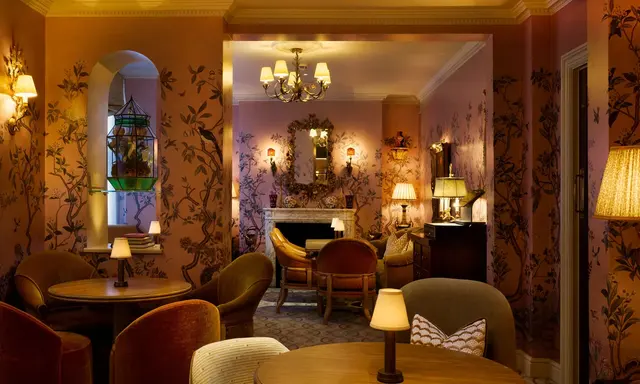
One of Kempinski's ambitions is to make Augustine feel like a welcoming living room for the surrounding city. Proposed communal areas include a more residential bar setting, small places to sit and talk, and a Collector's Table showcasing work by Czech artisans. The hotel also envisages a special ceiling installation developed with a local artist. These touches aim to shift the experience beyond a formal reception-and-corridor arrangement into a series of spaces worth visiting in their own right.
A successful version of this idea would serve two quite different audiences. Overnight guests may want discretion and calm after a day in the city, while Prague residents can bring energy and a sense of local connection to the restaurants and bars. Balancing those needs requires attention to circulation, noise and privacy as much as to decoration. The property's monastic heritage makes that tension more interesting: hospitality and quiet contemplation exist alongside a contemporary social programme.
The Salon and the reinvention of the Refectory
The dining plans combine new concepts with the architecture's existing character. The Salon is described as a neighbourhood restaurant organised around a bright brasserie, relaxed dining areas, semi-private settings and a courtyard. Menus are intended to pair familiar classics with contemporary interpretation, with details such as table-side finishing and a wine list designed to encourage exploration. Such descriptions suggest a sociable destination restaurant rather than a dining room operating purely for overnight guests.
The historic Refectory is being developed as a bar with a twelve-part cocktail concept inspired by alchemical traditions and Prague's long cultural history. Botanicals, seasonal infusions, locally rooted drinks and Bohemian glassware form part of the proposed identity. St Thomas dark lager also features in the concept materials. As these are plans for the new phase, exact menus, booking procedures and operating hours should be verified closer to the reopening; the existence of an announced idea does not guarantee every element will remain unchanged.
Art, philosophy and the details behind the design
Kempinski's description of the new hotel is unusually interested in narrative. LDS Design Studio is drawing on ideas associated with St Augustine and the surrounding city's artistic traditions, including symbolic motifs that move beyond the expected restrained monastic palette. The proposal incorporates references to grace, imperfection and playfulness, a conscious effort to acknowledge that a historical building can be the setting for contemporary life rather than an object to be admired from a distance.
This emphasis makes authenticity important. A reference to Czech craft has greater meaning when visitors can discover who made an object and how it relates to the local culture. The Collector's Table and potential encounters with resident artists may help provide that context, provided the experiences are managed thoughtfully and the work is presented accurately. Guests interested in architecture should ask about access to historic spaces, as an operating monastery will naturally place restrictions on some areas.
A cultural programme designed around insider access
The hospitality group intends to use its E.R.A.s programme, short for Experience Real Access, to connect guests with people who know the city from within. Resident curators are expected to introduce travellers to cultural figures, craftspeople and other local voices. That could distinguish the hotel from a conventional tour schedule built only around Prague's best-known landmarks, especially for returning visitors who have already explored the castle, Charles Bridge and Old Town.
The most rewarding luxury travel often involves the pace and context of an encounter as much as its exclusivity. Learning about a historic neighbourhood from someone who works there, or discovering the techniques of a contemporary maker, may leave a stronger impression than a busy timetable. The hotel has outlined the direction of the programme but not a universal catalogue of guaranteed experiences. Travellers should enquire about current availability, language, group size and whether any opportunities carry additional charges.
Why Prague remains appealing for a longer stay
Prague's Malá Strana district lends itself to a slower visit. Its streets, gardens, churches and architectural viewpoints create opportunities to explore on foot, while the city supports an active programme of music, visual arts and dining. Augustine's position below the castle places a guest near some of the capital's most recognisable heritage without necessarily requiring every day to follow the main visitor circuit. The hotel's own spaces could become a reason to build more unstructured time into an itinerary.
For high-end travellers accustomed to grand resort compounds, the appeal of a compact historic city hotel is different. Rather than seeking extensive private grounds, the experience depends on how the property opens a window onto its neighbourhood. Choosing an individual suite, reserving time for the spa and leaving evenings free for cultural performances can give the visit a more personal rhythm. Transport and mobility needs should be considered in advance because historic districts and adapted buildings can have uneven access.
A different kind of investment in luxury hospitality
Kempinski's acquisition of Augustine in April 2026 represented its first outright hotel acquisition in more than fifty years, according to the company's announcement. The group framed the purchase as part of a strategy to exercise closer control over distinctive heritage assets rather than relying solely on management agreements. The Augustine redevelopment is intended to demonstrate how that approach might translate into rooms, service and public spaces that carry the company's identity without erasing the character of the building.
That commercial ambition will be tested by the experience of actual guests. Restoration quality, consistency of service and a convincing local cultural programme will matter more than the language of any launch campaign. Maintaining the relationship between the hotel and the functioning religious community is another measure of success. Historic hospitality assets can feel compelling precisely because they have purposes and stories that predate their current commercial identity.
Planning for the early-2027 relaunch
Prospective visitors should distinguish the hotel currently operating under Kempinski's ownership from the fully reimagined version described for early 2027. Renovation schedules may alter the availability of restaurants, suites, spa facilities or public areas, and the planned Tower Suite belongs to a later phase. Anyone organising an important celebration or extended stay should obtain written confirmation of the relevant services for the chosen dates, together with current booking and cancellation conditions.
Kempinski's October 2026 hotel announcement provides the principal details of the intended transformation, while its official hotel page is the appropriate starting point for live availability. The appeal is already clear in principle: a place where Prague's centuries-old architectural memory and contemporary luxury are expected to share the same address.