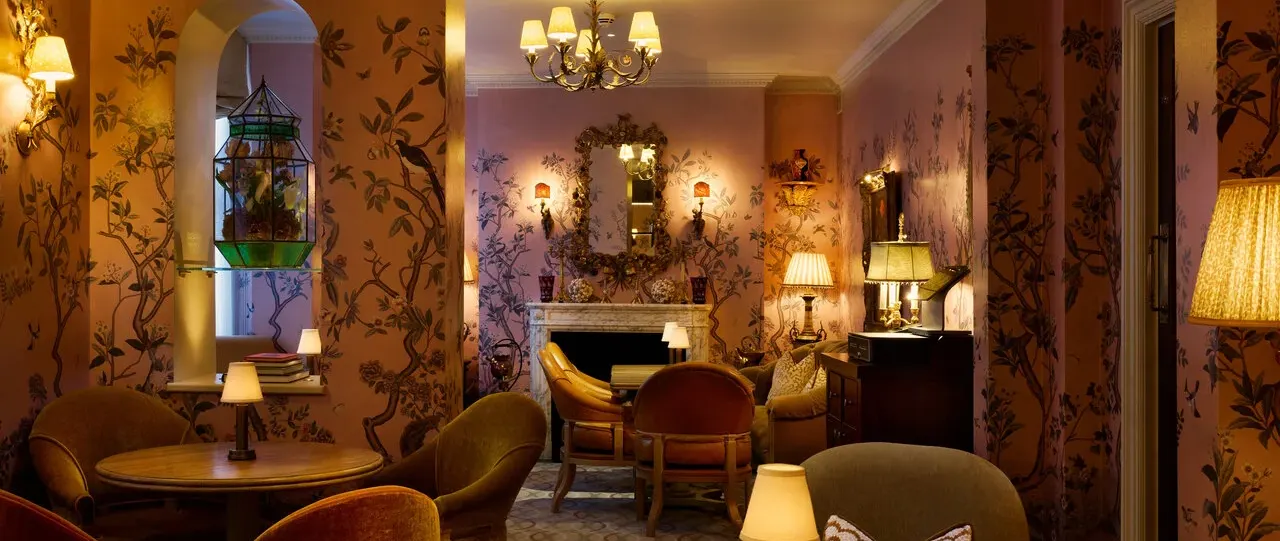
A London institution prepares a new identity
Dukes London, the discreet hotel at 35 St James's Place, is being prepared for a major relaunch in the second quarter of 2027 under Minor Hotels' Minor Reserve Collection. The group announced the management agreement on 1 October 2026, with the 85-key property undergoing a wide-ranging redesign led by Russell Sage Studio. The result is intended to preserve the hotel's character while giving its rooms and public spaces an updated identity.
The announcement concerns a future hotel reopening, not a claim that the complete renovation has already finished. It is especially interesting because the property occupies a private-feeling central London address within walking distance of royal parks, galleries and some of the capital's most established clubs and restaurants. For guests who prefer traditional London hospitality over a conspicuous glass tower, those qualities remain part of the appeal.
A St James's address with a century of stories
The hotel dates its history to 1908 and has long traded on an association with political figures, writers and travellers seeking discretion. St James's is a district where diplomatic, royal and cultural London overlap within a compact network of streets, creating a distinctive atmosphere for guests walking between appointments. None of this requires a visitor to adopt the hotel's legends as verified history; the place stands on its setting as much as its mythology.
Within the wider neighbourhood are Green Park, St James's Park and the approaches to Buckingham Palace, while theatre, specialist retail and major museums can be reached with relatively short journeys. The operator describes Green Park Underground station as approximately five minutes away on foot, although walking time will vary with luggage and mobility. As always in London, guests should check traffic and access arrangements for arrivals requiring privacy.
Eighty-five rooms, including signature suites
The refurbishment plan retains a relatively intimate inventory of eighty-five keys, with thirteen executive suites and five signature suites among the redesigned accommodation. Minor Hotels says elements of St James's history and influential figures will inform the room themes, placing local identity at the centre of the studio's work. The final balance between decoration and contemporary practical comfort will become clearer when official room photography and layouts are released.
Suite labels alone reveal little about how a space works for an extended stay. Families and travellers combining business with a holiday may want to know about connecting arrangements, discrete work areas, wardrobes, accessibility and noise control. The press announcement does not supply individual floor areas, full amenity lists or confirmed opening rates, so buyers of a future reservation should wait for the final accommodation guide.
The famous bar stays in service
Dukes Bar is the property's most recognisable public room and, importantly, Minor Hotels says it will continue to operate throughout the wider renovation. Its tableside frozen martini service has built an international reputation, amplified by the long-standing story that the bar inspired Ian Fleming's conception of James Bond's preferred cocktail. The Fleming association is a widely repeated hotel legend, not a reason to overstate what is documented about the origins of any particular line in a novel.
Keeping the bar open preserves a living part of the hotel's identity while other spaces change. Still, a guest planning a special visit should confirm opening hours, seat availability and any restricted access during construction, rather than assuming the entire hotel is operating as usual. The timing and pace of building work can also affect arrival routes and neighbouring spaces even where a particular bar remains available.
The Delany Drawing Room offers a second gathering place
A newer social space, the Delany Drawing Room, is already operating as a lounge and bar. According to the release it has a selection of 160 whiskies, complemented by Champagne and cocktails, and its associated conservatory and garden add another dimension to a small St James's meeting. These are tangible facilities available during the transition, unlike future guest rooms whose finished appearance is still being developed.
Once Dukes relaunches, the group expects the drawing room to serve afternoon tea and to become a venue for private events or drinks receptions. The potential is attractive for travellers entertaining a few colleagues or family members in a quieter environment, but the capacity, menus and hire conditions require direct confirmation. Guests seeking exclusive use should ask how the conservatory and garden relate to the lounge's normal circulation.
A new restaurant with a London hospitality partner
The planned reopening also includes a restaurant developed with The Wolseley Hospitality Group, itself part of Minor Hotels. That relationship brings an established London restaurant operator into the project's next chapter, though the announcement does not disclose a named chef, final concept, dishes or opening service hours. The distinction matters because a development partnership is not the same thing as a restaurant already taking bookings.
An effective hotel restaurant can play two roles in a property like Dukes: a destination for people who live and work in central London and a convenient base for guests who want to dine without crossing the city after meetings. Achieving both requires consistent service and a room with its own character, not merely a premium label. The culinary programme will be worth revisiting when the partners release specifics.
Why Minor Reserve Collection fits the project
Minor Reserve Collection is a recently introduced luxury umbrella for independent hotels with distinctive histories and identities. Unlike a tightly standardised chain, its proposition is to retain what guests already recognise while adding international distribution and management support. Dukes will mark the collection's entry into the United Kingdom, rather than representing a newly built hotel in a market where the name has no history.
The operator's early collection also includes the planned relaunch of Hotel Palace Portorož in Slovenia and Aventora Resort Baía Formosa in Brazil, both at different stages of development. Those names illustrate the intended geographic variety but do not tell us what daily service will feel like at Dukes. The challenge in London is preserving the hotel's intimate personality as its commercial platform changes.
Who is behind the transformation
Minor Hotels is working with Seven Tides, its longstanding real-estate partner, to oversee the next stage at Dukes. Russell Sage Studio is directing the multiyear interior transformation, while the hospitality group will take on hotel operations through its management agreement. Such divisions of responsibility are common in luxury hotels, where property ownership, brand management, design and restaurant services may involve different teams.
For guests, the relevant test will be whether those teams produce one coherent experience at the moment of reopening. Room delivery schedules, restaurant launch timing, luggage handling and employee training should all converge well before the first major reservations. A promised second-quarter 2027 date provides a planning marker, but actual availability and prices should be checked against the hotel's booking system.
A future London stay grounded in place
The reimagining of Dukes London is notable for what it intends to keep as well as what it intends to change. The established bar, modest overall room count and quiet St James's position are assets difficult to recreate elsewhere; the new suites, drawing-room programming and restaurant are intended to bring them into a contemporary luxury offer. It is a heritage transformation rather than the unveiling of an entirely new property.
Luxury travellers looking towards 2027 should watch for final suite photography, the full dining concept, confirmed reopening dates and the operational arrangements around the still-open bar. Until that information is published, the appropriate conclusion is that a significant London landmark is in transition, with a more detailed guest experience yet to be tested.