A signed project, not an open resort
Minor Hotels has announced its planned debut in Morocco through Anantara Retreat Rabat, an intimate 38-key hospitality project in the capital rather than another large beachfront resort. The company confirmed its management and development partnership with Bloom Holding on 12 October 2026 and identified early 2030 as the anticipated opening period. Visitors should treat that date as a forward programme, not an invitation to make a confirmed reservation at an operating hotel.
The setting is Rabat's diplomatic area, reportedly around twenty minutes from the city centre, where a smaller property may appeal to travellers who value discretion and calmer surroundings between official appointments or cultural visits. Seven three-bedroom villas are included alongside luxury rooms and suites. Minor Hotels has not yet supplied an approved nightly-rate schedule, final villa floorplans or a date on which accommodation bookings will open.
Why Rabat suits a different luxury itinerary
Rabat rarely needs to imitate the high-energy souks and spectacle associated with Marrakech. Morocco's capital offers an alternative rhythm shaped by its Atlantic shoreline, the Bou Regreg estuary, administrative role and historic neighbourhoods. For a traveller arranging private meetings, a family history trip or a quiet extension after time in another Moroccan city, the prospect of an intimate villa-led retreat has a particular logic.
The city also holds cultural importance beyond its government institutions. UNESCO named Rabat World Book Capital for 2026, a designation reflecting its literary and creative environment; that is a city-wide cultural recognition and should not be confused with an award for the proposed hotel. Guests planning a future visit should verify the exact calendar of exhibitions, festival programmes and museum access closer to travel, rather than relying on today's announcements for a 2030 stay.
Seven villas within a 38-key retreat
The project's planned accommodation mix is unusually compact for an internationally recognised hotel brand: thirty-eight rooms, suites and villas in total, including seven villas with three bedrooms each. That scale points towards a more residential atmosphere, especially for extended families, travelling principals and visitors who want space beyond a conventional hotel suite. It also means the number of villas should not be confused with the number of separate guest bedrooms available across the entire property.
A three-bedroom villa could offer a practical base for relatives travelling together or a party with several schedules, but the published release does not say whether each will have a private pool, independent staff entrance or enclosed garden. Those are meaningful differences for a privacy-conscious guest. Prospective clients should request the final layout, connecting accommodation options and visitor-access arrangements when the operator publishes definitive product information.
Moroccan architecture without an invented design brief
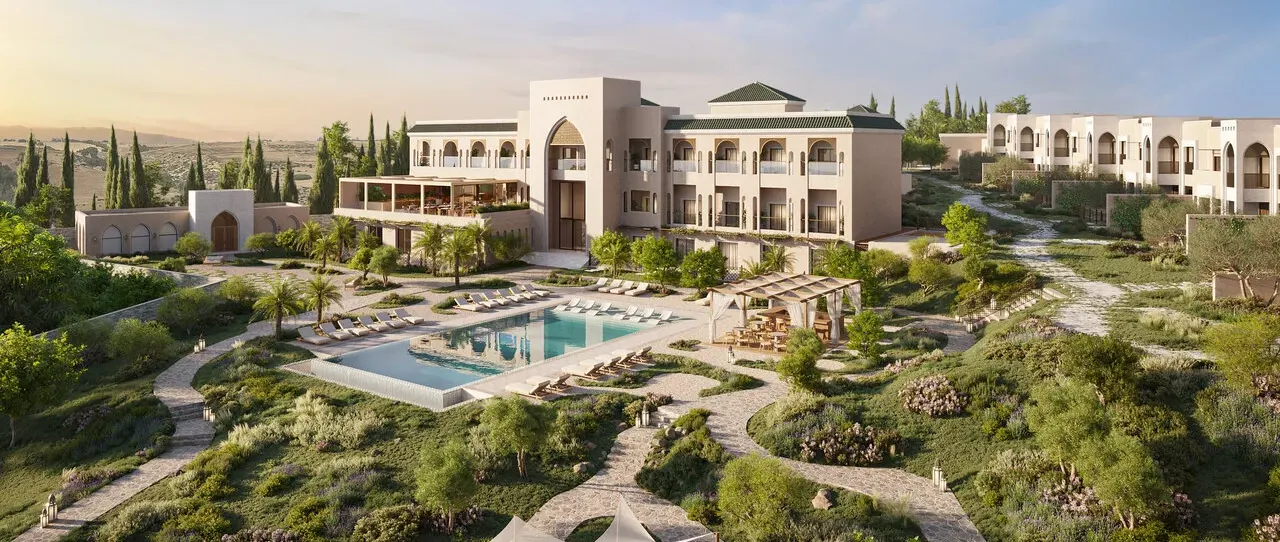
Minor Hotels describes a design that will bring traditional Moroccan architectural references together with contemporary accommodation standards. The first official visual is a rendering, and readers should understand it as an illustration of the development's intentions rather than a photograph of a completed building. Detailed information on materials, the architect of record, landscape design and final room interiors has not yet been publicly established in the announcement.
Well-executed local design would need to do more than apply ornamental motifs. Climate-responsive shade, quiet internal courtyards, carefully framed outdoor areas and separation of public and private circulation are possible considerations, but they are editorial questions for the design team rather than confirmed features. The finished experience will depend on how these practical demands are reconciled with the brand's hospitality approach.
A spa, a tea lounge and the art of staying in
The announced facilities include an Anantara Spa, fitness facilities, a swimming pool, a signature restaurant and a Moroccan tea lounge. Together these create a self-contained arrangement for guests who might want to spend an afternoon at the retreat after sightseeing or an evening of meetings. The tea lounge, in particular, offers an opportunity to express a local hospitality tradition within the hotel's own social spaces.
No treatment menu, restaurant chef, service hours or pool specification has been released in the announcement. Travellers attracted by the brand's wellness reputation should avoid assuming that programmes offered at other Anantara resorts will automatically transfer to Rabat. Once details are confirmed, the most revealing questions will concern treatment expertise, privacy, dietary flexibility and whether villa dining can be arranged on an individual basis.
The ownership and operating partnership
Bloom Holding is the Abu Dhabi-based developer working with Minor Hotels on the project, while the Anantara name will bring a hotel-operating identity familiar to international luxury travellers. The arrangement separates the skills needed to deliver a real-estate development from those involved in running accommodation, food and beverage, maintenance and personal guest services. Both roles matter particularly when a property opens in a new national market.
An announcement of a signed agreement is an important commercial milestone, but it is not proof that every permit, construction stage and supplier contract is completed. Future updates ought to disclose the progress of building work and the timing of recruitment, rather than present the scheme as if it already welcomes visitors. This distinction helps prospective guests assess what is real today and what remains part of an investment programme.
A potential address for diplomatic and private travel
The planned location is relevant to business and official travel as much as to leisure. A smaller retreat in the diplomatic district could reduce the need to cross the city repeatedly during appointments while offering meeting rooms for private discussions. Minor Hotels explicitly identifies diplomatic, corporate and affluent leisure guests as intended audiences, although it has not announced the capacity or technical specification of those meeting areas.
Discreet travel also depends on arrangements that a building plan cannot convey: vehicle access, baggage handling, staff procedures, quiet work areas and connectivity. Those points should be checked with the eventual reservations team, especially by family offices and groups with complicated arrival schedules. The suitability of a villa for business hosting should be confirmed case by case and not inferred simply from the number of bedrooms.
What to watch before a 2030 opening
The Anantara Retreat Rabat proposal is a distinctive addition to the luxury development pipeline because of its modest key count, concentration of private villas and planned position in the capital. Its early-2030 target places it several years away, leaving substantial time for the architecture, service plan and surrounding neighbourhood to evolve. The available information supports an announcement of intent and partnership, not a hotel review or an assessment of actual guest experience.
For future travel planning, the next useful announcements will be construction milestones, confirmed room and villa designs, bookable dates, accessibility information and the opening menus for spa and dining. Until these exist, the attraction lies in the concept: a comparatively intimate Moroccan city retreat designed to combine cultural exploration with quiet, residential-style hospitality.