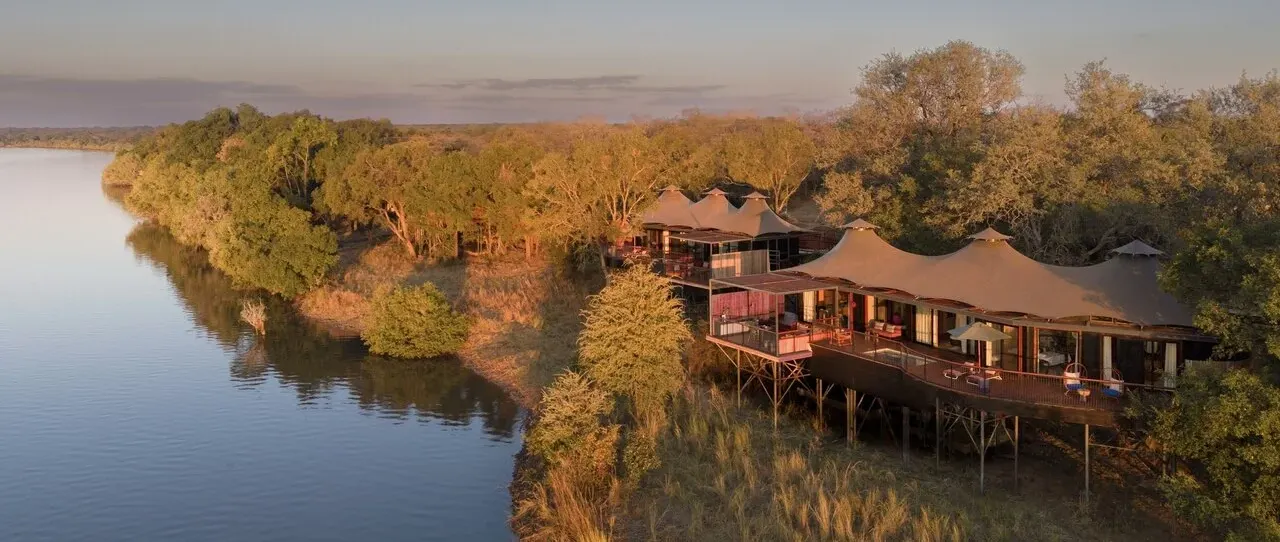
A small safari camp with a remarkably large landscape
Anantara has introduced Anantara Tented Camp Kafue River, its first safari property in Africa, within Zambia's Kafue National Park. Announced on 7 October 2026 after three years of development, the camp combines thirteen suites and villas with guided wildlife outings and a substantial wellness programme. Its most significant luxury may be the separation between accommodation, river and wilderness, rather than the length of its facilities list.
The property overlooks the Kafue River in Zambia's largest national park, with structures raised above the terrain on platforms. The operator says the elevated arrangement helps keep wildlife corridors open beneath the buildings. That design claim is a useful starting point, although environmental performance ultimately depends on daily operation, energy, water and waste practices as much as on the architectural drawings.
Conservation brings another dimension to the stay
Anantara developed its wildlife experiences with African Parks, whose wider conservation work in Kafue is conducted in partnership with the Zambian authorities. Since 2022, park teams have strengthened security, improved infrastructure and addressed fire management as part of a long-term restoration programme. The conservation programme and the hotel are different organisations, and guests should not assume a room booking directly finances every wildlife project described by the operator.
Examples highlighted by Anantara include a reintroduction of Kafue lechwe in 2024 and a large relocation of wildebeest and zebra in 2025. Such work is more complex than a single photogenic animal encounter, involving careful decisions about habitat, monitoring and long-term protection. Guests choosing a safari on conservation grounds can ask what the property's direct contribution is and how guides explain the park's restoration.
The thirteen suites and villas have distinct characters
The small accommodation collection comprises three Horizon Terrace Suites, nine Pool and Bush Villas and one Presidential Villa. The terrace suites rise approximately fourteen metres above the ground and are accessed by a glass elevator, providing a considerably higher outlook than conventional tented lodging. According to the operator, elevated outdoor sleeping areas offer an opportunity to spend part of the night beneath the stars.
The Pool and Bush Villas stand on raised timber platforms, with heated plunge pools and dedicated space for in-villa massage. The Presidential Villa adds a more expansive private arrangement and exclusive access by boat, together with a flexible timetable for meals and activities. Travellers should confirm exact privacy arrangements, accessibility, safety features and bedroom configurations for their chosen unit rather than assuming all thirteen offer identical facilities.
Design informed by the river and its trees
Interiors by Meg Ralph Spaces use canvas, timber and natural textiles in a palette inspired by the surrounding bush. The official photographs show accommodation that directs attention towards mature trees and the river beyond, leaving room for the landscape to be the visual focus. Anantara says the buildings were positioned around important riverine trees to limit disturbance, a practical design decision that must continue to be supported through careful site management.
Although the camp describes itself as off grid, the operator lists solar power, on-site water purification and many of the comforts associated with premium hospitality. Those measures can reduce some infrastructure demands in a remote area, but they are not sufficient by themselves to establish a carbon or conservation result. Guests who depend on electrical equipment or reliable communications should ask about backup systems and connectivity before travelling.
Dining can happen almost at river level
One of the camp's distinctive facilities is a low floating dining pontoon for up to four guests, reached by boat for breakfast, afternoon tea or wine tasting. Its intimate scale makes light, weather and the surrounding wildlife part of the experience, creating an alternative to an elaborate restaurant interior. The concept depends on sensitive guiding and safe judgement near a river that is also habitat for hippos and crocodiles.
Other dining venues include Luzuba Harvestry, which the group presents as a place for contemporary food informed by Zambian ingredients, and Twalumba Bar and Lounge for informal gatherings after a game drive. The launch information says full board is included with the lead accommodation rate, but individual menus, private dining supplements and seasonal operating arrangements should still be checked. River conditions may affect which experiences can safely run.
Wellness is integrated into the accommodation
Anantara has created a floating fitness platform with Technogym equipment and an outdoor area for yoga, providing a place to exercise while looking across the water. Spa rituals can be delivered in dedicated massage rooms within individual suites or villas and followed by time in a private steam shower. This changes the character of a spa appointment from a visit to a communal building into part of a secluded safari day.
Luxury wellness is most valuable when it respects personal preference, health and the rhythm of the place. A demanding early game drive may be followed by rest instead of a complicated treatment schedule, while other guests may enjoy a short massage. The existence of an attractive spa menu does not prove medical benefits, so guests with relevant conditions should discuss suitability and contraindications with qualified professionals.
Game drives and river outings shape the itinerary
Twice-daily guided game drives form the backbone of the advertised programme, alongside river safaris, bush picnics and catch-and-release fishing. Guides are essential not only for interpreting animal tracks and habitats but also for managing the distance between guests and wildlife. The park supports elephants, antelope and large predators, yet no reputable safari operator should promise specific sightings at a fixed time.
Visitors may choose to travel during Zambia's greener months, when the operator says vegetation flourishes and migratory birds arrive, but seasonal shifts also influence access and visibility. Rain, river levels and park restrictions can alter excursions, sometimes at short notice. A flexible itinerary with time for quiet observation is usually more realistic than attempting to fit every advertised activity into a short stay.
Understanding the launch rate and the journey
In October 2026 Anantara quoted an introductory lead rate of USD 6,300 per room per night based on two people sharing. The announced inclusions cover full board, premium drinks, twice-daily game drives, personalised butler service and one ninety-minute spa treatment per person per stay. That was a published starting figure, not a guaranteed tariff for every date or villa, and travellers should request an exact quotation with transfer costs, taxes and booking terms.
Reaching a remote national-park camp involves logistics more complicated than a transfer from an airport to a city hotel. Anantara lists private charter flights from Livingstone or Lusaka to Chunga airstrip and road-transfer alternatives, with a long journey possible for guests driving from Lusaka. Visitors should coordinate the aircraft, luggage allowances, weather backup and arrival time with the lodge well before committing to onward connections.
Where the value of the experience will be proven
Anantara Kafue is an operating new camp with a defined inventory and named facilities, not a proposed resort whose attractions are confined to architectural renderings. Its small capacity and river setting may particularly appeal to travellers who have already seen busy safari circuits and now want more time for observation, conversation and rest. The same remoteness that supports that atmosphere brings costs and practical demands that deserve honest consideration.
For a private safari party the final questions are operational: how are guides trained, what medical assistance is available, which wildlife outings are included, and what happens if weather prevents a flight? A careful answer will say more about the standard of hospitality than a dramatic photograph of a pool villa. Kafue's landscape is remarkable enough to reward a journey designed around informed expectations and responsible access.