A watch conceived for an unusual workplace
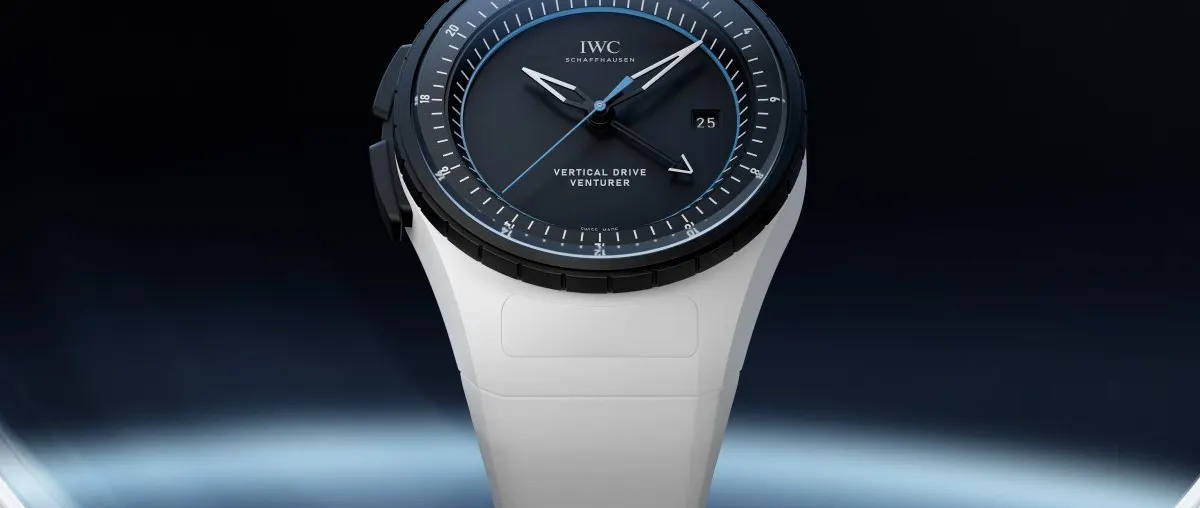
IWC Schaffhausen presented the Pilot's Venturer Vertical Drive at Watches and Wonders Geneva in April 2026 as a mechanical watch created with human spaceflight in mind. The company worked with Vast, which is developing the Haven-1 commercial space station, to explore how familiar watch functions might be used in an unfamiliar environment. It is an engineering story rather than a claim that the watch has already travelled into orbit.
The project invites a fundamental question about mechanical instruments in a highly digital setting. A wristwatch designed for specialist operations needs controls that make sense to the wearer and materials appropriate to its intended conditions. A space theme on a dial would not answer those questions, so IWC has focused on how the movement is operated.
A rotating bezel takes over the crown
The Venturer Vertical Drive uses a patent-pending arrangement in which a rotating bezel helps control winding and setting. A rocker switch on the case side selects the relevant function, replacing some tasks associated with the conventional pull-out crown. That creates an unusually direct relationship between the broad outer ring and the internal mechanics.
A control system is only useful when its operating modes can be understood and reliably selected. In demanding circumstances, unclear switches may lead to unintended changes, which is why human interaction is a significant part of the design. The watch offers collectors an unusual opportunity to think about ergonomics alongside calibre and case finishing.
Ceramic choices reflect material engineering
IWC describes a construction using white zirconium-oxide ceramic and its proprietary Ceratanium material. The company's longstanding experience with ceramic cases provides a foundation for applying these materials to specialist requirements. Durability and appropriate mass are important considerations, although no case should be treated as impervious to every possible form of damage.
Collectors should examine how an unusual material can be serviced over time, including whether particular parts require specialist replacement. Scratch resistance and impact resilience are not identical properties. A technically ambitious watch may reward careful ownership, but it deserves the same practical attention to wear, fit and maintenance as other mechanical instruments.
Vast adds a testing context
Vast has participated in qualification testing linked to the planned Haven-1 station. The manufacturer's announcement describes the watch as qualified for that specified human-spaceflight programme, giving its engineering claims a tangible context. The qualification should be considered within the limits stated by the partners, not expanded into a claim about every imaginable space mission.
The timing of a station's launch is separate from a watch's public presentation. An April product announcement does not verify that a mission has taken place by October. Following the programmes involved through their official updates is a more reliable approach than treating the watch's dramatic appearance as proof of operational use.
A collector's view of tool-watch innovation
Mechanical watches often retain their appeal because they make complex movement visible and understandable through their operation. The Venturer adds another layer by changing how winding and setting are performed. For enthusiasts, such a development can be fascinating even without any intention of using the instrument in the conditions for which it was conceived.
The value of an unusual mechanical system lies partly in the maker's documentation and service support. An instrument that can be explained, maintained and demonstrated may hold long-term interest beyond its initial publicity. The spaceflight connection gives the story attention, but the distinctive engineering provides substance.
What remains to be established
IWC's original release confirms the design, materials and involvement with Vast. It does not provide a record of a completed future mission, nor should its terminology be read as a promise of universal space certification. Buyers should consult current manufacturer specifications for exact dimensions, availability and care requirements.
The continuing significance of the Venturer Vertical Drive is its challenge to familiar watchmaking assumptions. By reconsidering a simple control such as the crown, IWC has shown that even a centuries-old mechanical category can offer space for new ideas.