A second partnership chapter in watchmaking
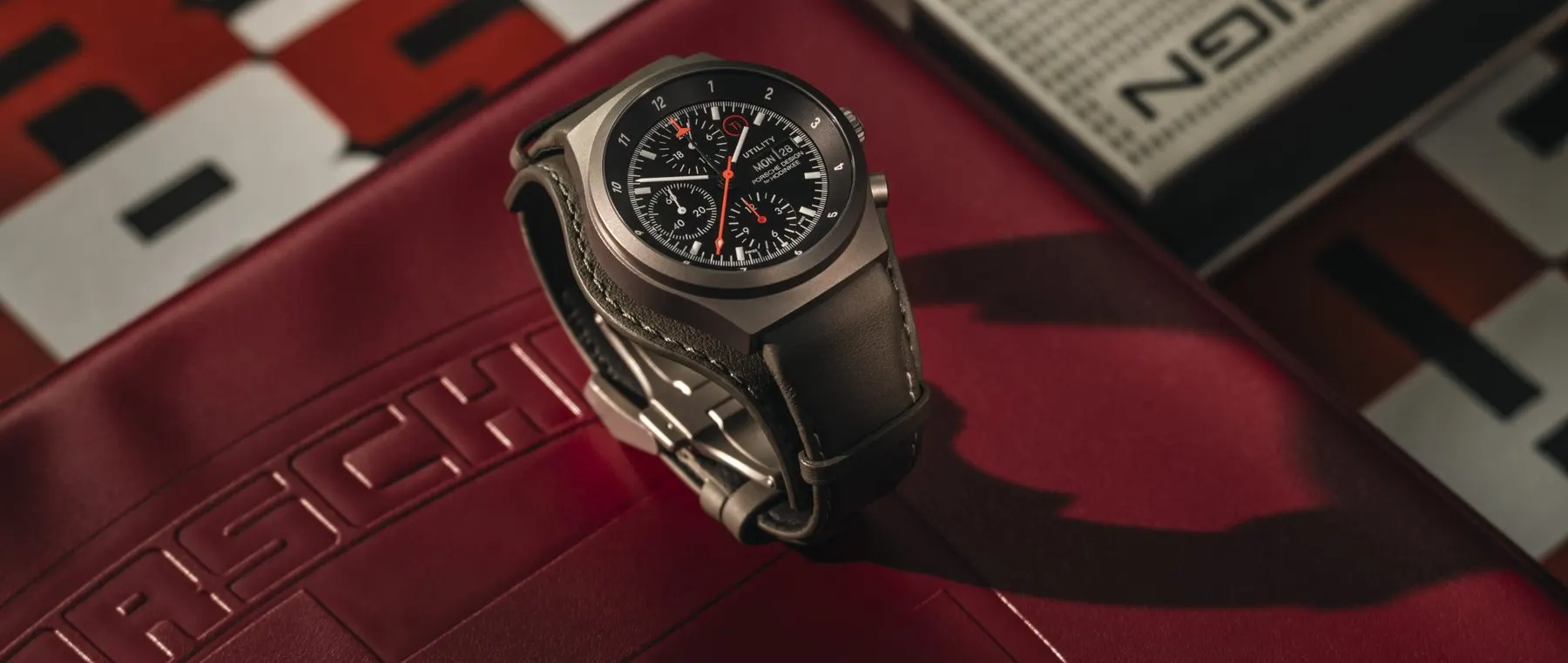
Porsche Design and Hodinkee have presented the Chronograph 1 Utility – Limited Edition for Hodinkee, a 350-piece watch that revisits the functional character of military chronographs from the late 1970s and 1980s. The product was announced on 1 October 2026, and its most significant feature is not a cosmetic reference to Porsche but the revival of a historically distinctive way to read elapsed minutes at a glance.
The collaboration is the second chapter of a planned three-part partnership following a Hodinkee edition in 2024. For collectors, that context is worth recognising without assuming that the final chapter will follow a particular design. The new watch was offered at €8,950 at launch, while actual availability and retail conditions now need checking with an authorised seller.
The movement has a recognisable ancestor
The WERK 01.340 movement takes inspiration from the Lemania 5100 layout used in historic Porsche Design military chronographs. Its central chronograph-minute hand brings elapsed minutes to the same general visual plane as the chronograph seconds, making that timing information easier to locate quickly than on a small subsidiary dial. The design also provides a 24-hour display at twelve o'clock.
Porsche Design says that the new movement is COSC-certified and offers approximately 60 hours of power reserve. This is a newly developed movement rather than the installation of salvaged Lemania 5100 parts. The distinction matters for long-term ownership: heritage is represented through the arrangement and purpose of the indications, while the mechanism must meet contemporary expectations for service and precision.
A design first considered for professional needs
Historic military customers wanted watches that could be read under demanding conditions and maintained over long periods. Porsche Design adapted its Chronograph 1 for air and naval forces in the late twentieth century, focusing on legibility rather than decorative embellishment. The latest limited edition invokes that earlier brief, even though it is being sold as a luxury collector's watch rather than issued as government equipment.
Marketing language about military heritage should not be mistaken for present-day military procurement or official certification for combat use. The practical idea is that a watch should communicate important information clearly, with the dial's layout supporting that purpose. Collectors can appreciate the connection without treating a modern limited release as identical to an original service-issued piece.
Titanium and a mostly black dial
The case is made from uncoated titanium, chosen for its relative lightness and durability. The dial has a dark instrument-inspired finish, including a red fighter-jet-shaped tip on the central minutes hand and red emphasis on the twelve-hour counter. A luminous chronograph seconds indication is intended to improve readability when light is poor.
The 24-hour indication provides a distinction between morning and evening when the hands are set in a conventional twelve-hour format. Other details include Utility lettering, a historic-style logo, a Ti mark and a bilingual English-German day indication. Each feature contributes to a specific visual story rather than adding ornament unrelated to the watch's stated purpose.
Why the central minute indication matters
Most modern chronographs place at least one elapsed-time indicator on a subsidiary register. That can work perfectly well, but it asks the viewer to shift attention away from the central hands. The WERK 01.340 places the elapsed-minute readout centrally, where it can be found and interpreted with a short glance. In this regard, the movement's layout is the heart of the new watch.
Porsche Design also uses a jumping-minute mechanism to make transitions distinct. The chapter ring carries a twelve-hour scale rather than a tachymeter, reflecting the instrument-first approach. These are functional decisions; they may be more meaningful to enthusiasts than a large case or a conspicuous badge celebrating the two collaborators.
The strap is part of the heritage story
The edition is supplied with a titanium bracelet, but buyers also receive an Agave Green Bund-style leather strap with a matching insert. Porsche Design says the leather is also used in Porsche sports-car interiors, adding a material link with the automotive side of the business. A quick-change arrangement allows the wearer to switch between the bracelet and the historic field-watch look.
Whether a bracelet or strap is preferable depends on daily comfort, climate and personal taste. Buyers should examine the fit and confirm the supplied accessories when ordering, particularly through secondary sellers. The additional strap is part of the edition's confirmed retail specification, not evidence that all standard Porsche Design chronographs include the same package.
Exclusivity and collecting considerations
The case back carries an individual limited-edition number out of 350. A small run can be attractive to enthusiasts who follow the development of Porsche Design's chronograph history, but the edition size by itself says nothing about future resale prices. Condition, documentation, provenance and long-term service support remain important when buying or selling a mechanical watch.
The manufacturer's announced European distribution included Porsche channels and selected retailers, while United States availability was assigned to Hodinkee and Watches of Switzerland. Stock levels may have changed since the 1 October launch. Collectors should check official listings and the serial-number documentation rather than infer availability from the original announcement alone.
A different way to connect cars and timepieces
Ferdinand Alexander Porsche founded the Porsche Design brand in 1972 after his work on the Porsche 911, bringing a philosophy of clear forms and practical function into watches and other products. The Hodinkee edition offers an example of that idea in an instrument whose visual arrangement is closely tied to its task. The automobile connection is part of the heritage, but the appeal of the product is watchmaking itself.
The confirmed October 2026 story is the 350-piece titanium Chronograph 1 Utility, the new WERK 01.340 movement and the return of a distinctive central-minute chronograph display. Its importance lies less in a collaboration logo than in recovering a thoughtful mechanical layout for a contemporary collector. A full assessment should still include direct examination of the watch, its fit and its current purchase terms.