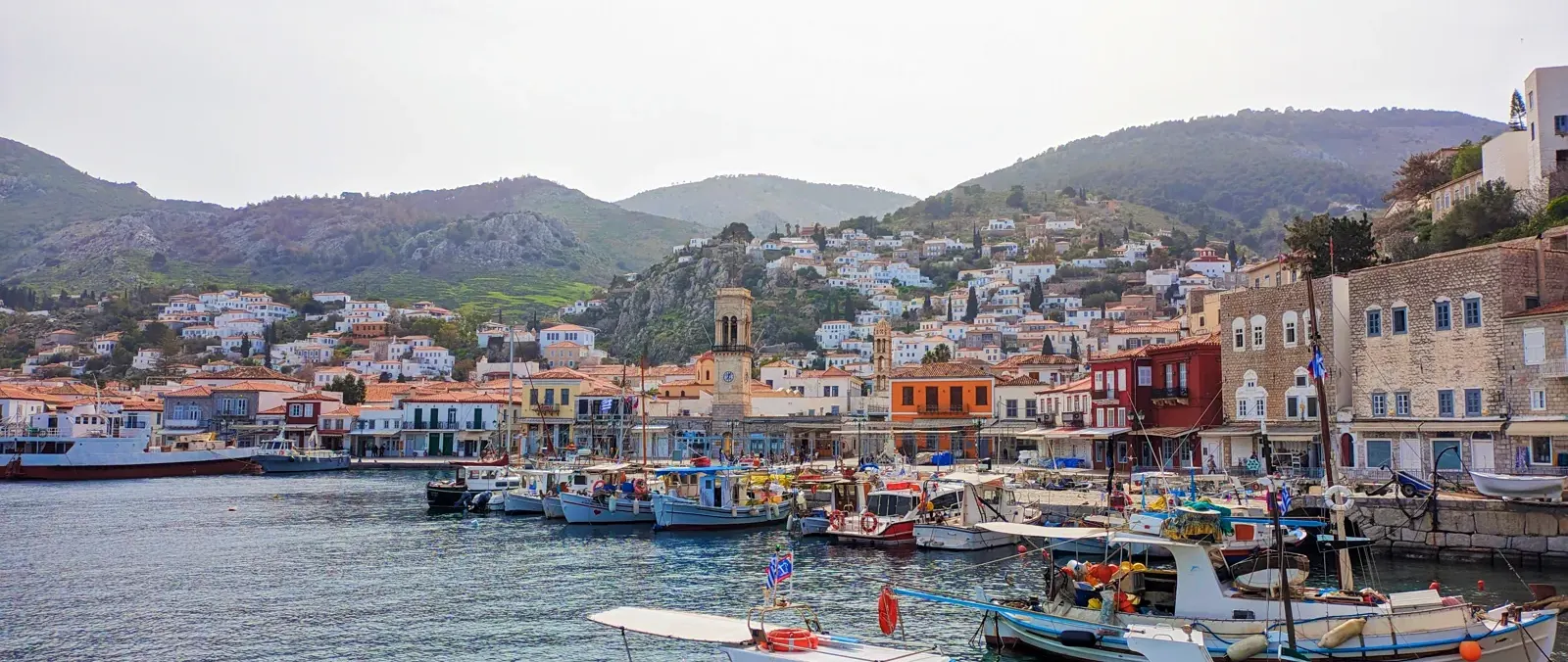
Hydra’s special appeal to the small-yacht owner
Hydra is a destination where the yacht should be a means of arrival, not the centre of every waking hour. The Saronic island is close enough to the Greek mainland to feature in a short Aegean itinerary, yet its stone waterfront, steep hillside settlement and largely vehicle-free character make the atmosphere noticeably different from a marina-led resort. For owners and charter guests travelling in 12 to 23.99-metre yachts, the reward is a rare feeling of immediacy: the harbour is not merely a place to berth, but the beginning of the town itself. The same compactness that creates this charm also demands careful arrival planning.
The Greek National Tourism Organisation describes Hydra as an island shaped by its historic merchant fleet, artists and writers, with grand stone houses standing above the harbour. That cultural identity matters to the luxury-yacht visitor because a memorable stay here does not require a succession of exclusive clubs or elaborate shore transfers. A walk beside fishing boats, an unhurried meal and an evening looking back towards the waterfront can provide much of the experience. Yet owners should separate the romance of arriving under their own power from the operational realities of a busy working port.
The first decision: berth or alternative arrival
The Municipal Port Fund of Hydra expressly asks boat operators to contact it before arriving to establish whether a berth is available. That is the most useful concrete instruction in any Hydra cruising plan. The port authority lists the telephone number +30 22980 52333 and provides a round-the-clock assistance contact through the same number. It does not promise a reserved berth simply because a boat is within a particular length category. For a 12-metre motor cruiser or a yacht approaching 24 metres, the controlling questions are still actual space, draft, prevailing conditions and instructions issued locally.
Hydra should never be treated as an automatically available overnight stop. Passenger ferries, water taxis, working craft and visiting leisure vessels share a constrained waterfront. If a skipper has a firm dinner booking but no confirmed safe berth, the itinerary is backwards. Contact the port fund, make a conservative arrival assessment and retain an alternative location or transfer strategy. A vessel’s size may help determine options, but length alone does not confer access. Local staff and the skipper, not a general travel feature, must make the final berthing decision for the particular day.
A waterfront with a maritime memory
The town’s appeal is not a recent styling exercise. Hydra’s eighteenth-century shipping wealth helped finance the stone mansions that still rise above the port. The Greek tourism authority links the island’s maritime families with their involvement in the Greek War of Independence in 1821. Seen from the water, the architecture makes this history unusually legible: the harbour has the feeling of an amphitheatre, and the town appears to have been arranged for people arriving by sea. It is an especially apt place to visit on a yacht because the approach offers the perspective from which the settlement was built to be seen.
To enjoy the scene properly, allow enough time to walk beyond the first line of quayside cafés. Look at how the lanes climb away from the water, how the large houses relate to smaller dwellings and how little the town relies on automobile access. There is a distinction between exploring a heritage place and treating it simply as a scenic backdrop. The better itinerary leaves room for a museum visit, a local guide or a conversation about the island’s trading past. That depth is what transforms a brief stop into a destination worth remembering.
The car-free principle changes the rhythm
Hydra is widely known for restricting wheeled vehicles. The local port fund’s visitor information is unusually clear that a traveller cannot bring a car, motorcycle or even a bicycle on the normal island crossing. The national tourism authority likewise describes a place with no cars or motorcycles and a network of lanes explored on foot. For yacht guests this is a practical consideration, not merely a picturesque detail. High heels, heavy suitcases and complicated transport expectations are often less useful here than good walking shoes and a small shore bag.
That change of pace creates a particular kind of luxury. A harbour arrival may be followed by a quiet walk to a shaded courtyard, a view from the hillside or a return to the yacht without the sound of road traffic. Equally, accessibility needs must be considered honestly: steep lanes, uneven surfaces and steps can affect guests with limited mobility. Any operator promising an effortless door-to-door land transfer should explain exactly how the route is accomplished. Hydra rewards simplicity, but its geography will not automatically accommodate every guest’s preferred routine.
Dining and the pleasure of staying close to shore
A Hydra evening is best planned around the waterfront rather than an overfilled schedule. The island’s established restaurant culture and seafood tradition give visitors plenty to explore, although the particular chef, menu and opening hours should be checked directly rather than assumed from a destination guide. Owners can choose between dinner aboard, food collected locally and a table on land, depending on the berth situation and the weather. None of those options requires a supposed celebrity-approved address or an invented reservation recommendation to feel special.
Guests stepping ashore should remember that a working port remains active after the most atmospheric photographs have been taken. Tender handling, gangway arrangements and movement around the quay must respect other users, particularly as light fades. It is easy to imagine a late return from dinner as a short stroll, but a vessel lying offshore or in another harbour makes the transfer more complicated. Good hospitality means discussing the return arrangements before the evening begins. The most elegant experience is one in which the logistical details have been quietly anticipated.
Swimming, walks and a more deliberate day ashore
The Greek National Tourism Organisation highlights Hydra’s nature trails, coastal views, swimming and traditional scenery. These activities fit the 12–23.99-metre yacht audience because the boat can serve as a comfortable base while the guests choose their preferred level of activity. One day might include a harbour walk and a short exploration of the town; another might involve a longer coastal outing. No destination article can guarantee suitable conditions for swimming or tender access at a particular cove, and the skipper should assess weather, local restrictions and traffic before proposing a stop.
Treat water activities as part of an itinerary rather than as a right to use any attractive patch of sea. Avoid anchoring in a way that damages seabed habitats, respect marked swimming areas and use locally authorised points for landing. When guests want private swimming, seek places that are appropriate for the specific yacht’s draft and handling characteristics. In a busy Saronic itinerary, the apparently easiest location can prove awkward once wash and tender activity increase. A well-chosen quieter option may produce a better day than chasing the most photographed view.
What yacht size actually changes
A 12-metre luxury cruiser and a 23-metre yacht share an interest in Hydra, but they do not have identical requirements. At the smaller end, close-quarters manoeuvring can be more flexible while accommodation and storage may be limited on a multi-night trip. Towards the upper end of Luxury Yacht Guide’s coverage, windage, beam, draft and the practical reach of a gangway become increasingly significant. Guests may enjoy greater privacy aboard the larger yacht, but the vessel itself can be less easy to position in a constrained harbour.
Do not confuse overall length with a complete berth specification. The skipper also needs to consider the actual beam, underwater profile, equipment, manoeuvring ability and any local limits imposed by the harbour authority. A crewed vessel can relieve guests of many decisions, but crews cannot override port instructions. The sensible preparation is to transmit accurate vessel particulars in advance and make a second check nearer arrival. Neither online photographs nor a statement that yachts visit Hydra provide an answer to whether one particular boat can stay that night.
A sensible Saronic itinerary without invented passage times
Hydra can form part of a Saronic cruising circuit that also considers neighbouring Poros and Spetses, both named in the port fund’s published ferry connections. That does not establish a recommended yacht route, guaranteed passage duration or safe approach for every vessel. Actual planning depends on the yacht’s operating limits, forecast, traffic, seasonal conditions and preferred overnight arrangements. Charter guests choosing between a short break and a longer cruise should ask the captain for realistic alternatives rather than treating a stylised route diagram as an operational passage plan.
The virtue of leaving space in the timetable is that Hydra can be enjoyed at its own speed. If berthing is unavailable, the crew might arrange another lawful and safe stop and offer Hydra as an excursion on a suitable day. If a good berth is secured, there is little reason to rush away after breakfast. The island’s character is concentrated enough for a single rewarding visit, but layered enough to justify a second walk, another meal and a little time simply observing the port. Flexibility, not a rigid hour-by-hour schedule, is the key to doing it well.
Heritage photography and what the picture can really show
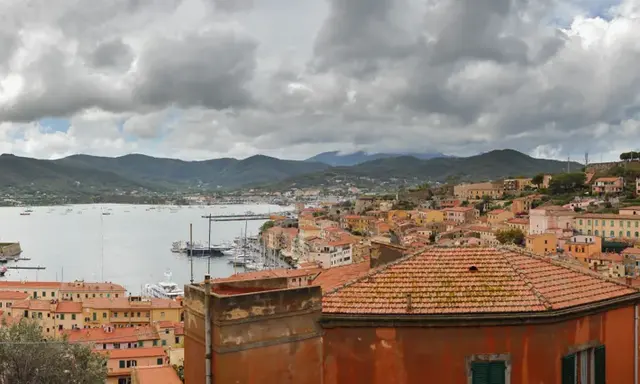
Hydra’s visual identity is so strong that destination imagery can easily become misleading if it is presented as evidence of a current berth or a recent event. The accompanying photograph in this feature is an independently licensed view of Hydra harbour made in February 2023. It documents the place itself, not a November 2026 marina availability report. An older photograph is entirely suitable for illustrating the stone-lined waterfront, but it cannot verify present mooring conditions, prices, construction works or boats currently alongside.
That distinction should also inform trip preparation. Attractive imagery, hotel descriptions and social posts are starting points for deciding where to visit, never substitutes for contemporary information from the relevant authority. A serious luxury-yacht guide should offer both inspiration and useful limits: the harbour’s beauty can be celebrated without implying that every guest can arrive on demand. Owners who observe those limits generally obtain a more relaxed experience because expectations have been aligned with the practical realities before departure.
Before departure: a compact, reliable checklist
Contact the Municipal Port Fund of Hydra on +30 22980 52333 to establish berth availability and any local instructions; be ready with the yacht’s full dimensions and intended arrival window. Ask the skipper to review weather and approach conditions rather than selecting a destination solely from its appeal in photographs. Discuss the shore transfer, return from dinner, walking accessibility and tender arrangements with guests. If the stay depends on a particular restaurant or service, confirm opening times directly. A port contact made in advance is useful, but availability can still change.
For broader destination context, the Greek National Tourism Organisation maintains an official Hydra profile, while the municipal port fund provides the practical harbour contact. Together they tell a coherent story: a heritage island best explored slowly and a harbour that must be managed responsibly. For luxury yachts between 12 and 23.99 metres, Hydra is not a promise of frictionless exclusivity. It offers something more distinctive: an authentic maritime town whose atmosphere remains closely tied to the sea, provided a crew treats arrival arrangements with appropriate care.
Original sources and image rights
Photograph: “Hydra harbour, Greece” (27 February 2023), by Νικόλαος Κυριακάκης, Wikimedia Commons, CC BY-SA 4.0; converted and resized to WebP. This is an archival destination view, not a live record of berth availability.