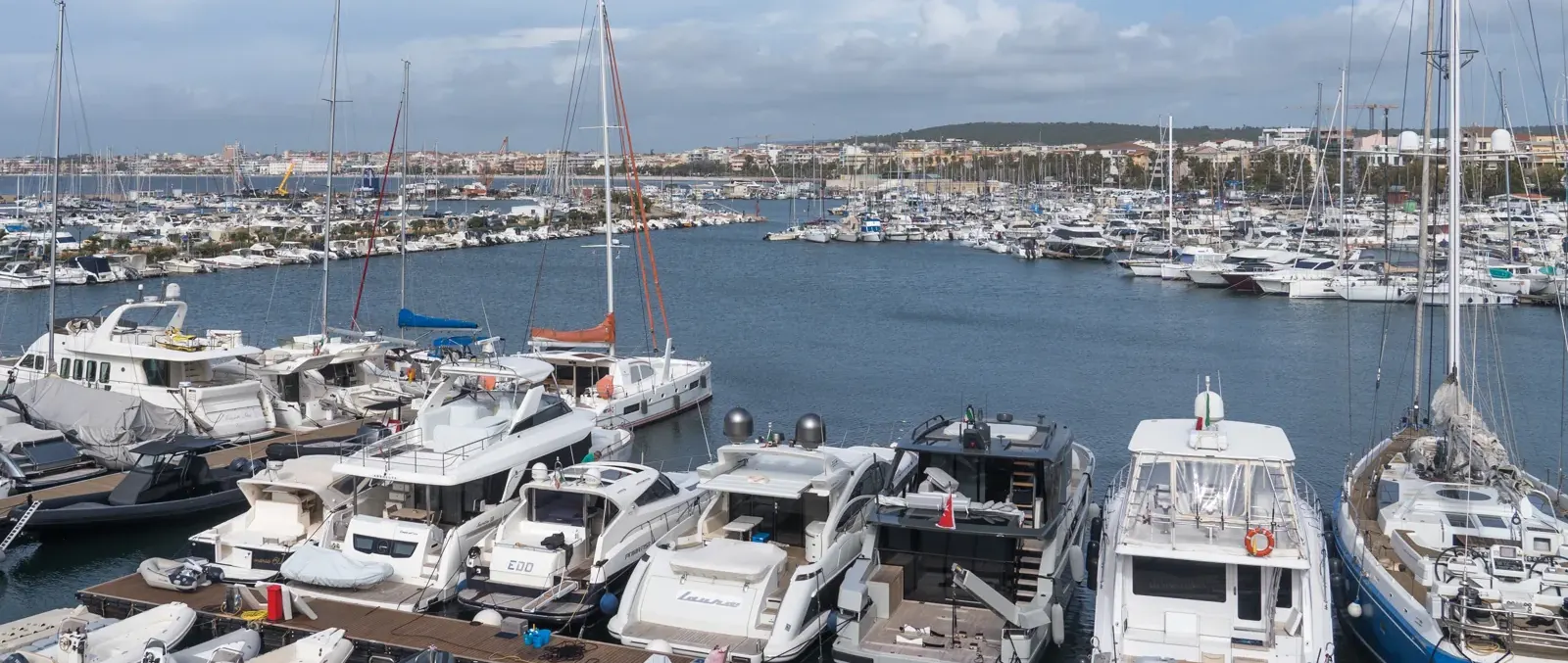
Alghero, Sardinia — Luxury Yacht Guide, 7 November 2026. Northwest Sardinia has a harbour city where the old Catalan walls meet a choice of contemporary mooring operators. This detailed guide examines verified berth options, distinct published VHF contact channels, the historic centre and coastal excursions for yachts from 12 to 23.99 metres.
Alghero from the water: an old town built around its harbour
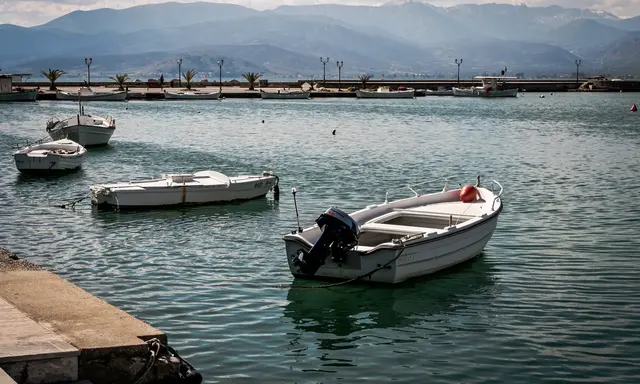
There are Mediterranean ports where a berth simply gives access to a destination, and there are ports where the mooring is part of the experience. Alghero belongs to the second group. Its historic quarter rises immediately behind the waterfront, the old ramparts frame the approaches to town, and the fishing harbour and marina pontoons occupy the same broad urban setting. For owners of a 12–23.99-metre luxury yacht, that creates an unusually simple proposition: arrive by sea, settle the yacht with the correct operator and explore much of the old centre on foot. This is a working port, however, not a decorative harbour built solely for visiting yachts. Its character comes from the coexistence of local maritime life, tourism and multiple berthing businesses.
Alghero sits on the north-western coast of Sardinia, looking out towards the Riviera del Corallo, or Coral Riviera. The town's Catalan heritage is visible in its architecture and cultural references, giving it a different atmosphere from many mainland Italian yachting stops. That identity is a useful reason to spend more than a transit night here. Instead of treating Alghero as a fuel-and-provisions waypoint, a short yacht stay can combine easy shore access with a substantial programme of historic streets, coastal scenery, local cooking and museums. The best visit is organised around the practicalities of the berth and the pleasure of the town, in that order.
Three berthing businesses, three different enquiries
One of the most important details for visiting yacht owners is that Alghero should not be treated as one marina with a single capacity figure, contact point or radio channel. Ser-Mar describes a facility with 80 berths and accommodation for boats up to 23 metres. Marina di Sant'Elmo separately advertises 100 berths, services available around the clock and capacity for much larger craft. Aquatica Sardinia's Alghero operation describes another 60-berth service, also with capacity extending well above the Luxury Yacht Guide size range. Those figures belong to the individual providers. Adding them together and calling the result the town's total capacity would misrepresent how this port is organised.
For a 12–23.99-metre yacht, each operation may be relevant, but suitability depends on the boat's actual length, beam, draught, requested dates and the berth offered. Ser-Mar's stated upper limit of 23 metres makes a particular difference to a vessel between 23.01 and 23.99 metres: it cannot simply be assumed to fit there because the boat falls within this publication's editorial range. A larger-capacity operator may be the appropriate first enquiry in that case. This is precisely why the berth should be selected through a named provider's current information rather than through an unverified generic harbour directory.
VHF channels and arrival coordination
Operator-specific details are equally important on arrival. Marina di Sant'Elmo lists VHF channel 9 on its published information, while Aquatica Alghero lists VHF channel 74. These are different published contact channels for different businesses, not alternative universal channels for the whole harbour. Ser-Mar has its own service details and reservation process. The responsible approach is to confirm the correct operator, arrival window, berth assignment, contact telephone and communications instructions when the booking is accepted. Those instructions should take precedence over a static travel article because port arrangements and staffing change.
Nothing in a destination guide replaces the master’s passage planning. Before entering, check the latest charts, notices, weather, traffic requirements, approach directions and any instructions supplied by the local harbour authority. Wind, sea state and ferry or commercial movements can change the practical picture. A sophisticated arrival also includes the less glamorous details: a clear fendering plan, shore-power compatibility, a realistic assessment of manoeuvring space and adequate time to contact the assigned pontoon. The attractive view of the city walls is a reward for a properly managed arrival, not a reason to rush one.
Transit berths and the port consortium
Visiting yachts looking for a short-term stop should also investigate the Consorzio Porto di Alghero. Its published port information identifies transit berthing areas, including Banchina Dogana and Banchina Sanità, and gives a dedicated transit contact. This is a distinct route for enquiries from booking directly with one of the marina businesses. The consortium's current availability, length limitations, assigned location and applicable tariffs need to be checked with it, particularly during busy holiday periods. A vessel that has room on paper may still be unsuitable for a particular quay because of operational allocation or dimensions.
The pricing distinction matters. A displayed annual or seasonal tariff cannot automatically be used to estimate an overnight visit. Nor should a price quoted by one concession be applied to another. Ask for a dated quotation covering the entire intended stay and confirm whether electricity, water, taxes, waste handling, security arrangements and cancellation conditions are included. For a longer itinerary, request the same information at the beginning of the planning process for every port. Comparable quotations reveal the real cost difference between a central town berth and a more secluded marina, and prevent false precision in a cruising budget.
The city walls and the first walk ashore
The remarkable feature of Alghero's waterfront is the proximity of the old defences to the everyday yacht itinerary. Municipal tourism material describes the harbour as dominated by the historic Catalan walls, with access from the seaward side into the old town. In practical terms, a centrally moored yacht can offer a leisurely first evening without arranging an inland excursion. The ramparts provide views over the water, while a walk inward leads into narrow streets and small squares. It is a destination that rewards an unhurried arrival: secure the boat, check the next day's weather and then let the harbour become the start of the town visit.
The towers add identifiable landmarks to the walk. Torre di Sulis and Torre di San Giovanni are among the places described in Alghero's visitor information, alongside museums and historic buildings. Opening times vary, so it is sensible to treat museum interiors as options rather than promises. The outside circuit still has its own attraction: stone walls, changing light and the transition from open sea views to intimate lanes. Photographers often find the most interesting scenes away from the obvious waterfront postcard angle, where local details show how a port city continues to function around its heritage.
Coral, language and the distinctive character of Alghero
Alghero's identity cannot be reduced to beaches and moorings. The Coral Riviera name reflects an association with red coral and local craft traditions, and the town retains a notable historical connection with Catalan language and culture. The Coral Museum provides a way to examine that legacy in a more structured setting, subject to its current visitor arrangements. If an evening visit is planned around a particular museum or exhibition, check directly before leaving the quay. Coastal yacht travel is especially satisfying when it connects the landscape seen on arrival with the reasons people have lived and worked beside it.
A worthwhile programme balances that historical curiosity with the simple pleasures of the old quarter. Choose a long lunch, explore a different section of the walls, or allow a second walk after sunset. Restaurants, artisan shops and cultural venues change from season to season, and it is better to choose them based on up-to-date opening information than to rely on a rigid list produced months earlier. For crews and guests, the appeal is flexibility. A town-side berth means it is easy to return to the yacht between outings without turning every activity into a car journey or a tightly timed transfer.
Porto Conte, Capo Caccia and the surrounding coast
Beyond the historic centre, the coast around Alghero provides the other half of a good yachting visit. Porto Conte and the Capo Caccia promontory are prominent regional attractions, offering a change of scale from the confined streets around the port. The temptation is to treat the surrounding water as a collection of picturesque anchoring opportunities. That would be a mistake without checking the marine protected area's current boundaries, permissions, navigation restrictions and anchoring provisions. Scenic water does not imply unrestricted anchoring or freedom to take a tender ashore wherever convenient.
Plan a coastal outing from the chart and the applicable park and harbour authority information. In a protected setting, designated moorings, permitted transit corridors and restrictions on anchoring can be significant. The conditions for swimming, diving and visiting nearby caves may also vary. A responsible skipper looks at the environmental rules before advertising a particular experience to guests. Where access is controlled or weather makes the trip doubtful, there are ample shore-based alternatives. Alghero works as a destination partly because a change to the sea programme does not leave the party with nothing meaningful to do.
Neptune's Grotto and weather-dependent excursions
Neptune's Grotto is one of the better-known excursions associated with the Capo Caccia area. It is a dramatic coastal attraction, but yacht visitors should not assume a sea approach or tour is available on any chosen day. Weather, sea conditions, visitor-management arrangements, bookings and operating schedules all affect access. If a visit is important, consult the attraction's official information and the relevant transport or excursion operator close to the planned date. There is no editorial value in presenting a weather-sensitive outing as guaranteed merely because the yacht has arrived nearby.
Good destination planning gives the day two versions. The first might combine an authorised coastal excursion with time to enjoy the water from a permitted location. The second might stay ashore: a museum, a long meal, the old walls and perhaps a drive to viewpoints outside the town. Neither option is inferior; each responds to the actual conditions. For a luxury yacht of this size, the ability to reorganise a day quickly is one of the advantages of independent cruising. The quality of the trip comes from informed choices, not from forcing a prearranged itinerary through unsuitable circumstances.
Food, markets and provisioning for a short stay
Alghero's shore setting is well suited to the practical rhythm of a smaller luxury yacht. Guests may prefer a restaurant dinner one evening and an informal meal aboard the next. Either way, provisioning should be handled as deliberately as berthing. Confirm delivery access with the marina, ask where vehicles may stop and establish whether staff can help with loading. The most useful local purchases are not necessarily extravagant: fresh produce, bread, regional cheeses and ingredients suited to a relaxed meal at anchor where anchoring is permitted. Cold-chain handling matters, especially after a warm day's shopping.
The food experience extends beyond the yacht's galley. A thoughtful itinerary leaves time to explore Sardinian dishes and wines without asserting that any one restaurant is always open or always the best. Crew members benefit from shore time too, provided watchkeeping and vessel security are covered. When comparing berths, the distance to everyday services can be as influential as the scenery. Walking access reduces the need for taxis, simplifies small repairs or supplies and allows a visiting party to get more from a short stay. These considerations are central to the 12–23.99-metre yacht owner experience.
Selecting a berth for a 12–23.99-metre yacht
There is no universal winner among Alghero's berthing choices. A 12-metre yacht making a two-night stop with minimal shore requirements may value quick access and straightforward services. A 19-metre motor yacht with several guests might prioritise a dependable power arrangement, access to provisions and a comfortable gangway. A yacht close to 24 metres needs particularly careful confirmation of the provider's stated length limits. Beam, draft, utilities and tender arrangements are just as relevant as length. A general description of a marina's maximum yacht size is not itself an assurance of an available, suitable berth.
Use a disciplined booking checklist: accurate length overall, beam and draught; arrival and departure times; power connection specification; water; waste services; mooring assistance; security; shore access; cancellation terms; and a complete price. Ask whether the assigned berth is in the operator's own area or on a transit quay. Check that the booking confirmation names the location and provides an operational contact for arrival. That may sound meticulous for a lifestyle itinerary, but it is what allows the lifestyle part to proceed smoothly. The best harbour experience is the one in which the administrative details disappear once the lines are secured.
A well-paced two-night stay
For a first Alghero visit, two nights can offer a good balance between harbour life and time afloat. Arrival day should stay relatively light: enter with the proper clearance and instructions, settle the boat and take a first walk around the bastions. Reserve the next morning for the historic centre, a cultural visit or provisioning. The afternoon can remain flexible for a permitted coastal excursion if weather and access conditions allow. On the second evening, the pleasure may be as simple as watching the town lights from the quay and remembering that the yacht is within walking distance.
Departure day deserves the same attention as arrival. Review the latest forecast and any restrictions relevant to the next leg, settle charges early and leave time for the practical work of disconnecting utilities and preparing the deck. A holiday itinerary does not have to be hurried to feel rewarding. Alghero illustrates that particularly well: it combines an unmistakable historic backdrop, several ways to arrange a berth and a coastline that invites exploration with appropriate care. For a luxury yacht between 12 and 23.99 metres, its real strength is the chance to make the harbour, town and sea part of a single coherent experience.
Primary sources and image credit
Berthing services and published capacities are sourced to the individual operators, whose allocations and tariff conditions must be verified when booking. Cultural and coastal details are cross-checked against tourism authorities and destination resources. Photo: “2024-10-09 Porto di Alghero.jpg” by Alexkom000 (Alexey Komarov), photographed 9 October 2024, CC BY 4.0, resized and cropped for this publication.