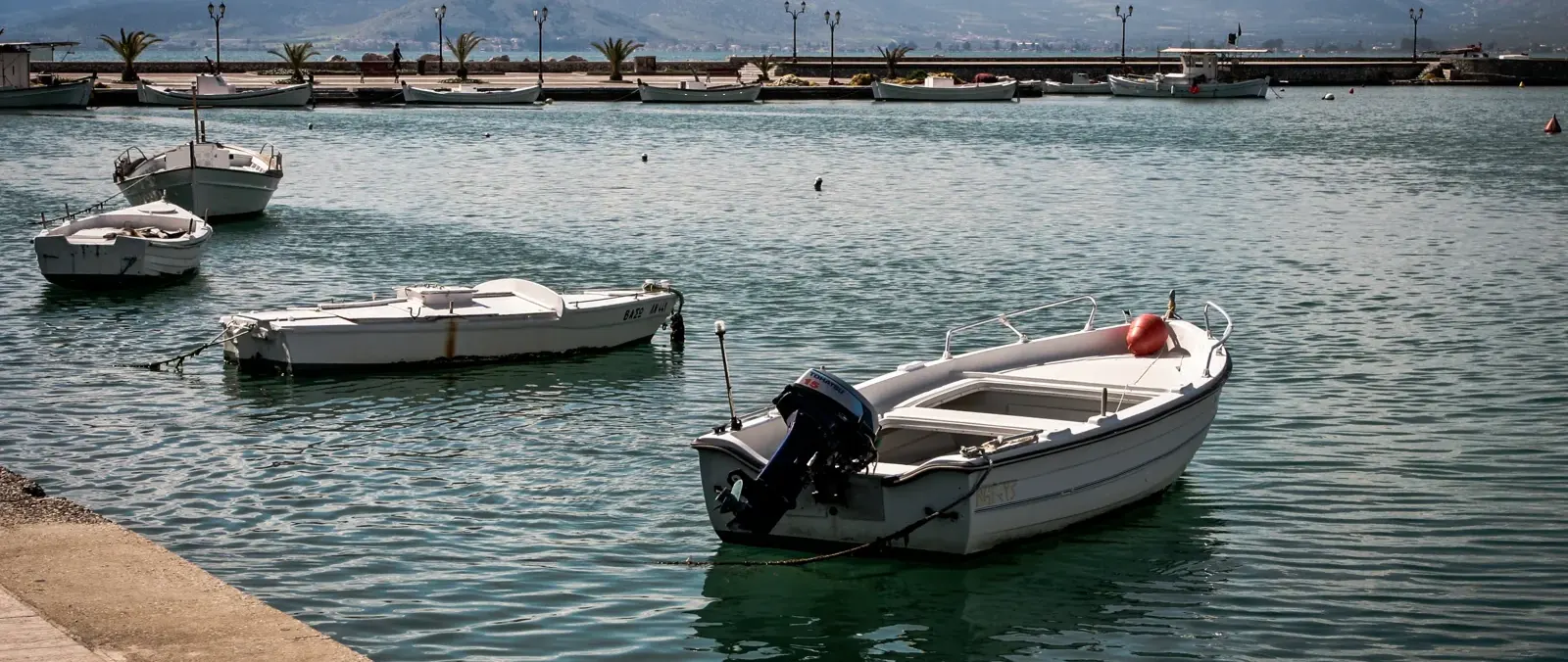
Nafplio, Greece — Luxury Yacht Guide, 7 November 2026. The Argolic Gulf harbour beneath Palamidi fortress offers a distinctive historic stop for 12–23.99-metre yachts. Unlike a resort marina, Nafplio's working municipal port requires advance berth coordination; the guide separates confirmed facilities from a future marina proposal.
A historic city with a working waterfront
Nafplio is one of the most rewarding town-and-harbour combinations in Greece, but its appeal to a visiting luxury yacht is not the same as that of a purpose-built resort marina. The port forms part of an active municipal waterfront, while the old town and its fortifications provide a striking backdrop to a stay ashore. For a yacht between 12 and 23.99 metres, that can be an attractive balance: direct access to architecture, restaurants and walks without the insulated atmosphere of a large private development. The distinction also means skippers should approach berth planning with care, because the quay is administered as a port facility rather than sold as a standard hotel-style marina package.
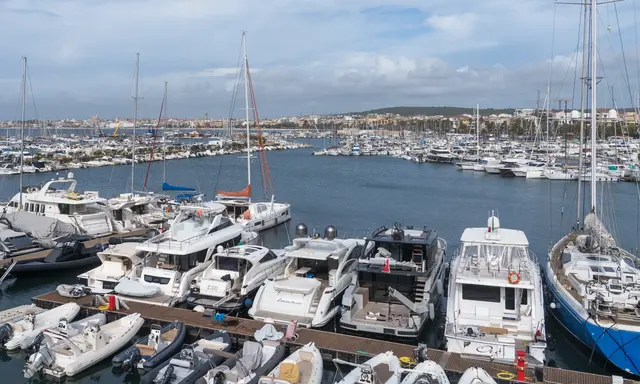
The setting is the Argolic Gulf in the Peloponnese, where a sheltered-looking harbour sits beneath the steep rise to Palamidi fortress. From the yacht, Bourtzi is the memorable landmark, set on an island in the harbour. The best visit combines the maritime view with enough time to understand the historic city inland. Nafplio is a place to explore on foot, with the boat acting as a comfortable base rather than merely a way to arrive. When the day's movement from deck to town is easy, a relatively compact yacht can feel like a particularly effective way of travelling.
Municipal port management: the critical booking fact
The Nafplio Municipal Port Fund is the relevant local body for the town harbour. Its official facilities information identifies around 1,100 metres of useful quay length across the port and states that berthing requires prior communication with the Nafplio Harbour Authority. That is not a declaration that 1,100 metres of quay is freely available to visiting 12–23.99-metre yachts. Different stretches of waterfront can serve different purposes, and allocation depends on the authorities' current operational requirements. The published draft information likewise must not be substituted for the conditions at a specific assigned berth.
A separate official announcement addresses the allocation of mooring positions. In practical terms, a skipper should not assume that seeing an open length of quay from the water provides permission to berth there. Contact the port administration and relevant Harbour Authority ahead of arrival with the yacht's overall length, beam, draught and timing, and request the designated place and current procedure. Confirmation of permission, alongside up-to-date navigational information, is the foundation for any stay. For an owner who is accustomed to a marina app or a concierge arranging everything, this more direct port-authority process needs to be built into the itinerary.
What services the port actually describes
The Municipal Port Fund's website lists water supply points and indicates that fuel supply is arranged through outside private providers. Those are two valuable pieces of practical information, but they do not prove that every visiting berth will have water immediately alongside or that fuel can be delivered on demand. Access depends on the location of the assigned quay, the service provider, hours and local rules. The port also describes sanitary facilities and arrangements intended to keep the waterfront clean, including separate waste bins for general and recyclable waste.
Yacht owners should clarify shore power rather than assume it exists at an assigned quay. The available official summary describes water points but does not establish a universal electricity connection for all yachts. Similarly, the availability and method of pump-out, oily-waste disposal and large refuse collection should be confirmed with the relevant service authority. A luxury stay is comfortable because the operator anticipates these practicalities. A quotation for berthing that omits service costs, or a generic travel description that assumes modern marina utilities everywhere, is inadequate for planning a vessel in this size range.
Why a proposed marina is not an existing berth
Nafplio has attracted interest in a marina development, and a project page from F3 Marina describes plans for a mixed-use facility with a yacht club, dining, leisure and retail components. That is useful context for the future of the waterfront, but the language on that page describes a proposed marina. It should not be represented as a fully operating, bookable facility for a current voyage. A destination guide must separate the existing municipal harbour from a development proposal, particularly when a yacht owner is trying to reserve a berth for an actual arrival date.
Until an operator supplies verifiable opening information and accepts real bookings, plans remain plans. This is not a reason to avoid Nafplio. The established harbour and historic city already justify a stop when a berth is allocated and the passage is suitable. It is a reason to make enquiries through the correct present-day channels. A photograph of an attractive future project or a glossy description of facilities cannot replace a dated berth confirmation from the body responsible for the actual quay.
Palamidi: the fortress above the yacht
Palamidi is the dramatic stone fortress above Nafplio, a place whose scale becomes clearer as the yacht draws near the waterfront. Greece's official tourism authority describes it as a major surviving fortification complex with commanding views over the city and the Argolic Gulf. It is more than a convenient photo stop: the architecture explains why this coast and harbour have long attracted military and political attention. Visitors who enjoy history can devote a substantial part of a day to exploring the fortification and looking down over the old town, Bourtzi and the water.
The climb and exposure should be planned thoughtfully. In warmer weather, early morning or late afternoon is more comfortable than the middle of the day, a point also made in the tourism authority's visitor guidance. Choose footwear suitable for stone surfaces, carry water and check current access arrangements before committing to the outing. The view from above rewards the effort, but a relaxed yachting holiday is not improved by rushing guests through a steep walk at the wrong time. A small group may prefer to divide the morning between a fortress visit and coffee in the town below.
Bourtzi and the shape of the harbour
Bourtzi's presence on an island within the harbour gives Nafplio one of its most immediately recognisable seaward views. It appears in visitor imagery and in the wider history of the city's defences, but the experience of seeing it from a yacht is distinct from visiting the structure. Access arrangements, transport and opening conditions for heritage attractions can change, so check official visitor information if going ashore there is an important objective. Even from the waterfront, the contrast between fortress, old town and surrounding hills creates a visual story that makes Nafplio different from a simple beach destination.
For photographers and guests, the light and angle change throughout the day. From a publicly accessible promenade, Bourtzi may appear almost to float against the horizon; from higher ground, it becomes one part of the harbour's larger geography. The yacht is a good vantage point when it is securely and lawfully moored, though deck photography should not distract from line handling or other operations. A particularly pleasant itinerary has no need to maximise the number of stops. It can allow the harbour's familiar landmarks to be seen again in changing light.
An old-town day worth taking slowly
Nafplio's waterfront connects naturally with streets, squares, small shops and places to eat. Rather than building a day around transport logistics, visiting yacht guests can spend time at a human pace: breakfast near the port, a walking circuit through the historic quarter, a visit to a fortification, then a return to the boat before dinner. The city has a layered history, and a guided walk may be worthwhile for anyone who wants more than photographs of picturesque facades. The real advantage of arriving in your own yacht is being able to divide the experience over two or three days.
Restaurant and shop recommendations are highly time-sensitive. A place praised in an old travel article may have changed ownership, opening hours or menus. It is more reliable to choose from current local information once the berth is confirmed. For food aboard, the port-town relationship can be especially useful. A smaller luxury yacht may be well provisioned for sea passage but still benefit from fresh produce, bread and regional ingredients. Check delivery and loading arrangements with the harbour before expecting a vehicle to reach the yacht directly.
The Argolic Gulf and alternative shore excursions
One of Nafplio's strengths is that a berth in town opens up the surrounding Argolid region without obliging the yacht to move every day. Local beaches and other nearby settlements may suit an excursion by road, while archaeological and historic sites make compelling alternatives when weather is unhelpful. The choice should be based on the guests' interests and the resources available on the date of travel. A luxury itinerary benefits from a balance of planned highlights and unstructured time rather than a schedule that treats every hour as a deadline.
If the next leg involves other ports in the gulf, separate the scenic concept from the navigation plan. Do not infer safe anchoring from a photograph of a bay or assume a town quay accepts a vessel of a particular length. Check local anchoring rules, protected areas, charts, latest notices and weather, then contact the authorities at the next destination. The Peloponnese can be a rewarding cruising region, but each harbour has its own conditions. Nafplio's character is strongest when presented as one purposeful stop within a carefully prepared route, not as a promise of unrestricted coastal access.
Why responsible harbour practice matters
The port's official guidance discusses waste separation and discourages the use of toxic products when washing vessels. That matters even to a yacht making only a brief visit. Waste from a 20-metre cruiser can be significant over a long weekend, and careless cleaning or disposal has no place in a historic harbour used by residents, local boats and wildlife. Confirm the permitted facilities and ask before discharging or washing anything. A responsible visit leaves the assigned quay and adjacent water as clean as they were on arrival.
Noise, lights, tenders and gangways deserve similar consideration. Visitors share the waterfront with other marine users and people whose homes or businesses are nearby. Evening entertainment aboard should respect the setting, while guest safety remains central when stepping between a yacht and a quay whose levels may change. The quality of luxury travel can be measured in the small courtesies that make a place welcome to visiting yachts. This attitude is particularly valuable in ports that remain genuinely integrated with their towns.
A realistic two-night Nafplio itinerary
For many owners, two nights give enough time to enjoy the town without making the stop feel over-organised. Before arrival, confirm the berth, approach requirements and services with the municipal port authority and Harbour Authority. On the first afternoon, secure the yacht and walk the waterfront and old streets. The next morning might be reserved for Palamidi, followed by an unhurried lunch and an afternoon exploring museums, shops or the promenade. Keep an alternative plan available if weather, access or local events alter the programme.
On departure day, deal with utilities, waste, charges and the next port's arrangements before leaving the quay. The most expensive yacht is not necessarily the most comfortable one in a town harbour; a manageable 12–23.99-metre craft can offer exceptional freedom when its skipper has done the preparation. Nafplio earns its place on a cruising route through a combination of genuine maritime setting, remarkable fortifications and an old town that rewards simply being there. Its working port needs respect, but the destination offers far more than a place to tie up.
The right questions to ask before booking
A concise enquiry will save time for both harbour staff and the yacht. State the vessel's length overall, beam and draught in metres, intended dates, flag, owner or agent contact, any unusual manoeuvring requirements and whether water or other shore services are essential. Ask for the exact designated quay and who must be contacted before approach. Confirm whether berthing is alongside or otherwise arranged, whether there are restrictions on arrival or departure, and what method the port uses to calculate charges. Do not assume the harbour's headline dimensions give your vessel an automatic entitlement to a space.
Once an allocation is confirmed, check gangway and fender arrangements for the actual berth and ensure that the crew understands the local procedure. If the answer is that there is no suitable space on the chosen dates, treat that as useful information and adjust the itinerary rather than press for an informal solution. This is the distinction between a lovely harbour photograph and a properly prepared yacht holiday. The first inspires a destination; the second makes it possible to enjoy the place safely and comfortably when you arrive.
Primary sources and image credit
Port operations verified from the Nafplio Municipal Port Fund and Greek Ports Association; Palamidi from Visit Greece; proposed future project status from F3 Marina. Photograph: Boats on the Harbor of Nafplion by Sharon Mollerus, photographed 13 March 2009, CC BY 2.0, resized and cropped. It depicts Nafplio harbour in 2009, not a current berth allocation.
- https://www.portofnafplio.gr/limenikes-egkatastaseis/limani-nafpliou/
- https://www.portofnafplio.gr/anakoinosi-gia-theseis-prosdesis-sto-limani-nafpliou/
- https://elime.gr/en/limania/dimotiko-limeniko-tameio-nafpliou-d-l-t-nafpliou/
- https://www.visitgreece.gr/en/experiences/culture/fortifications/palamidi
- https://f3marina.com/nafplio/