An Atlantic landfall, not just a fuel stop
Horta rewards a yacht crew who treats it as a place rather than a waypoint. The harbour on Faial sits near the centre of Atlantic passage-making traditions: yachts arriving from the west meet those preparing for the next leg east. For an owner of a 12–24-metre yacht, this is an unusually rich combination of practical shelter, maritime culture and accessible island excursions. The point is not to pretend that every day here brings a transatlantic spectacle. Instead, the permanent presence of visiting crews, painted quay walls and working port life gives Horta a character that is difficult to manufacture at a purpose-built resort. The city is sufficiently close to the marina for a short walk ashore after a long passage.
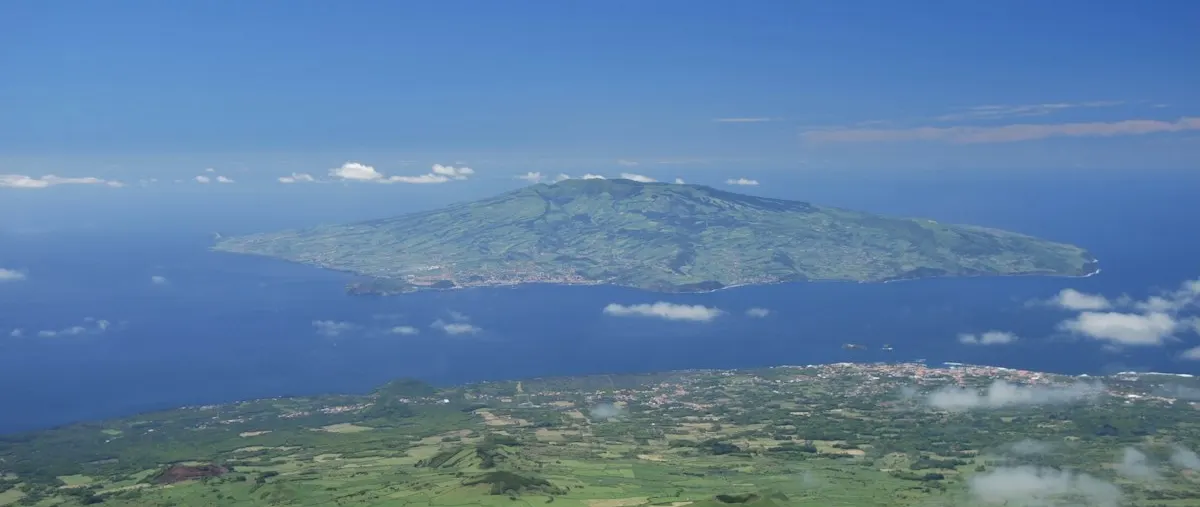
The photograph illustrating this guide shows Faial across the channel from Pico, not the marina itself. The mountain-island relationship is part of what makes this stop memorable: Faial's green slopes and the much larger volcanic cone of Pico provide a sense of scale that is best appreciated from the water. There is no need to invent secret anchorages or exclusive facilities to make the destination interesting. Its strength lies in a famous public harbour and an honest Atlantic story.
Choosing and contacting Marina da Horta
The operating port company, Portos dos Açores, locates the marina inside Horta harbour on Faial's southeastern shore and provides a dedicated marina contact, VHF channels 10 and 16 and an indicated entrance depth of 4.0 metres. Its technical page lists 240 berths, while an Azores tourism listing gives 300 docking spaces. That difference is a reason to seek a live berth allocation directly from the operator, not a reason to present a precise number as guaranteed availability. An owner should send the actual length overall, beam, draft, vessel type and arrival window, then receive confirmation of a suitable place before relying on published berth counts.
The harbour is protected by a breakwater, but that does not remove the need for a disciplined approach. Portos dos Açores specifically warns of substantial tidal currents in the Faial channel and of ferry and fishing traffic around the entrance. The approach guidance published by the operator describes local leading marks and harbour lights; it is reference material, never a replacement for corrected charts, notices to mariners, current port instructions or a proper bridge watch. A 20-metre yacht carrying people and provisions has a very different stopping distance and windage from a dinghy, and a cautious skipper plans for that difference.
Facilities that matter after a passage
The Azores tourism directory lists fuel, technical space, a lift, washrooms, laundry, a club, basic communications and support services at Horta Marina. It also identifies facilities for recycling. After several days offshore, this practical side of Horta matters more than a glamorous marketing description. It lets crew begin with fresh water, electricity and waste arrangements, inspect the vessel carefully and then take leave ashore in an orderly manner. Individual capacity, opening times and lift availability should all be reconfirmed because infrastructure descriptions are not berth contracts.
There is also a worthwhile distinction between what a marina can accommodate and what a yacht requires. Shore-power amperage, cable connection, potable-water throughput, fender arrangements, fuel delivery and access for contractors become more consequential above about 12 metres. A good reservation request identifies each requirement. For yachts approaching 24 metres, ask whether the allocated berth offers adequate turning space and whether rafting or other temporary arrangements are expected. The best arrival is one in which the skipper knows where the yacht will lie before the bow crosses the harbour entrance.
The harbour paintings and what they mean
Horta's most distinctive open-air gallery is made by generations of sailors. Azores tourism describes a longstanding custom of leaving a painted mark on the breakwater as a token of a vessel's visit and a gesture of hope for safe onward travel. These are not merely decorations applied by a tourism office. They are individual memories of ocean passages: names, dates, home ports, itineraries, emblems, jokes and messages, laid beside and sometimes over the work of crews who arrived years earlier. Walking the wall slowly reveals how international this harbour has become.
For an owner who travels aboard a yacht under 24 metres, the ritual makes an appealing alternative to the usual souvenir photograph. But it is worth behaving as a visitor to a shared historic space rather than assuming any surface is available. Ask marina staff which areas may currently be painted, avoid covering significant older marks without guidance, and keep chemicals and waste out of the harbour. The romance of this tradition depends upon ordinary sailors respecting the working place that supports it. Even visitors who choose not to paint can spend a rewarding hour reading the archive formed by everybody else's contributions.
Peter Café Sport and maritime memory
Peter Café Sport, recognised by Azores tourism as a meeting place for sailors since 1918, is a natural first destination from the waterfront. Its significance is not that a single bar has an unusually long drinks list; it is that it has been part of the Atlantic sailing network for more than a century. Here the social geography of yachting becomes visible. Crews who might never meet in a formal marina lounge have reason to compare their weather windows, repair work, destinations and ocean experiences. Horta's hospitality has been shaped by this exchange.
Upstairs, the Scrimshaw Museum adds a more complex historical layer. The official tourism directory describes a collection of carved and engraved whale and sperm-whale teeth and memorabilia associated with visiting sailors. It is important to regard these objects as records of former whaling practices and island lives rather than as endorsements of an activity. Modern Faial offers whale-watching experiences that have a very different relationship with living cetaceans. A thoughtful itinerary lets both histories be seen and discussed honestly, giving the destination cultural substance beyond photographs and restaurant reservations.
The island beyond the harbour
A yacht gives its owner access to the sea; it does not replace the need to see Faial on land. The island's most revealing excursion is toward Capelinhos, where the 1957–58 eruption altered the western end of the landscape. The Azores tourism materials identify an interpretation centre that explains this volcanic episode, along with the island's central caldera. Neither experience is a casual continuation of a marina walk. Arrange transport, allow enough time for weather, walking conditions and exhibitions, and verify opening arrangements rather than promising a fixed schedule to guests.
Faial is often described through green countryside, blue hydrangeas and the grey volcanic material at its western edge. That variety is exactly the reason a stay of several nights can be more rewarding than a quick overnight visit. It also changes how a skipper should think about shore plans. The most satisfying first day may be deliberately unambitious: secure the yacht, rest, walk the harbour and dine nearby. On the second day, travel to Capelinhos or the caldera. Such pacing is considerate of a passage-weary crew and avoids turning an island visit into another endurance exercise.
Pico across the channel and a serious navigation note
The channel between Faial and Pico is a compelling part of the scenery, and the islands form an appealing pair for guests who want more than a single town. However, proximity is not a substitute for route planning. The regional diving tourism service describes Pico as about 4.5 nautical miles from Faial in the context of the island group, but that figure should not be taken as a berth-to-berth passage plan. Relevant endpoints, ferry routes, currents, wind and sea conditions determine an actual transfer. Guests can also use established passenger connections if keeping the yacht safely berthed is preferable.
The separate opportunity is to appreciate the volcano and wine-growing island across the water without committing to an extra manoeuvre. On a clear day Pico's outline anchors the view from Faial. Its presence makes Horta both a destination and a vantage point. This is particularly attractive in the 12–24-metre range, where a crew may combine longer offshore passages with quiet days in port. There is no need to set an arbitrary mileage target every morning. Sometimes the luxury is to remain securely alongside, make an excursion with a local operator and return for a simple evening afloat.
Wildlife, diving and responsible choices
Faial's surrounding waters are known for marine life, and the regional diving-tourism service highlights outings around Guia Hill, the Faial–Pico channel and more distant offshore sites. Specialist encounters such as blue-shark diving or trips to offshore banks require qualified operators, appropriate conditions and a separate risk assessment; they are not general swimming recommendations for a family yacht. Guests who prefer a less demanding day can consider accredited whale-watching trips, leaving the operator to navigate wildlife protocols and local rules. The important distinction is between enjoying the sea and treating marine mammals as guaranteed spectacles.
A privately owned yacht can still contribute to a considerate visit. Avoid treating wildlife sightings as invitations to chase animals, manage waste and bilge discharges strictly, follow port guidance and keep noise and wake down near working craft. In a harbour with so much collective sailing history, these behaviours feel like part of seamanship rather than an environmental accessory. Guests notice the difference between a skipper who values the sea as a living place and one who regards every landscape as scenery laid on for the yacht.
A workable two- or three-night plan
For the first afternoon, aim simply to complete check-in, replenish essentials and give the yacht a careful post-passage inspection. Afterwards, walk the painted breakwater and take an unhurried waterfront meal. Day two can begin with Peter Café Sport and the Scrimshaw Museum, followed by an island excursion toward Capelinhos if the forecast and guest energy suit it. A third day allows the caldera, whale-watching with a properly licensed operator, or a quieter encounter with the town. None of these ideas requires inventing yacht-only access or promising berths that have not been confirmed.
Before departure, repeat the practical work in reverse: inspect forecasts for the next actual leg, establish the harbour exit plan, pay outstanding charges, secure loose deck gear and agree the movement of guests while leaving the berth. Horta is most rewarding when treated with the patience it deserves. It offers that rare combination of reliable nautical infrastructure, a globally recognised sailor tradition and an island landscape that feels genuinely connected to ocean voyaging. For a 12–24-metre yacht, it is the sort of harbour that can become a favourite without ever pretending to be a luxury resort.
Image credit: Faial island seen across the channel from Pico, Azores — Gherardo Sava / Unsplash. Original photograph, used under the Unsplash License. The lead photograph is illustrative and does not depict an unverified product or berth.