A Renaissance sculpture presented in a new setting
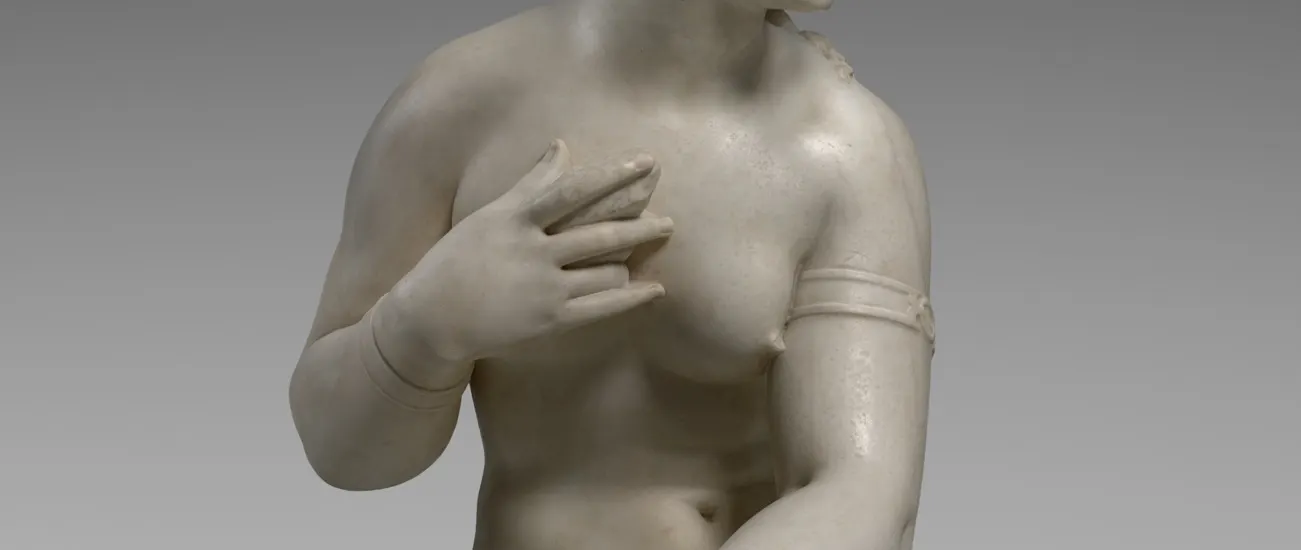
The Cleveland Museum of Art is currently displaying Giambologna's Fata Morgana in its Italian Renaissance gallery, where the installation evokes the Tuscan grotto for which the work was originally made. The museum acquired the sculpture in 2025 and currently lists its display through 1 September 2030. Carved in marble around 1572, the figure was commissioned by the prominent Florentine banker Bernardo Vecchietti. Its original setting at a fountain in a constructed grotto gave the sculptor an opportunity to explore the relationship between a human figure, surrounding architectural forms and the presence of water.
The setting gives this work particular relevance to people who enjoy the design of spaces connected to the water. Luxury yacht owners may see an intriguing historical precedent for the ways in which a relatively small area can be given a strong identity through the arrangement of light, a sculptural object and a view. There is no expectation that the marble itself should be brought aboard a yacht. The attraction of the example is the precision with which the artist considered the role of an individual work within a wider environment.
A figure with a name connected to water
The museum explains that the title refers to both the nearby spring supplying the fountain and the legendary fairy Morgana associated with the story of King Arthur. The sculpture originally appeared to come out of a cave within the constructed grotto. This combination of a recognisable figure from myth and a particular architectural setting produced an experience quite different from simply placing a sculpture on a conventional pedestal.
The grotto creates a transition from the ordinary appearance of an outdoor setting to a more deliberately composed interior. A visitor approaching the figure would have encountered changes in the enclosure and potentially in the character of the light. The relationship between the sculpture and the fountain was therefore part of the experience of the work. The sculpture's specific pose can be considered against that background rather than interpreted as an isolated arrangement of marble.
In a contemporary residential or yacht design project, an object is often acquired after the principal layout has already been determined. Giambologna's work provides a reminder of what can be achieved when the role of the object and the character of its setting are considered together from the outset. The desired effect may be quite modest in a contemporary vessel, but the approach remains relevant.
The sculptor's ability to suggest movement in marble
Giambologna, born in Flanders and active in Italy, became one of the distinguished sculptors of his generation. The Cleveland Museum of Art identifies Fata Morgana as one of a comparatively small number of sculptures by him in marble. It draws particular attention to the twisting pose and the softness that the artist was able to suggest through a hard material.
An encounter with a three-dimensional work differs from the view offered by a photograph. Parts that appear to combine into a single shape from one position can become clearly distinct when the viewer moves. The relative importance of an individual contour changes, and the relation of the arms, torso and legs becomes apparent in a succession of views. The museum's presentation allows visitors to explore this quality directly.
A sculpture should consequently be considered in relation to the routes people use through a room rather than only in terms of its appearance from the position chosen for a photograph. In a restricted space, the range of available viewing positions may influence the selection of a work. An object conceived to be seen from several angles may not be appropriately appreciated if it is tightly confined in an alcove with only one narrow view.
The patron and the relationship to architecture
The commission for Bernardo Vecchietti illustrates the particular relationship that could develop between a Renaissance patron, an artist and the intended place of installation. The sculpture became one part of an architectural and landscape experience. Its title had a relationship to the fountain's own source of water as well as the mythological subject.
For a contemporary owner, that history suggests a useful starting point for a commissioned object. Instead of requesting generic decoration of a certain size or material, consider the place where the work will be encountered and the qualities desired there. A client with an interest in a particular coastal landscape or a history associated with the family's yacht might discuss how the maker can interpret that relationship. The work may then offer an individual experience connected to those circumstances rather than being interchangeable with an object selected for a completely different setting.
Knowledge of the original work should be respected when drawing on it as inspiration. A contemporary interpretation of movement, water or light is distinct from a reproduction of Giambologna's design. The maker's intentions and the requirements of the new installation deserve independent attention.
Physical scale and the practical limits of installing sculpture
The museum records the marble sculpture as measuring 99 by 68 centimetres and weighing 475 pounds. Its considerable weight is an important reminder that the physical dimensions of an artwork cannot be used alone to establish the practicality of displaying it in an interior. The mass of the work, the support arrangement and the characteristics of the location all require attention.
A luxury yacht's internal structural arrangements and weight distribution are among the reasons that substantial sculpture demands a specific technical assessment. An object suitable for a domestic gallery may be entirely unsuitable aboard a vessel. The professional team responsible for the yacht should establish the relevant loads, mounting arrangements and other applicable requirements before a work is introduced. The display should also account for the movement of people and the access required for maintenance. It is generally more sensible to begin with the constraints of the actual vessel than attempt to impose a particular piece on a location unable to accommodate it.
This is not a limitation on the ability of a yacht to contain interesting sculpture. Contemporary artists can work in a variety of materials and across many scales. A work developed for an appropriate location can have a powerful presence without depending on the mass and dimensions of a Renaissance marble.
Lighting and the apparent character of a surface
A carved marble figure can appear very different under diffuse daylight and concentrated artificial lighting. The depth of shadows and the relationship between the brightest and darkest areas influence the way the underlying form is perceived. In the original grotto, the surroundings would have been particularly important to the way visitors encountered the sculpture. The museum's decision to evoke that setting recognises the historical relationship without suggesting that the gallery reproduces every condition of the original installation.
An owner commissioning a smaller sculptural work for a yacht should consider its appearance throughout the day. Changes in daylight can alter the focus of a room whose windows are oriented towards different aspects of the surrounding water. Artificial illumination should work with the actual properties of the selected material and the practical use of the space rather than compete with the object for attention.
If an important original work is contemplated, appropriate conservation advice should inform the lighting specification. An attractive visual effect does not automatically establish that the light levels or environmental conditions are suitable for the preservation of the object over an extended period. Careful coordination between the designer, artist and relevant specialists can prevent that issue arising after the work has been installed.
Water as part of an architectural experience
The Tuscan grotto provides a particularly interesting example of water being integrated into the character of a designed place. A modern yacht is already surrounded by water, and the relationship between its architectural elements and the natural environment can often be achieved without installing a separate decorative fountain or water feature. A carefully positioned work can provide a point of attention within a room that otherwise opens towards the sea.
The experience of moving between spaces can also matter. An object does not necessarily need to dominate the principal saloon or be visible from a considerable distance. It may be encountered gradually as a visitor enters a quieter area. A design that gives particular consideration to the sequence of views can make a comparatively small interior feel individual. In developing such an arrangement, the normal use of the vessel should remain the starting point. Decorative effects should not obstruct access, create unnecessary operational difficulties or compromise safety.
In this respect, the relevance of the Renaissance grotto lies not in its historical decoration but in its integration of sculpture and setting. The visitor is given a reason to experience the place itself rather than regard the object solely as something to be viewed independently.
A shore visit to the Italian Renaissance gallery
The sculpture is on display in gallery 117B of the Cleveland Museum of Art, which currently identifies the arrangement as free to visit through 1 September 2030. The opening of the presentation dates to August 2025, so the work should not be described as a new acquisition in November 2026. The museum's continued exhibition programme nevertheless offers an opportunity to examine a notable example of Renaissance sculpture in the context of a Great Lakes visit.
The original sculpture remains a museum object with its own requirements for preservation. Its presence in a gallery provides an opportunity to look closely at an unusually accomplished work and consider why its original location mattered. For a yacht owner, the most useful insight may emerge through that very specific observation. A work of art acquires an additional quality when the place in which it is encountered gives the viewer an opportunity to appreciate its form and meaning. That lesson can be applied to an individually designed vessel without attempting to recreate the circumstances or materials of a sixteenth-century fountain.
Sources and photograph
Source documentation: https://www.clevelandart.org/art/2025.18, https://www.clevelandart.org/exhibitions/new-acquisition-giambolognas-fata-morgana. Photograph: Fata Morgana, c. 1572, by Giambologna — Cleveland Museum of Art, Fata Morgana, c. 1572, Giambologna, marble, Leonard C. Hanna Jr. Fund 2025.18; CC0 Open Access.. Resized for web display under CC0 1.0.