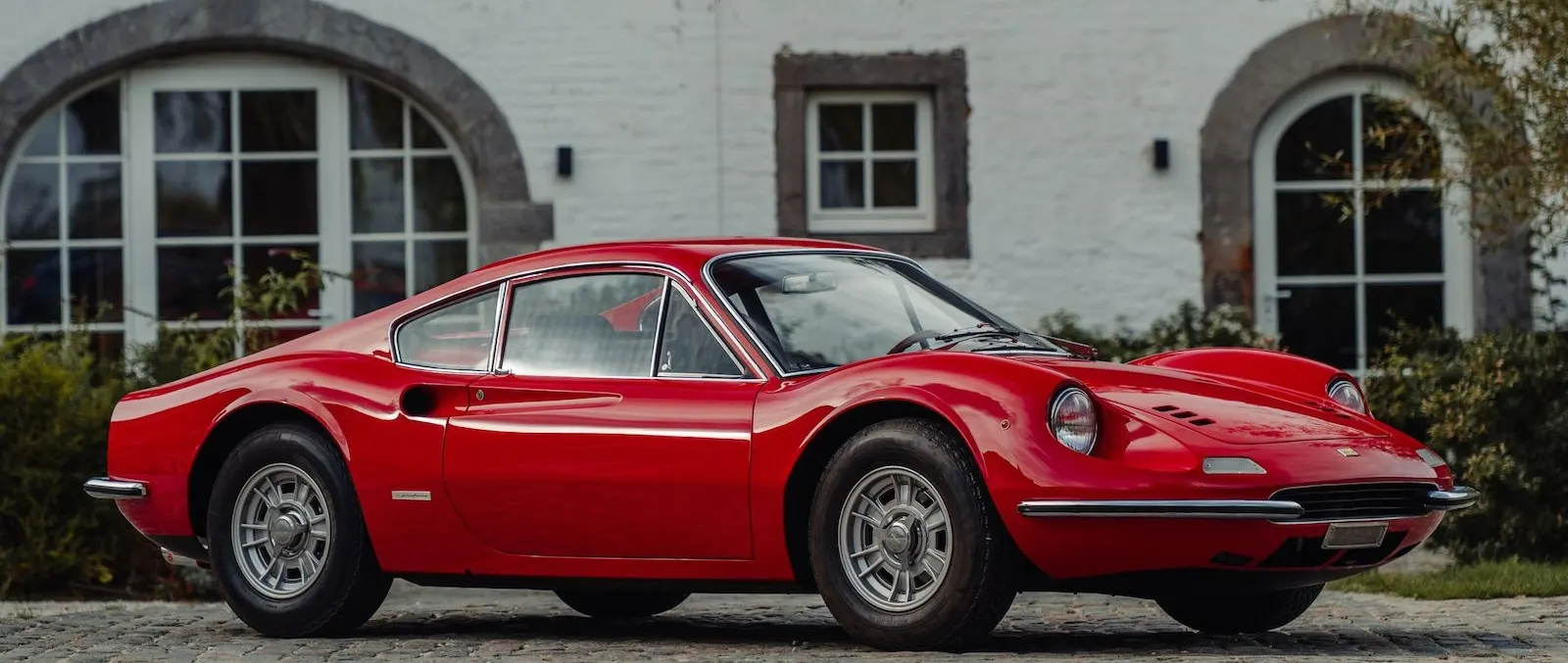
An early Dino records a Belgian auction result
Collectors of Ferrari’s late-1960s sports cars have a fresh result to consider following the sale of a rare alloy-bodied Dino 206 GT. This development is relevant to owners and guests who pursue luxury motoring, hospitality, private travel or collectible objects alongside their yachting interests.
Bonhams recorded its original Italian delivery and current registration in Belgium, together with a mechanical overhaul carried out in 2023. The lot’s presentation makes it especially relevant to collectors interested in the first transition from Ferrari’s traditional front-engined road cars to compact mid-engined sports-car architecture.
The 206 GT and a new road-car concept
The Dino 206 GT drew on the manufacturer’s experience with mid-engined racing cars and the development of compact V6 powertrains. Its appearance in the late 1960s broadened the possibilities for a fast, agile road car, even though the Dino name and presentation differed from the marque’s more familiar V12 grand tourers.
Pininfarina’s styling gave the model fluid proportions with a low nose and distinctive cabin shape. Its aluminium body is particularly noteworthy because the 206 GT was the sole alloy-bodied Dino production series, a feature that makes material and repair history important matters during specialist inspection.
Bonhams describes the model as Ferrari’s first mid-engined road car. That position in the company’s history contributes to its interest for automotive historians, but a specific surviving vehicle also needs to be assessed on authenticity and mechanical condition rather than on the general significance of the design.
The importance of chassis 00150
The auction catalogue identifies engine 135B 29 and reports that the car retains its matching-numbers engine and gearbox. Such claims are useful starting points for research, and collectors should reconcile them with factory records, period service documents and the relevant component stamps when making an acquisition.
Bonhams described the example as highly original and disclosed a thorough mechanical overhaul in 2023. Originality and usability can be complementary qualities, although the precise parts changed during recent work remain relevant to any assessment of the car’s long-term preservation and historic character.
An early alloy-bodied car warrants particular care in body inspection. Corrosion, incompatible repairs, paint history and panel alignment can affect both presentation and costs, and repairs require techniques suited to the materials rather than those used on ordinary steel-bodied classic vehicles.
Auction evidence and collecting implications
The published €563,500 result includes premium, giving collectors a confirmed reference point rather than a forecast. It does not by itself establish a valuation for other 206 GTs, since low production numbers make differences in provenance, originality and condition especially influential.
For a collector maintaining a stable of significant vehicles, access to knowledgeable Ferrari specialists, secure storage and suitable insurance can be as consequential as the purchase itself. An appealing historical sports car may be driven occasionally, but even occasional use requires thoughtful maintenance.
This Dino’s appearance at Zoute illustrates continuing demand for early, mechanically distinctive examples of Italian design. Its auction result matters, but the lasting significance is the role the compact, alloy-bodied 206 GT played in establishing a new path for Ferrari-related road-car engineering.
For readers combining cruising with international travel or collecting, the announcement provides a useful reference point when planning a private itinerary or acquisition. Individual costs, access and conditions should be verified with the company concerned before making a commitment.