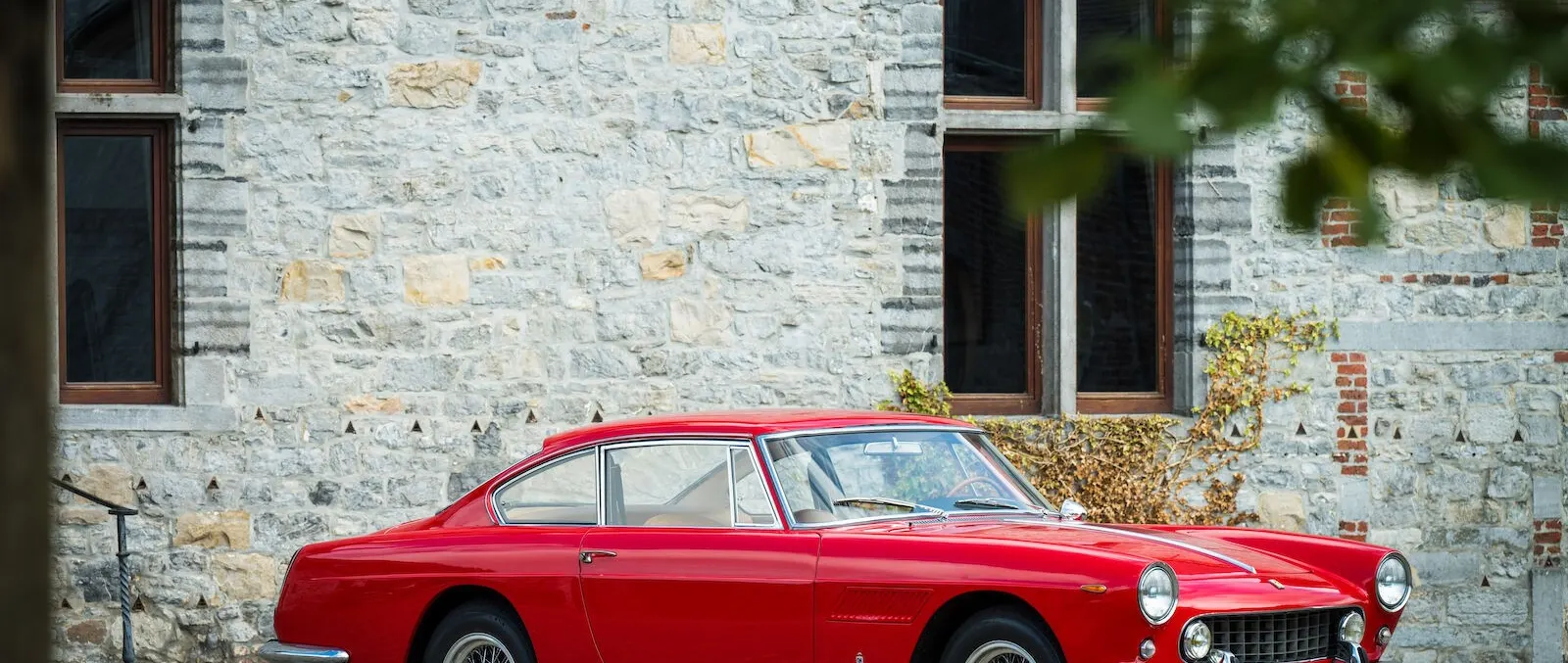
A grand touring Ferrari with a fashion connection
The ownership history of a Ferrari 250 GTE adds another layer to the appeal of an elegant classic grand tourer sold during the Zoute auction. This development is relevant to owners and guests who pursue luxury motoring, hospitality, private travel or collectible objects alongside their yachting interests.
Bonhams identifies the vehicle by chassis number 2801 and describes a history that includes an Italian restoration in the 1990s, current ownership dating from 2001 and Belgian registration. Those details help define the particular car that changed hands, rather than merely relying on the appeal of the Ferrari badge.
Why Ferrari built the 250 GTE
The 250 GTE marked an important broadening of Ferrari’s road-car range. Introduced in 1960, it offered genuine 2+2 seating so customers could travel with more flexibility while retaining the sound and performance character of the company’s Colombo-derived V12 engines.
Pininfarina was tasked with preserving the proportions and elegance of a sporting Ferrari while making room for occasional rear-seat passengers. The resulting grand tourer combined a relatively discreet appearance with a mechanical specification connected to one of the most productive periods in the manufacturer’s history.
That practical brief makes the GTE an interesting counterpart to more overtly sporting two-seat Ferraris. The car suited owners who wanted to travel greater distances with luggage and company, a purpose that remains relevant to collectors planning continental tours rather than brief exhibition appearances.
Provenance and originality behind chassis 2801
The catalogue notes that the car was delivered new in Italy and includes invoice-backed maintenance under its long-term custodian. The connection to Massimo Ferragamo adds narrative interest but should be considered alongside the documents confirming when and how the vehicle passed between owners.
The earlier Italian restoration also deserves a detailed assessment. An experienced inspector would want to establish the quality and extent of bodywork and mechanical refurbishment, check the car against its production records and understand what has been maintained or replaced since the 1990s.
Unlike a recently produced sports car, the 250 GTE requires an ownership plan adapted to an older engine, cooling and electrical system. Routine use can be rewarding, but it also calls for appropriate specialist servicing, sensible journey preparation and an appreciation of the limitations of period equipment.
Interpreting the €207,000 sale
The Bonhams figure is the achieved auction price including premium, not a pre-sale estimate. It reflects one identifiable chassis in one auction, and should not be taken as a comprehensive guide to the values of every 250-series Ferrari or even every GTE in the same condition category.
Grand touring cars with historical design appeal are often evaluated differently from the most celebrated limited-run Ferrari sports racers. The GTE’s combination of four-seat practicality, V12 engineering and provenance makes for a distinctive collecting proposition, but the cost of any outstanding technical work remains essential to the decision.
This result adds a useful public market reference for the model. More broadly, it illustrates why a car conceived to be driven comfortably over long distances continues to attract attention: its character is grounded in the meeting of engineering, craftsmanship and the everyday needs of an enthusiast owner.
For readers combining cruising with international travel or collecting, the announcement provides a useful reference point when planning a private itinerary or acquisition. Individual costs, access and conditions should be verified with the company concerned before making a commitment.