The Alabaster Coast from a working maritime town
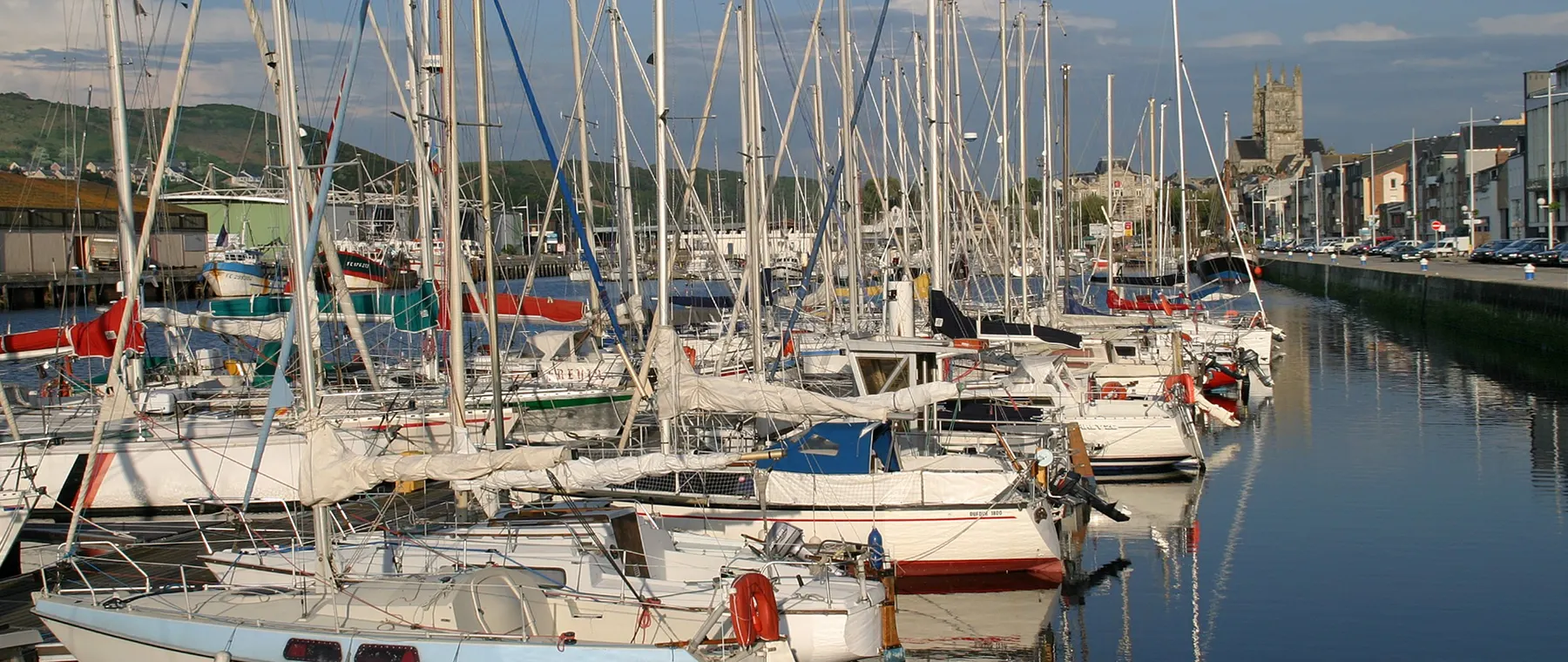
Fécamp's setting between the high white cliffs of Normandy gives a visit a distinctive geographical character. Its harbour developed around fishing, notably the long-distance cod expeditions to the waters off Newfoundland, and today also accommodates recreational vessels. Normandy Tourism describes the town as a former centre of ducal Normandy, a site of religious pilgrimage and the home of the Bénédictine liqueur. These different histories offer considerably more to the visitor than the attractions of a contemporary seaside resort alone. For owners of twelve-to-twenty-four-metre yachts, the appropriate starting point is confirmation of a suitable berth and marine services from the actual operator. Once those requirements are settled, the guests can discover the connection between maritime trades, the architecture created by earlier prosperity and the cultural institutions that now interpret that past. The accompanying photograph by W. Bulach depicts Fécamp marina; it illustrates the town's recreational waterfront rather than providing information about berthing availability.
The Pêcheries Museum and the North Atlantic fishery
The Pêcheries Museum provides an introduction to the fishing history for which Fécamp is particularly known. Its exhibitions concern the working lives of fishermen, the activities supporting them and other elements of local history. North Atlantic fishing required vessels and crews to undertake long voyages away from home, and the organisation of the town's economy reflected the requirements of those expeditions. A museum visit allows yacht guests to examine that history rather than interpret the presence of a fishing boat merely as an attractive element of the harbour landscape.
The working conditions of a historical fishing crew were profoundly different from the experience of contemporary private cruising. Differences in machinery, accommodation, communications and the availability of assistance shaped the way earlier voyages were undertaken. Museums are particularly valuable when they explain the relationship between technical objects and the people who actually used them. Visitors with an interest in vessel design can consider how equipment and working spaces were arranged according to the demands of the fishery. Verify the current exhibition programme and opening arrangements before visiting.
Looking outward from the museum's rooftop
Normandy Tourism highlights the panoramic view available from the museum's glass rooftop. Its position gives a particularly interesting contrast with the view of the harbour from the deck of the yacht. From higher ground, the relationships among the separate quays, buildings and surrounding hills become easier to observe. The arrangement of the port reflects the different functions it has served and the constraints of its geography.
For guests whose interests include landscape photography or architecture, an elevated view can be the starting point for examining the town at street level. Take time to look at the structure of the landscape and the relationship between the built environment and the natural cliff line. A museum rooftop is not an appropriate substitute for official navigation publications when planning a yacht approach; the value of the view is cultural and geographical. The skipper should establish the actual marine conditions independently of the shore excursion. Visitors with limited mobility should check the accessibility arrangements with the museum.
A palace created around a nineteenth-century enterprise
Fécamp's Palais Bénédictine is distinctive even within Normandy's varied architectural heritage. The entrepreneur Alexandre Le Grand developed the Bénédictine business and commissioned a building combining Neo-Gothic and Neo-Renaissance features. The traditions surrounding the liqueur associate its origins with a recipe attributed to a sixteenth-century monk, but visitors should distinguish the history of the documented commercial enterprise from the legendary account of the recipe's beginnings.
The palace's elaborate appearance demonstrates the relationship between architecture and the presentation of a product. An industrial building that also receives visitors can communicate ideas about heritage and craftsmanship through its public spaces. Owners concerned with designing a private residence or yacht interior may find the use of historical references interesting; the value is in considering their relationship to the purpose of the building, rather than copying individual decorative motifs. The scale and use of the palace are fundamentally different from those of a yacht. A guided visit is a way to understand why its architectural choices were made.
Art, production and collecting in the same institution
According to the regional tourist board, the palace's visitor experience encompasses the distillery, a collection of principally fifteenth- and sixteenth-century religious works and a contemporary art gallery. This combination allows visitors to consider the founder's interests as a collector separately from his commercial activities. The historical display arrangements preserve aspects of the way the collection was presented at the end of the nineteenth century, providing evidence not only of the objects' origins but also of an earlier approach to collecting and exhibition.
For a yacht owner who acquires works of art, the setting in which a collection is displayed can be as meaningful as the individual objects. Questions of lighting, scale, conservation and arrangements for visitors differ between a museum, a residence and a vessel. The palace offers a useful occasion to reflect on those differences. Current exhibitions, access to production areas and the format of the tour should be confirmed directly with the operator.
The drink itself is associated with a blend of twenty-seven ingredients, according to Normandy Tourism. A visit does not require guests to participate in an alcoholic tasting; if they choose to do so, arrange suitable onward transport and avoid impairment of anyone responsible for vessel operation.
Holy Trinity Abbey Church and the ducal past
The Abbey Church of Sainte-Trinité occupies an important place in Fécamp's history. Its substantial medieval structure developed from Romanesque beginnings and reflects early Gothic construction. Normandy Tourism identifies the burials of the dukes Richard I and Richard II and notes several features of the interior, including fourteenth-century stained glass, surviving parts of a rood screen and eighteenth-century gilded woodwork.
A visit can be approached through the relationship between the architecture and the history of the ducal establishment. Fécamp was a favoured residence of the dukes before Normandy's relationship with the kingdom of France changed in 1204. The surviving remains of the ducal palace opposite the church offer another perspective on that earlier period. The ecclesiastical building and palace should not be treated as isolated landmarks: their proximity helps explain the historical concentration of religious and political activity in the town.
Respect the church's continuing religious role and any restrictions applying to visits or photography. A qualified guide can provide additional context when the family wishes to investigate the history in detail.
Cap Fagnet and the landscape of the cliffs
Cap Fagnet is associated with a particularly extensive view of the white cliffs, sea and town. The regional tourist authority describes its strategic significance in earlier periods, including association with fortification and the twentieth-century Atlantic Wall. It also identifies the headland as part of the GR21 walking route. This offers yacht guests a way to appreciate the same coastline from a substantially different position.
Coastal cliffs and exposed paths have their own hazards, and a walking route should be chosen according to current access conditions, weather and the capabilities of the group. Allow time for the return journey and do not approach unprotected edges for photographs. The family can organise the excursion by land while the skipper remains responsible for the yacht's actual movements. A view from the headland is an opportunity to examine the geographical relationship between the entrance to the port and the surrounding coast, not an indication that the yacht's approach is suitable under particular conditions.
The Saturday market and a coastal culinary identity
Normandy Tourism identifies the Saturday morning market at Les Halles and highlights herring among the local specialities. A yacht guest can explore the food businesses around the harbour and discuss the produce currently available rather than assume that a particular seasonal catch will be on every menu. For owners with a professional chef aboard, a market visit can lead to a different kind of onboard meal if the arrangements for obtaining and storing ingredients are appropriate.
The important distinction is between enjoying a commercial food market as a visitor and presuming access to facilities associated with fishing or distribution. Organise purchases through businesses serving the public or through the crew's usual provisioning arrangements. A meal in the town can also provide an opportunity to discover preparations that differ from those familiar aboard. Verify current market and restaurant schedules when planning the visit.
Organising a stay rather than a brief harbour call
A meaningful Fécamp itinerary can devote separate periods to the Pêcheries Museum, the palace and the history of the abbey. A coastal walk and a meal based around Normandy ingredients can complete the programme. Rail and regional coach connections described by the tourism authority offer alternatives for guests arriving independently. Confirm current schedules and the practical arrangements for transfers between the yacht and shore.
The captain should establish current berth availability, the dimensions accepted by the facility, water depths, access arrangements and the nautical information relevant to the intended passage. Fécamp's combination of a distinctive maritime economy, historical architecture and a landscape of white cliffs is valuable regardless of the precise location of the yacht. A longer stay allows those characteristics to be appreciated on their own terms.
Sources and photograph
Source documentation: https://en.normandie-tourisme.fr/unmissable-sites/fecamp/. Photograph: Fécamp marina, France — W. Bulach / Wikimedia Commons, CC BY-SA 4.0. Resized for web display under CC BY-SA 4.0.