Design Miami has confirmed the programme for its 22nd edition, returning to Miami Beach from 1 to 6 December 2026 with an emphasis on the ideas and craftsmanship revealed by collectible design. The organiser's official fair programme identifies Charlene Prempeh as curatorial director and names *Unveiling* as this year's theme. Preview access is scheduled for 1 December, while the public fair opens on 2 December and continues to 6 December. With galleries, Curios, special projects and talks, the event offers more than an opportunity to purchase decorative objects. It is a meeting place for collectors, designers and visitors interested in why a material, technique or form has lasting cultural significance. This is an advance report based on the announced programme, not a claim that the December fair has already been visited or reviewed.
What the theme of Unveiling proposes
The official description frames Unveiling around the discovery of ideas, craft and narratives embedded in objects. Curatorial director Charlene Prempeh presents the fair as a place where the apparently familiar can become surprising when the process, purpose or cultural history behind it is brought into view. That is a useful concept for a design event because a chair, light, screen or vessel may carry more than a simple functional role. Its story might involve a rare material, an unusual production method or a reinterpretation of an established tradition. A fair theme does not mean every gallery will show the same type of work. The value of a curatorial framework is to give visitors a way of asking more searching questions about the objects they encounter.
The dates distinguish previews from public days
The programme identifies Tuesday 1 December as a preview day by invitation, with a members' preview scheduled from 11am to 1pm and a collectors' preview from 1pm to 6pm. Wednesday 2 December includes a VIP preview before the public session begins at 1pm. The published public hours run from 11am to 7pm on Thursday 3, Friday 4 and Saturday 5 December, with an 11am to 6pm schedule on Sunday 6 December. These are announced fair hours and can change, so visitors should confirm access and ticketing directly. A preview invitation should not be treated as equivalent to a general admission ticket. This is especially important for international travellers whose arrival or departure days may allow only a short time at the event.
Miami Beach is the fair's specified venue
Design Miami identifies its location as Convention Center Drive and 19th Street in Miami Beach. That places the event within the city's broader December arts calendar but not necessarily at the same physical site as every design-district installation or art-fair programme. Visitors should distinguish Miami Beach from the Miami Design District on the mainland side of the city, because the two can easily be conflated in casual coverage. The fair programme includes visitor-planning and floor-plan information that can be checked before setting out. A travel itinerary should rely on actual transport conditions and current access arrangements rather than an invented walking time between unrelated venues.
Galleries provide the main collecting context
The fair's gallery section is central to the way it presents collectible design. Galleries may bring together work by different makers, periods and practices, allowing collectors to consider how an object sits within a wider history of decorative and functional art. The organiser maintains a gallery directory and other programme sections, but the general fair page should not be used to attribute a specific newly made object to a gallery without inspecting its actual listing. Buyers considering a major acquisition should look beyond a striking photograph to provenance, condition, materials, authenticity and any documentation supplied. The fair creates a setting for those conversations; the legal and commercial details of an individual sale remain separate from the admission experience.
Curios can introduce unfamiliar voices
Design Miami also highlights its Curios programme, which traditionally offers a setting for focused presentations and experimentation. A compact or thematic display may allow a visitor to understand a designer's idea more directly than a broad catalogue of unrelated objects. The word Curio on the official site identifies a programme category rather than a guarantee that an item is rare or suitable as an investment. The 2026 edition's curatorial theme may encourage closer attention to making, but only actual gallery information can confirm an individual object's materials or edition details. A collector should resist inferring investment value from inclusion alone and instead ask questions about authorship and the work's intended use or display.
Special projects connect design to experience
The fair lists special projects in addition to galleries and Curios. Such programming gives organisers a way to investigate design through installations, conversations or other contexts that may not resemble a conventional product display. It is valuable for audiences who are curious about the ideas behind the market but do not intend to purchase on the day. The official programme defines the framework for participation; it does not mean that every project is open throughout every hour of the fair. Visitors interested in a specific presentation should check the latest schedule and whether there are capacity or booking restrictions. Design events can be easier to appreciate when enough time is allocated for slower observation rather than simply moving between stands.
Talks place the objects within a wider debate
The published talks programme includes *Living with Design: The Art of Collecting, Curating and Creating*, presented by Bank of America Private Bank on the preview day. The listed participants include Design Miami chief executive Jen Roberts, architect and designer Lee Mindel and art-services specialist Drew Watson. The discussion title suggests an interest in the relationship between living with collectible objects and assembling a thoughtful collection. The organisers also list *Kohler & Friends: Forever in Color* among early programme entries. These are announced talks, not reports of what the speakers ultimately said. Anyone quoting conclusions from a conversation should wait for a recording, transcript or first-hand attendance rather than write imagined remarks in advance.
Architecture and collecting overlap
Many of the most interesting collectible designs occupy a space between architecture, art and objects intended for daily use. A chair can be a functional piece of furniture and an exploration of material culture. A lighting work can shape the atmosphere of a room as decisively as the walls surrounding it. Such overlap is relevant to residential and yacht interior design, where furnishings must form part of a coherent spatial experience. The fair's curatorial emphasis encourages that wider perspective, but it does not turn every collectible object into equipment suitable for a vessel. Materials used aboard a yacht must also be assessed for weight, stability, fire safety, maintenance and installation requirements. Admiration at a fair is not a substitute for technical suitability.
Craftsmanship deserves attention beyond appearance
The theme of unveiling invites visitors to ask how an object was made, which skills it required and whether its material choices are meaningful. A surface may appear simple while relying on demanding specialist processes, or a deliberately rough texture may be the result of careful design. The general concept can be discussed without claiming knowledge of unverified technical methods for individual exhibitors. Serious collectors should request direct documentation from the maker or authorised gallery and understand the condition and conservation implications of particular finishes. This distinction is important when comparing a temporary fair installation with an object intended to remain in a private interior for decades.
The fair is not the whole of Miami Art Week
Miami hosts numerous exhibitions and design events in early December, and the official Design Miami fair is only one part of that wider landscape. The separately announced Objects of Common Interest public commission in the Miami Design District is an example of another programme with its own organiser and physical setting. It should not be presented as one of the indoor fair's gallery exhibits by default. Visitors may benefit from enjoying both settings, but their tickets, times and transport requirements require separate verification. Keeping the distinction clear allows travellers to plan realistically and avoids treating the entire city as one exhibition with a single admission policy.
Collectors can start with practical questions
Before buying, a collector may wish to establish authorship, date, edition size, condition and whether restoration or modification has taken place. Additional questions can concern export, shipping, taxes and the requirements of installation in a home or yacht. Design Miami can bring potential buyers into contact with specialists, but the event does not remove the need for independent professional advice where a transaction is significant. A visitor may also enjoy the fair without making an acquisition. Learning to distinguish artistic value, personal preference and possible resale expectations is a more durable outcome than treating every appealing display as an opportunity to speculate.
The fair's original visual programme matters
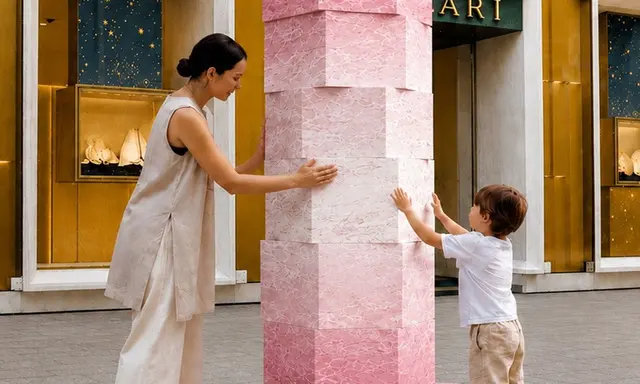
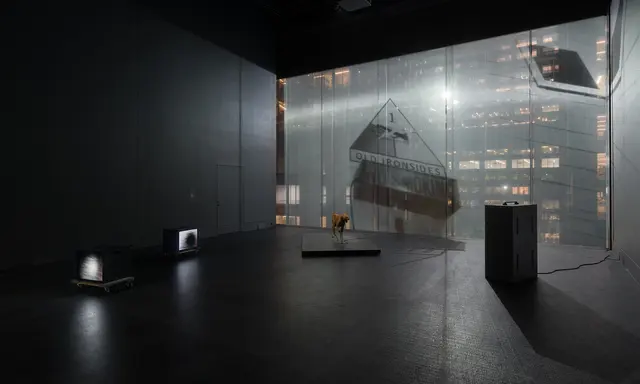
The lead image accompanying this report comes from Design Miami's own 2026 programme gallery and is credited to the organiser. It provides a genuine first-party visual reference for the fair's design identity but is not described as a photograph of visitors attending an event that has not yet taken place. An advance image may be promotional or depict a work associated with the programme, and that limitation should remain clear. The date, theme and schedule instead come from the organiser's published text. Responsible visual sourcing helps preserve the meaning of a new edition without borrowing an unrelated photograph from a previous year or manufacturing an illustration.
What can be confirmed before opening day
The firm details are the 22nd edition, the 1–6 December date range, the Miami Beach location, Charlene Prempeh's *Unveiling* theme and the structure of previews, public days, galleries and early talks. Further exhibitor information, ticket conditions and programme adjustments should be checked directly through the official Design Miami 2026 fair page. The event has not yet begun as of this article's publication date of 28 November, so it would be wrong to claim an attendance result, a completed critical verdict or an auction-like sales total. For travellers interested in art, craftsmanship and luxury interiors, the announcement provides a useful reason to plan a thoughtful visit to the Miami design calendar rather than a hurried tour of objects chosen only for their price or visual impact.
Explore related Luxury Yacht Guide lifestyle reporting
- Harry Nuriev and JRP Editions Turn Sound Into Furniture at Design Miami
- MoMA Reveals the Architecture of Independence in Western Africa
- Doloni Brings Ukrainian Jewellery and Craft to Design Miami 2026
- Alex Turco Turns Salt, Stone and Sea Sponges into Design Miami Sculpture
Primary reporting and image credit
Primary manufacturer and organiser source(s): https://designmiami.com/fair/miami-2026. © Design Miami. Original image from the official Design Miami 2026 event fair page, illustrative of the announced programme rather than a photograph of December 2026 fair visitors. Image is used only for correctly attributed factual editorial coverage and never represented as open-licence stock photography.